

Acoustic Treatment
Gym Acoustics: Three Noise Problems That Need Three Different Fixes
A gym is acoustically one of the worst room types to get right because the noise is not one problem. It's at least three distinct problems happening in the same building, and each one needs a different fix.
The free weights area creates impact noise that travels through the structure. Group studios generate music bleed through partitions. The main floor builds up a sustained ambient noise level because hard surfaces and high ceilings keep reflections alive.
Related guide
Need the gym impact-isolation side too?
Gyms create a different class of problem once dropped weights and low-frequency vibration start travelling through the slab. The soundproofing guide covers floating build-ups, vibration products, and block-and-isolate strategy.
Read the gym soundproofing guideThe three noise zones inside a gym
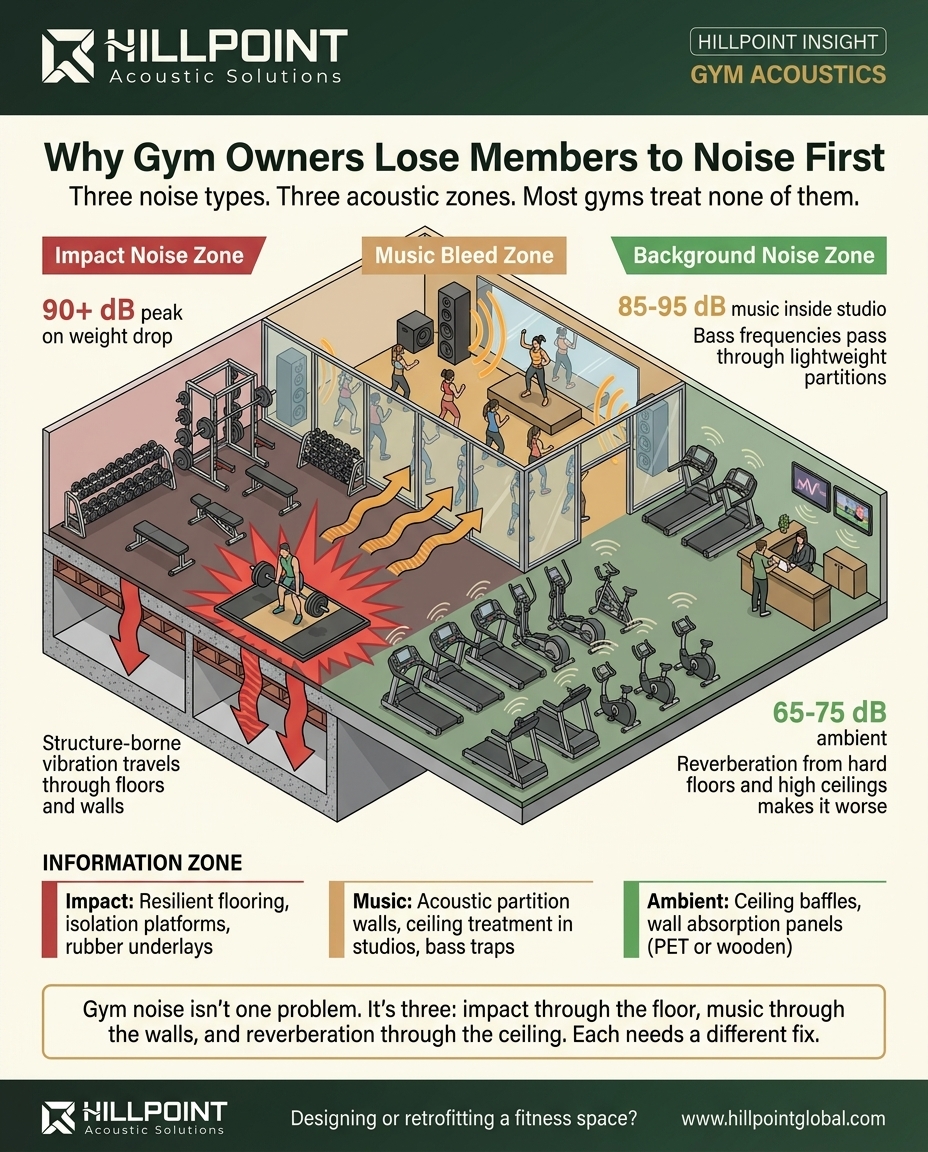
Gym noise isn't one problem. It's three: impact through the floor, music through the walls, and reverberation through the ceiling. Treating one without the others leaves the space feeling just as loud.
The right approach maps those issues as separate acoustic zones: the free weights area where dropped loads create vibration, the group studio where bass-heavy music pushes through partitions, and the open gym floor where cardio equipment, conversation, and hard surfaces build a constant ambient noise floor.
Impact noise from weights
When a loaded barbell hits a platform from overhead height, the peak sound level can exceed 90 dB at 2 metres. The bigger issue is the vibration that transmits through the floor slab into the building structure, reaching spaces above, below, and beside the gym.
Basic rubber tiles reduce surface noise but do little for structure-borne vibration. The difference between commodity gym flooring and a properly isolated platform is dramatic when the source is Olympic lifting, free weights, or repetitive high-impact training.
This is an isolation problem, not an absorption problem. The treatment sits in resilient flooring systems, isolation platforms, rubber underlays, and vibration-decoupled equipment support. Ceiling panels and wall treatment do not stop a structural vibration path once it is already in the slab.
Music bleed from group studios
Group fitness studios typically run music at 85 to 95 dB inside the room. Inside the studio that is intentional. Outside it becomes the complaint, usually because bass frequencies pass through lightweight partitions far more easily than the rest of the spectrum.
Below 125 Hz, standard glass partitions and lightweight stud walls offer minimal resistance. What escapes is the rhythmic thud of bass, which tends to be more irritating than broad-spectrum noise because it is persistent and structured.
Fixing music bleed requires mass and decoupling: heavier partition walls, resilient support layers, better glazing choices, and bass control inside the studio so less energy reaches the boundary in the first place.
Reverberation on the main gym floor
Large open gyms with concrete or rubber floors, exposed ceilings, and minimal soft surfaces build reverberation quickly. Sound from treadmill motors, weight machines, TV speakers, and conversation bounces around the room until the whole floor sits in a 65 to 75 dB ambient wash.
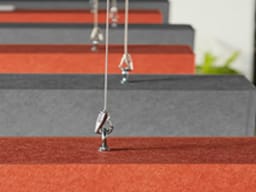
This is the problem ceiling baffles and wall panels actually solve. Suspended baffles are especially effective because they work in exposed-ceiling environments, absorb from both sides, and reduce RT60 across the open floor without needing a ceiling grid.
HillPoint's SOF PET baffles and wall panels fit this zone well because PET handles humidity better than many office-first materials and the lightweight format works where heavy suspended systems are not practical. Wooden acoustic panels suit premium fitness spaces where the finish matters as much as the function.
Treating the gym as three zones
The mistake most gym fit-outs make is treating the entire facility as one acoustic problem. Ceiling panels go up everywhere, rubber tiles go down everywhere, and nobody separates impact control, music isolation, and reverberation treatment into different scopes.
The more effective approach is zone-based: absorb on the main floor to control reverberation, block between the studio and adjacent spaces to control music bleed, and isolate in the free weights zone so impact noise does not enter the building structure.
HillPoint covers the absorption and blocking layers with ceiling baffles, wall panels, and partition-related solutions, and we coordinate the isolation layer with flooring and vibration specialists so the full package works together instead of leaving gaps between trades.
Gym and amenity references from our portfolio
This portfolio image shows the type of fitness environment where durability, appearance, and zoning the acoustic treatment all matter. See the full projects page for the broader portfolio.
Fitness Centre
Products commonly used for this segment
These are the products that most often come up when we design acoustic treatment for gym acoustics: three noise problems that need three different fixes.
SOF Panels – PET
SOF Baffles
Square, rounded, or custom profiles
View product
Comfy Panels-Fabric
Comfy Panels
Multiple shade options
View product
Acousstop Wooden Panels
Wood Baffles
Maintains full access to ceiling plenum for building services
View product
Specialized Products
Acousstop Silenz
High mass for superior airborne sound reduction
View product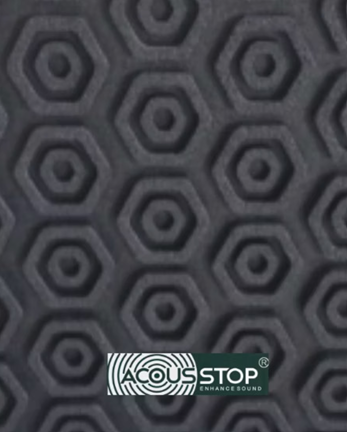
Specialized Products
Acousstop Vibro Pad
Interlocking design for fast installation
View product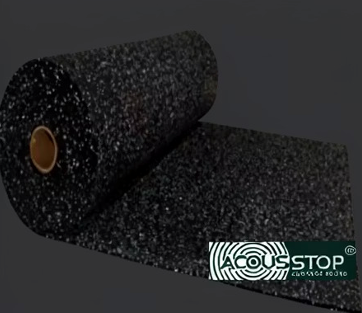
Specialized Products
Acousstop Vibro Roll
Directly fixed over screed, wood, or rubber floor
View product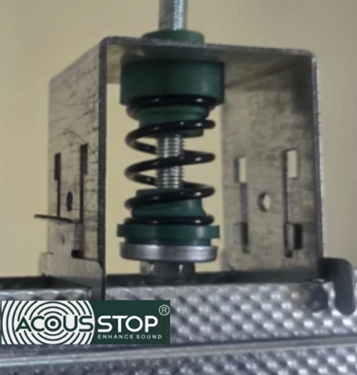
Specialized Products
Acousstop Vibro Mount
Excellent low-frequency isolation
View productStart the conversation
Planning acoustics for a gym or fitness centre?
Share the gym layout, floor build-up, studio adjacencies, ceiling type, and surrounding rooms. We can separate the impact, music bleed, and reverberation problems and recommend the right treatment package for each zone.