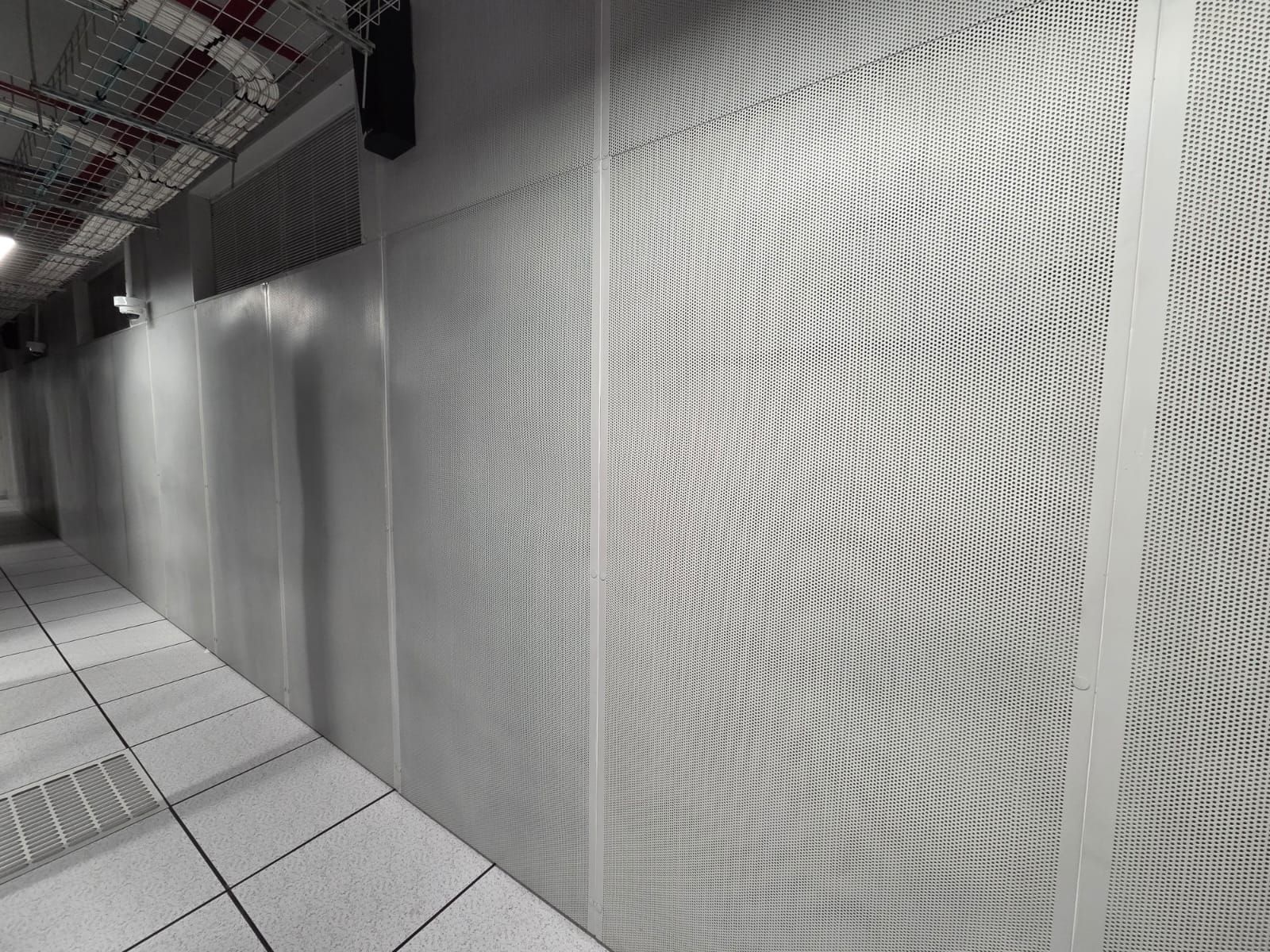
Treat
Control reverberation inside the room with panels, ceilings, baffles, and other absorptive surfaces.
Technical Guide
There is one acoustic specification mistake that shows up more than any other: a client complains about hearing the next room, the design team adds acoustic panels, and the complaint survives because the problem was never reverberation. It was transmission.
That distinction matters because soundproofing sits on the block-and-isolate side of acoustic design: assemblies, STC logic, weak-link detailing, and the systems that keep sound from crossing between spaces on Indian commercial projects.
STC
Explained clearly
Block + Isolate
Core focus
Doors to floors
Whole-assembly view
India + GCC
Project coverage
If the room feels echoey, speech is unclear, or video calls sound hollow, the issue is usually what is happening inside the room. That is the job of absorption and acoustic treatment.
If people in one room can hear the next room, corridor noise is entering a consultation room, or bass is leaking through a shared structure, the issue is transmission. That is the job of soundproofing: mass, sealing, decoupling, and vibration isolation.
Control reverberation inside the room with panels, ceilings, baffles, and other absorptive surfaces.
Control airborne transmission between rooms with walls, doors, glazing, seals, and airtight detailing.
Control structure-borne vibration with floating build-ups, resilient layers, and decoupled assemblies.
Sections
Good soundproofing starts by treating the whole room as the barrier, not just the wall drawing in the consultant pack.
Speech, music, or mechanical noise hits a wall, door, or glazing line and passes through the assembly. This is the path STC is trying to summarize.
Sound avoids the intended barrier and travels over, under, or around it through the plenum, slab, corridor, ductwork, or adjacent wall line.
Impact or vibration travels through the building structure itself, then re-radiates as sound somewhere else in the plan.
A gap under a door, an unsealed penetration, or a partition terminating at the ceiling grid can collapse the real performance of an otherwise strong assembly.
If you want the deeper diagnostic on the bypass routes, the sound flanking paths guide is the best companion read to this guide.
STC, or Sound Transmission Class, is the single-number shorthand most commercial specifications use to describe how well a partition blocks airborne sound. It is useful because it simplifies comparison. It is risky when people forget what the number leaves out.
In practice, STC 25 to 30 is barely private, STC 45 is a workable commercial privacy baseline, STC 50 and above is where stronger room-to-room separation becomes believable, and the higher end of the range is usually reserved for more demanding studio, cinema, healthcare, hospitality, and executive-room conditions.
| STC range | What you typically hear | Common use case |
|---|---|---|
| 25 to 30 | Loud speech is clearly audible and often intelligible | Light internal doors, weak partitions, non-private separations |
| 35 to 40 | Speech is muffled but still noticeable | Basic commercial partitions where privacy is not a priority |
| 45 | Normal speech is audible but usually not intelligible | Meeting rooms and standard commercial privacy targets |
| 50 | Loud speech is difficult to follow | Stronger boardroom, hotel, and healthcare privacy goals |
| 55 to 60 | Speech and music are faint or very difficult to perceive | Executive rooms, studios, and higher-performance barriers |
| 60+ | Very strong airborne isolation when the detailing holds | Cinemas, specialist media rooms, and demanding separation zones |
STC is still a laboratory-oriented mid-frequency summary. It does not tell the whole story for bass, impact noise, or field conditions with flanking paths and site leaks. For door-specific interpretation, the STC acoustic door guide adds the practical context.
Most commercial soundproofing problems can be mapped to a few recurring system families. The key is choosing the right assembly for the path the sound is using.
Walls gain performance from some combination of more mass, better damping, decoupling, and cavity insulation. High-performing barriers are almost never a single-material answer.
Doors are usually the weak point. Dense cores, perimeter seals, and threshold control matter more than how expensive the partition around them looks.
Impact-heavy and structure-borne problems need a floor build-up that is isolated from the slab, not just a quieter finish material on top.
Concrete slabs move low-frequency energy well. When the room above or the plant zone above is the source, the ceiling build-up is often non-negotiable.
Glass can separate visually while still leaking privacy acoustically. Pane build-up, asymmetry, seals, and how the partition meets the structure all decide the result.
Ducts, cable trays, pipes, louvers, and risers routinely bypass otherwise strong assemblies unless they are sealed, lined, wrapped, or acoustically separated as part of the design.
The required assembly changes quickly by sector because the source noise, privacy target, and dominant transmission path are different in each room type.
Guest privacy depends on party walls, corridor doors, service penetrations, and plumbing-path control rather than decorative wall treatment alone.
Hotel soundproofing contextConfidential rooms usually fail at the door, the ceiling plenum, or the glass line before they fail in the middle of the partition.
Office soundproofing contextClassroom-to-classroom privacy, music-room separation, and HVAC noise control all sit alongside reverberation requirements in the same project.
Education soundproofing contextSpeech privacy and low background noise matter at the same time, which makes doors, partitions, ceilings, and services part of one acoustic system.
Healthcare soundproofing contextThese projects need stronger barriers, more low-frequency discipline, and tighter weak-link control around doors, ducts, and structural connections.
Cinema soundproofing contextImpact transmission and bass-heavy program rooms push the problem toward resilient floors, isolated assemblies, and vibration control.
Gym soundproofing contextThese rooms still need barrier logic at entrances, adjacencies, and mechanical interfaces even when the main design discussion starts with reverberation.
Auditorium soundproofing contextIndian commercial work usually borrows its detailed performance language from international standards and consultant practice rather than from a single dominant local partition code.
These are the common reference points for measuring airborne sound transmission loss and summarizing it as STC on commercial partitions, doors, and glazing.
Projects influenced by European consultant standards may use Rw-style insulation metrics. The concept is similar to STC, but the numbers are not a perfect one-to-one substitution.
These sit behind impact and floor-ceiling thinking where structure-borne transmission, footfall, or dropped-weight energy is the problem.
The National Building Code gives the broad framework, but real commercial briefs usually rely on consultant schedules, hotel brand standards, healthcare privacy needs, or international fit-out references to set the actual performance targets.
Education and wellness-led projects often introduce acoustic privacy and background-noise targets that push soundproofing decisions much earlier into the design programme.
For the standards-led overlap between sound isolation, reverberation, and background noise, the WELL acoustics guide is a useful adjacent read.
Soundproofing failures are rarely about a material not existing. They are usually about coordination. The wall may be fine, but the door was downgraded. The door may be fine, but the partition stops at the ceiling grid. The drawing may be fine, but the service penetration never got sealed.
That is why HillPoint approaches these jobs as assembly problems. The work typically starts with identifying the source room, the receiver room, the privacy target, and the most likely transmission paths. From there, the system is mapped across partitions, doors, ceilings, floors, glazing, and plant interfaces instead of being reduced to a single product line.
The manufacturing unit in Coimbatore, Tamil Nadu supports the product side of that work, especially around acoustic doors, partitions, metal systems, and related acoustic components. Membranes, resilient layers, and vibration products then get specified in the context of the whole build-up rather than as disconnected add-ons.
Where the project requires it, field performance verification can be coordinated so the installed result is checked against the intended outcome instead of assuming the lab number survived the site conditions untouched.
A partition that stops at the suspended ceiling grid is not a genuinely soundproof room. It is a partial barrier under an open bypass route. Sound moves up through the ceiling tile, across the plenum, and down into the adjacent room, taking the path of least resistance instead of respecting the STC number written on the wall type.
That single detail shows up again and again on office, hospitality, healthcare, and education projects. It is also one of the cheapest fixes when caught in drawings and one of the most expensive fixes when discovered after occupancy.
If a room needs real privacy, review whether the partition actually runs slab to slab, whether the penetrations are sealed, and whether the door and glazing are rated to the same intent as the wall. That is usually a better first audit than adding more absorbent panels to the visible surfaces.
These references do not all represent the same kind of soundproofing problem, but together they cover the room types where transmission control, plant noise, or impact isolation become specification-critical.
These links are the fastest route into the current HillPoint products most relevant to the block-and-isolate side of acoustic design.

Doors and Movable Partitions
Acoustic doors for the room opening that usually decides whether privacy works in practice.
View guide
Doors and Movable Partitions
Movable partitions for spaces that need flexible division without giving away the whole isolation brief.
View guide
Specialized Products
High-mass membrane for improving airborne sound isolation inside wall, floor, and ceiling build-ups.
View guide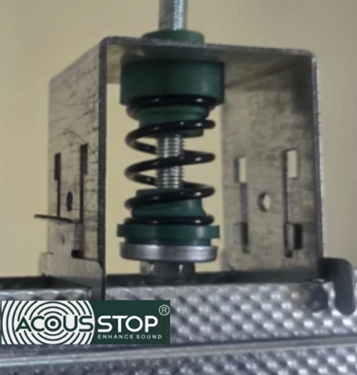
Specialized Products
Ceiling and structural isolation mount for low-frequency and structure-borne noise control.
View guide
Specialized Products
High-impact resilient floor tile system for gyms and other vibration-sensitive adjacencies.
View guide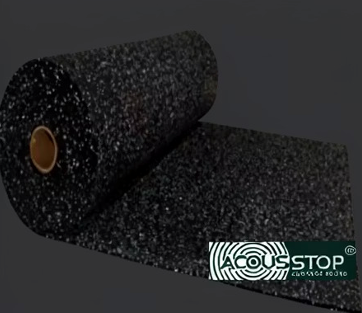
Specialized Products
Roll-format resilient underlay for impact and vibration control where a lighter build-up is appropriate.
View guide
Specialized Products
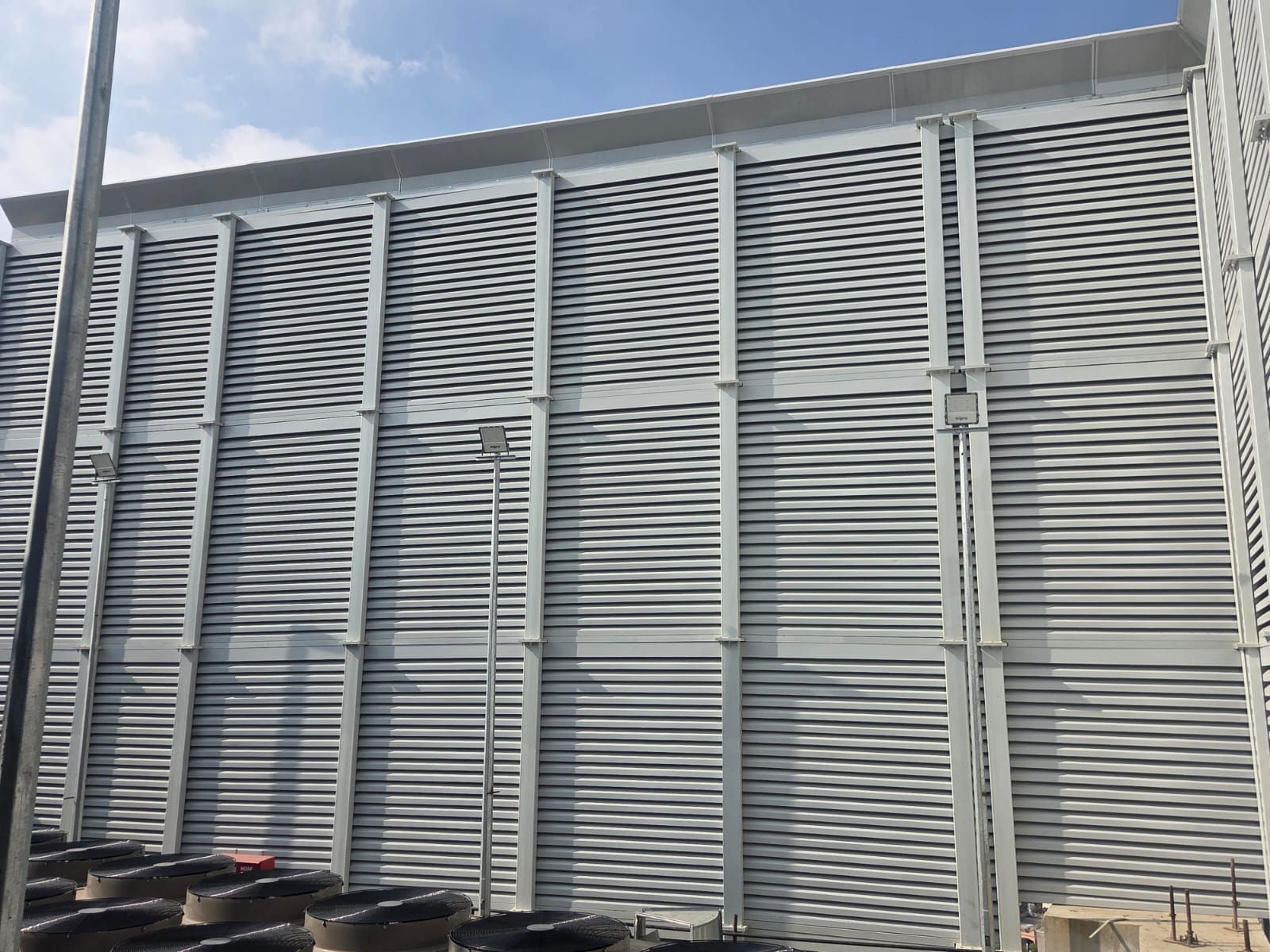
Acoustic louver systems for plant rooms, ventilation paths, and service openings that still need airflow.
View guideThese are the questions architects, consultants, and project teams usually ask once the brief turns from "we need privacy" to "what assembly actually gets us there?"
Acoustic panels absorb sound inside a room to reduce echo and improve speech clarity. Soundproofing reduces sound transfer between rooms using mass, sealing, decoupling, and vibration isolation. They solve different problems and many commercial projects need both.
STC 45 is a practical commercial privacy baseline for many meeting rooms. STC 50 and above is more common where confidential speech, hotel privacy, or stronger room separation is required. Music, cinema, and studio work often need higher-performing assemblies and more attention to low-frequency behaviour than the STC number alone shows.
Installed cost varies too much by target rating, wall area, ceiling condition, penetrations, access, and whether the project is new-build or retrofit to make a public number genuinely useful. The most reliable path is to share the source room, receiver room, target privacy level, and existing construction so the system can be priced as an assembly rather than as an isolated material.
Sometimes yes, but the result depends on the existing assembly and the weak points around it. Adding mass, damping, and a new face can improve performance, but if the problem is flanking, door leakage, or a partition stopping at the ceiling grid, surface upgrades alone will not solve it.
There is no single best material because soundproofing works as an assembly. Mass, decoupling, damping, cavity insulation, seals, and vibration isolation each solve different parts of the transmission path.
Yes. A strong partition with a weak door still behaves like a weak barrier. The door, frame, perimeter seals, threshold seal, and installation quality often decide whether the room feels private in practice.
Low-frequency noise is harder than ordinary speech because the energy carries through structure and below the range that STC summarizes well. It is solvable, but it usually needs heavier assemblies, vibration isolation, floating build-ups, or room-within-a-room thinking rather than a lightweight retrofit.
Soundproofing Consultation
Send the source room, the receiver room, the privacy target, and any constraints from the existing construction. HillPoint can respond with a system direction that treats the wall, door, ceiling, floor, and leakage points as one acoustic assembly.
India corporate office
No. 3, 2nd Floor, Dasarahalli Main Road, Opposite Karagadamba Temple, Dasarahalli, Hebbal Post, Bangalore 560024, Karnataka
contactindia@hillpointglobal.comGCC project contacts