Absorb
Panels, baffles, clouds, and ceilings control reverberation, echo, and speech clarity inside the room itself.
Integrated Acoustics
Most acoustic problems do not fail on the drawing. They fail in the handoff between consultant intent, product procurement, and site execution.
HillPoint sits in the gap between those handoffs. We work as one team across design support, manufacturing, and installation, which is why project teams use us when the project needs more than a panel vendor.
Absorb
Room acoustics
Block
Room-to-room control
Isolate
Structure-borne noise
500+
Project references
The phrase gets used loosely, but specification decisions are easier when the three acoustic jobs are separated clearly.
Panels, baffles, clouds, and ceilings control reverberation, echo, and speech clarity inside the room itself.
Acoustic doors, partitions, and properly sealed assemblies control how much sound passes from one room to another.
Membranes, floating systems, and vibration products handle the structure-borne noise that absorption products cannot fix.
The design may be right, but quality still depends on how procurement and site installation interpret the brief after handoff.
You get product suggestions, but not always a straight answer on whether the room problem is really absorption, blocking, or isolation.
Acoustics becomes one line item among many, which is exactly when details get value-engineered out of performance.
The integrated model matters because the overall acoustic result is usually lost in those handoffs rather than in the physics.
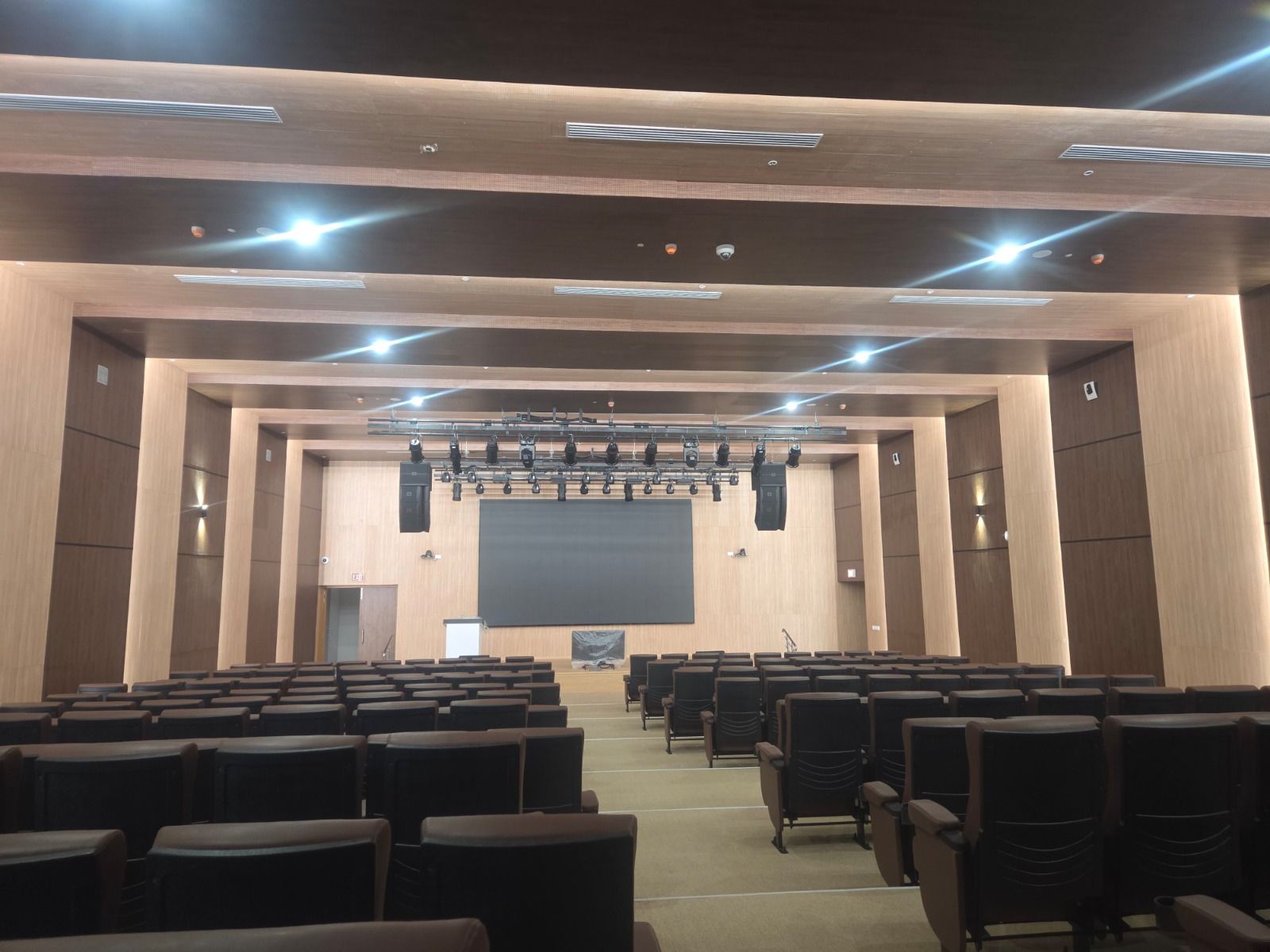
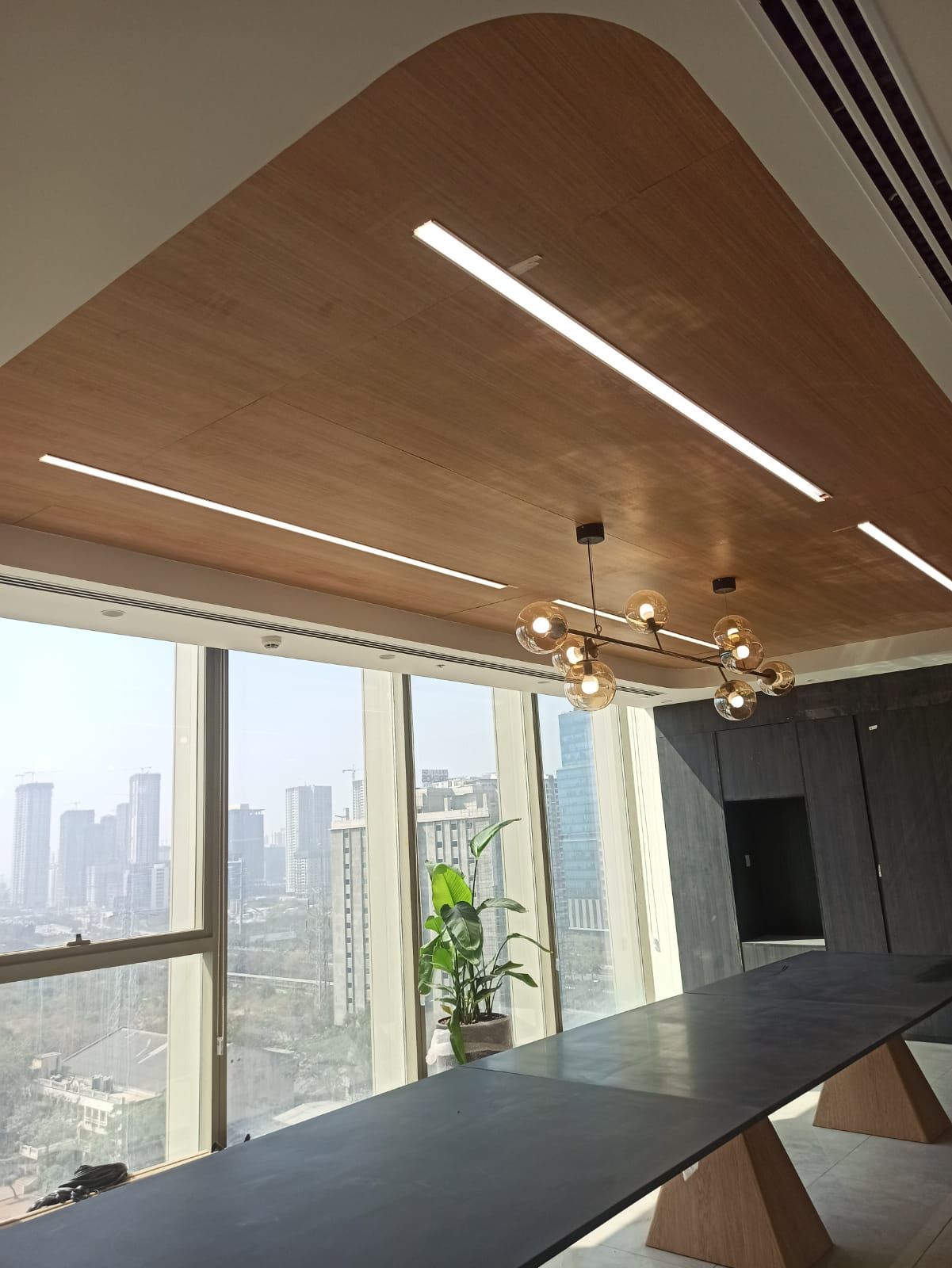
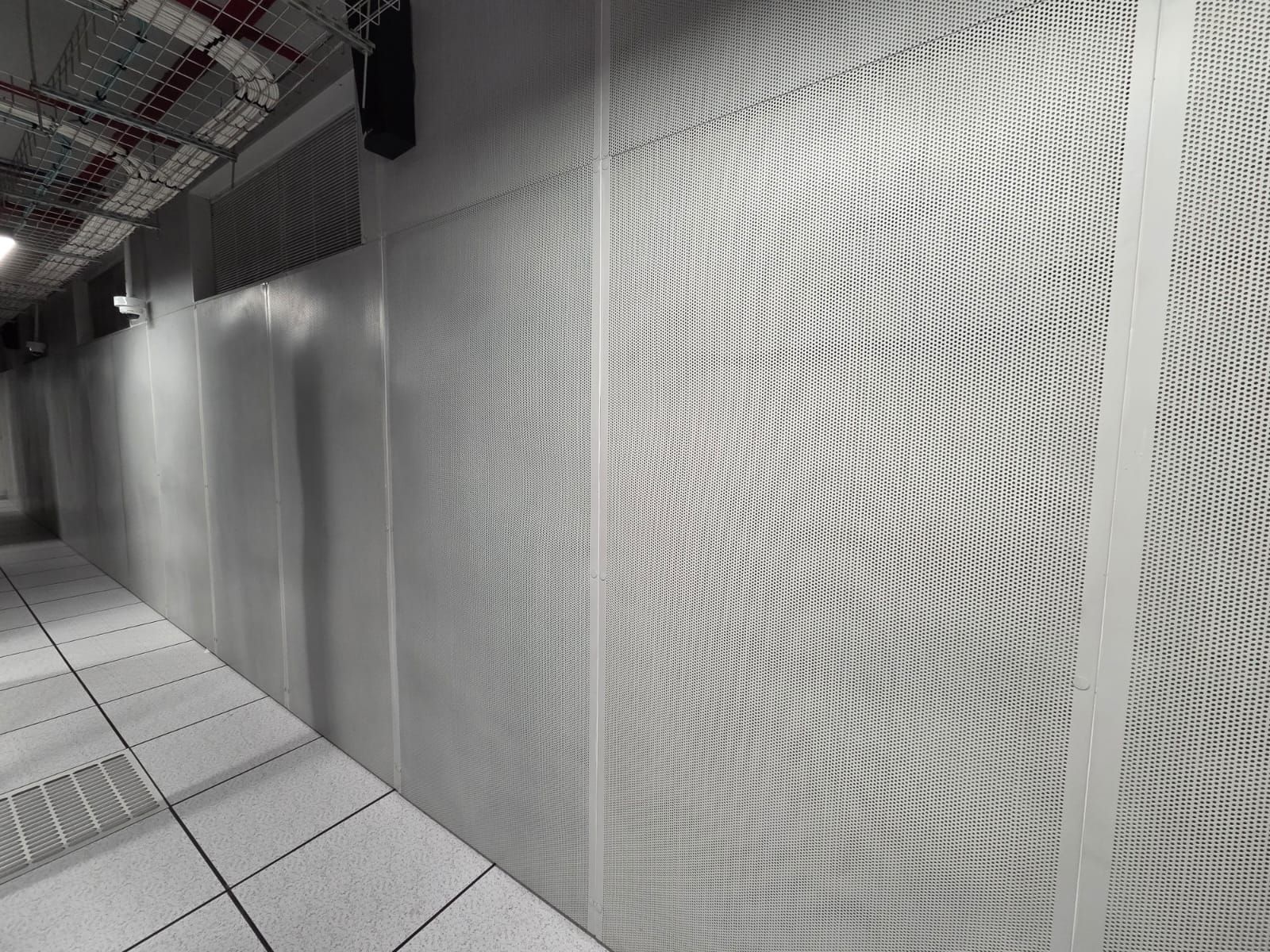
The public project set already shows the pattern. The Government Auditorium in Chennai combines wall and ceiling treatment for speech-first performance. The Hyderabad corporate office project shows curved micro-perforated ceiling work that had to be prototyped before production. The server-room project in Hyderabad shows the opposite problem: durable metal treatment in a high-noise technical space where ordinary decorative panels would have failed immediately.
These are different room types, but they all point to the same operating model: the acoustic intent, the product choice, and the installation logic have to stay connected. When they do not, the project starts compensating with late changes and expensive retrofit work.
Room types, occupancy, target RT60 or privacy level, ceiling conditions, and consultant notes set the scope.
The team maps the problem to absorption, blocking, and isolation instead of assuming more panels solve everything.
The product mix is built against the approved intent rather than improvised from whatever is available on site.
Edge conditions, doors, ceilings, and sequencing are checked with the same acoustic target still in view.
The client gets a space that was designed, supplied, and installed as one acoustic system rather than three unrelated trades.
Acoustics is much less expensive when it shapes the design early. Once the ceiling, partitions, glazing, MEP routing, and finish palette are already fixed, the project starts paying retrofit rates for problems that could have been solved in the original coordination drawings.
That is why early coordination with architects, consultants, and project owners matters. The highest-ROI acoustic decision is usually not the product. It is when the acoustic conversation starts.
These case studies show the range of room types where acoustic design, manufacturing, and installation need to stay coordinated.
These product detail pages give the specification team a faster route into finishes, mounting logic, and published performance values.

Acousstop Wooden Panels
Engineered for maximum absorption in ceilings
View product
Acousstop Wooden Panels
Elegant aesthetically pleasing design
View product
Comfy Panels-Fabric
Multiple shade options
View product
Doors and Movable Partitions
Drop and perimeter seals prevent sound leakage
View product
Specialized Products
High mass for superior airborne sound reduction
View product
Specialized Products
Excellent low-frequency isolation
View productRelated Guides
Use the acoustic panels India guide for the absorb side of the brief and the soundproofing solutions India guide for the block-and-isolate side. Together they explain product selection, sound blocking, and isolation before you choose a system.
Yes. The integrated model is often most useful when there is a consultant brief that still needs product, detailing, and installation support carried through cleanly.
No. The range spans absorption, blocking, and isolation products, which matters because many acoustic failures are really assembly or vibration problems rather than panel problems.
Send drawings, room schedules, and any target RT60, STC, or privacy requirement already on the project. That is enough to shape a first response.
Design Consultation
Share the room schedule, drawings, and acoustic targets. We can map the job across absorb, block, and isolate before procurement starts working against you.