
Soundproofing
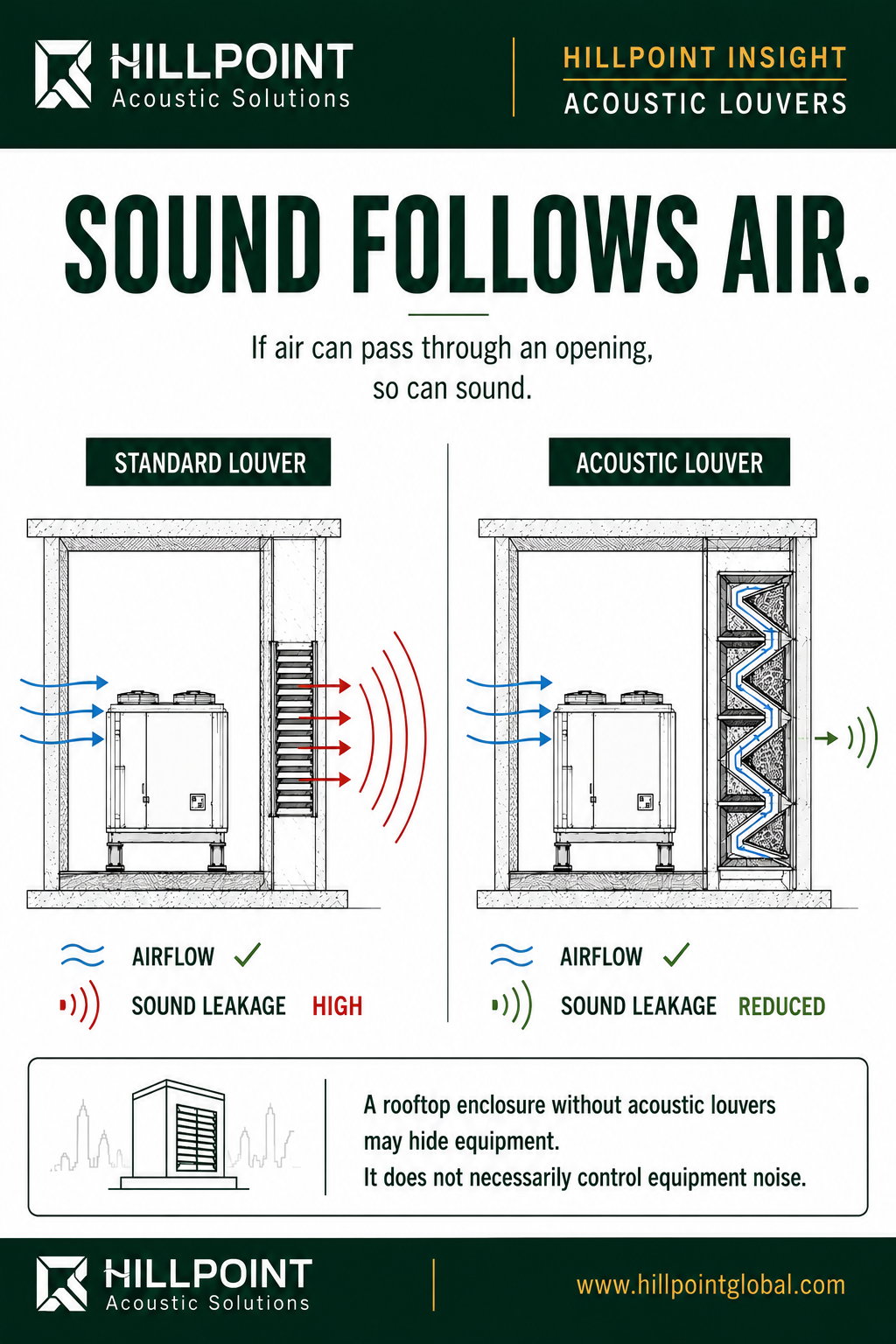
Acoustic Louvers: Cut Rooftop HVAC Noise, Keep the Airflow
Acoustic louvers cut rooftop HVAC noise while still passing the air chillers and cooling towers need. Here is how they work and how to spec one.
Read articlePractical notes on the acoustic problems that show up in offices, meeting rooms, classrooms, and commercial interiors.
Acoustic louvers cut rooftop HVAC noise while still passing the air chillers and cooling towers need. Here is how they work and how to spec one.
Read article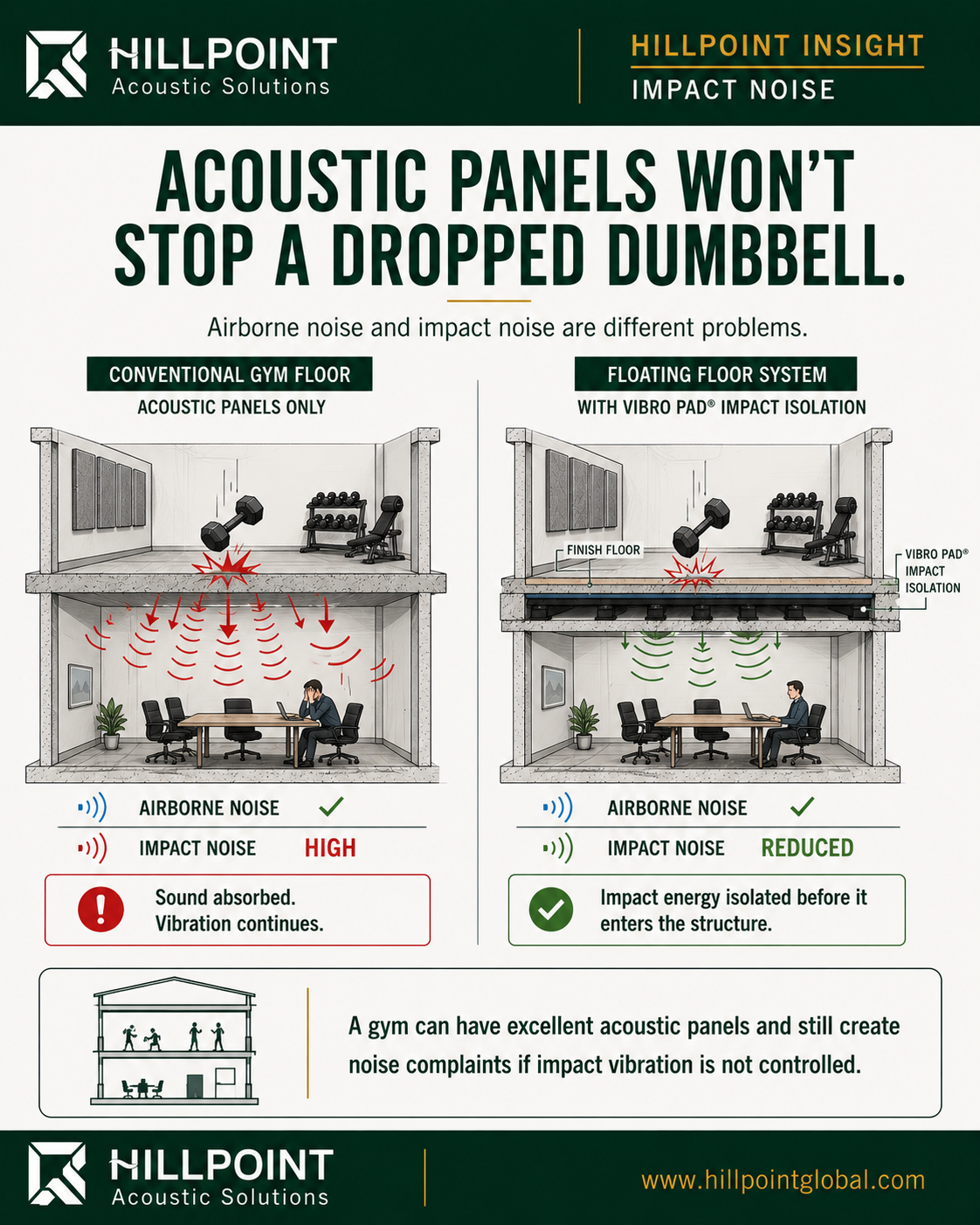
Gym below an office or apartments? Acoustic panels won't stop the thud of a dropped weight. Here is why impact noise needs floor isolation, not more panels.
Read article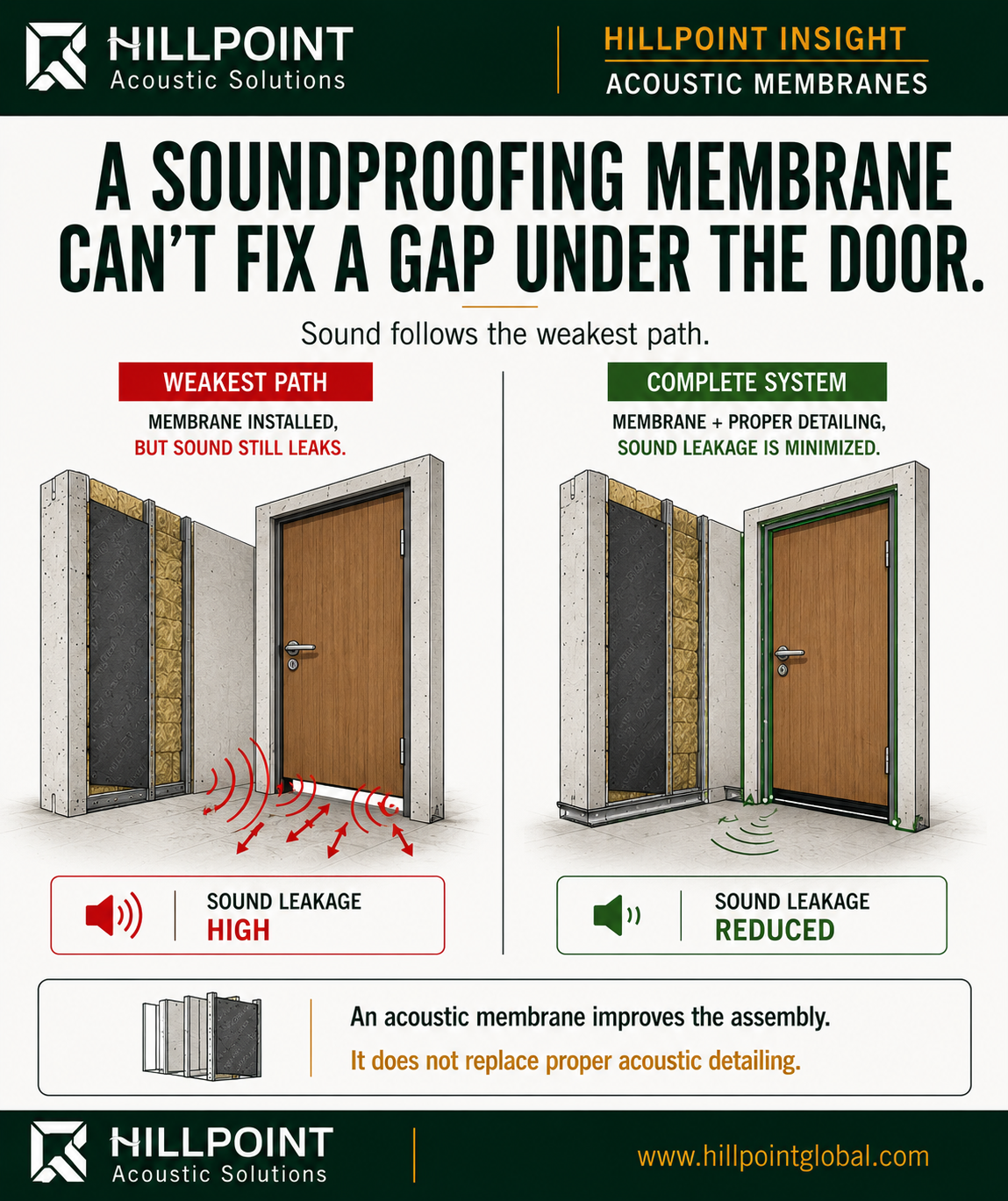
An acoustic membrane improves a wall, but it can't beat a gap under the door. Here is the weakest-path principle and why soundproofing is a system, not a product.
Read article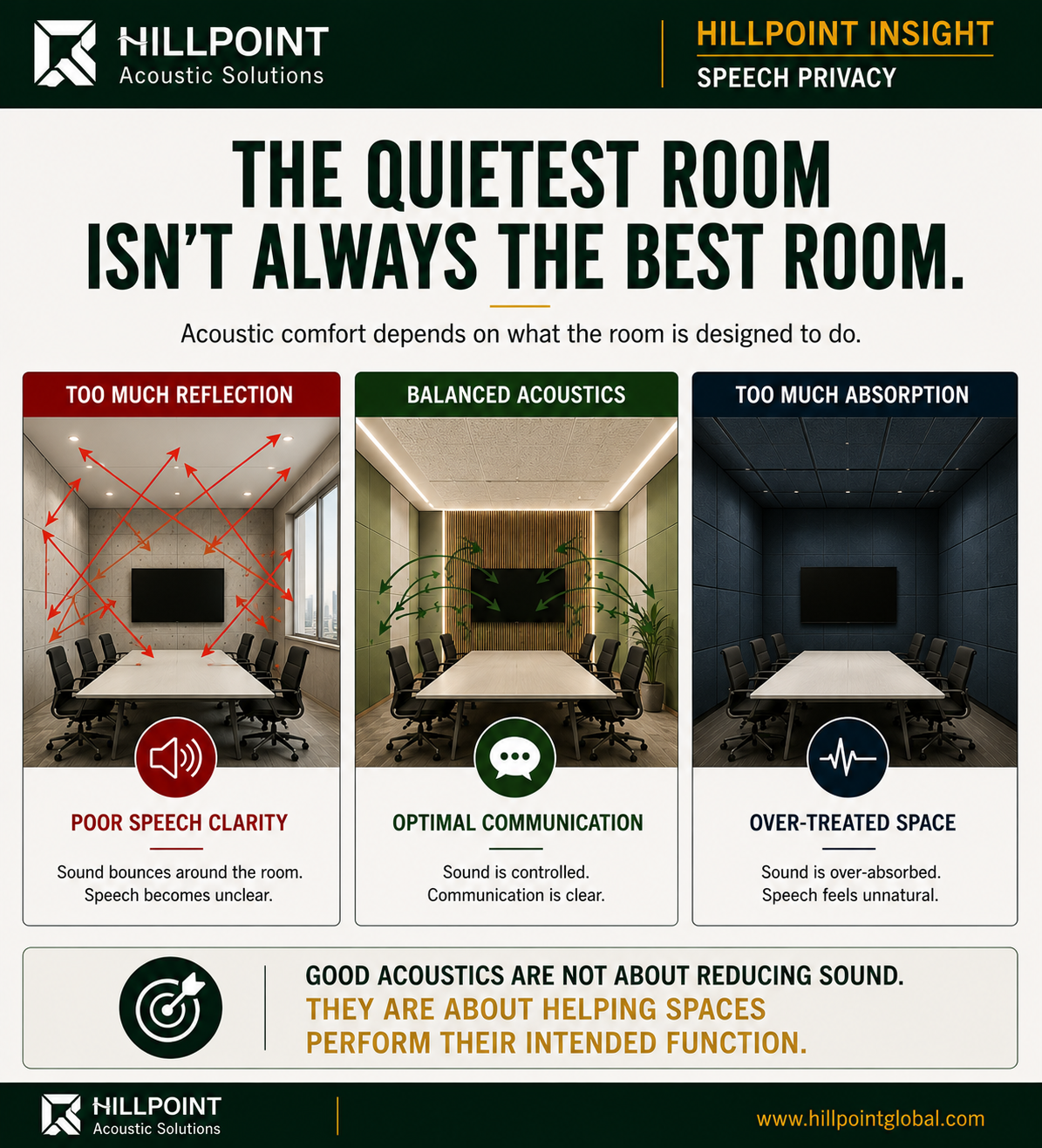
The quietest room isn't the best room. Speech privacy and speech intelligibility pull in different directions, and good acoustic design balances them by use.
Read article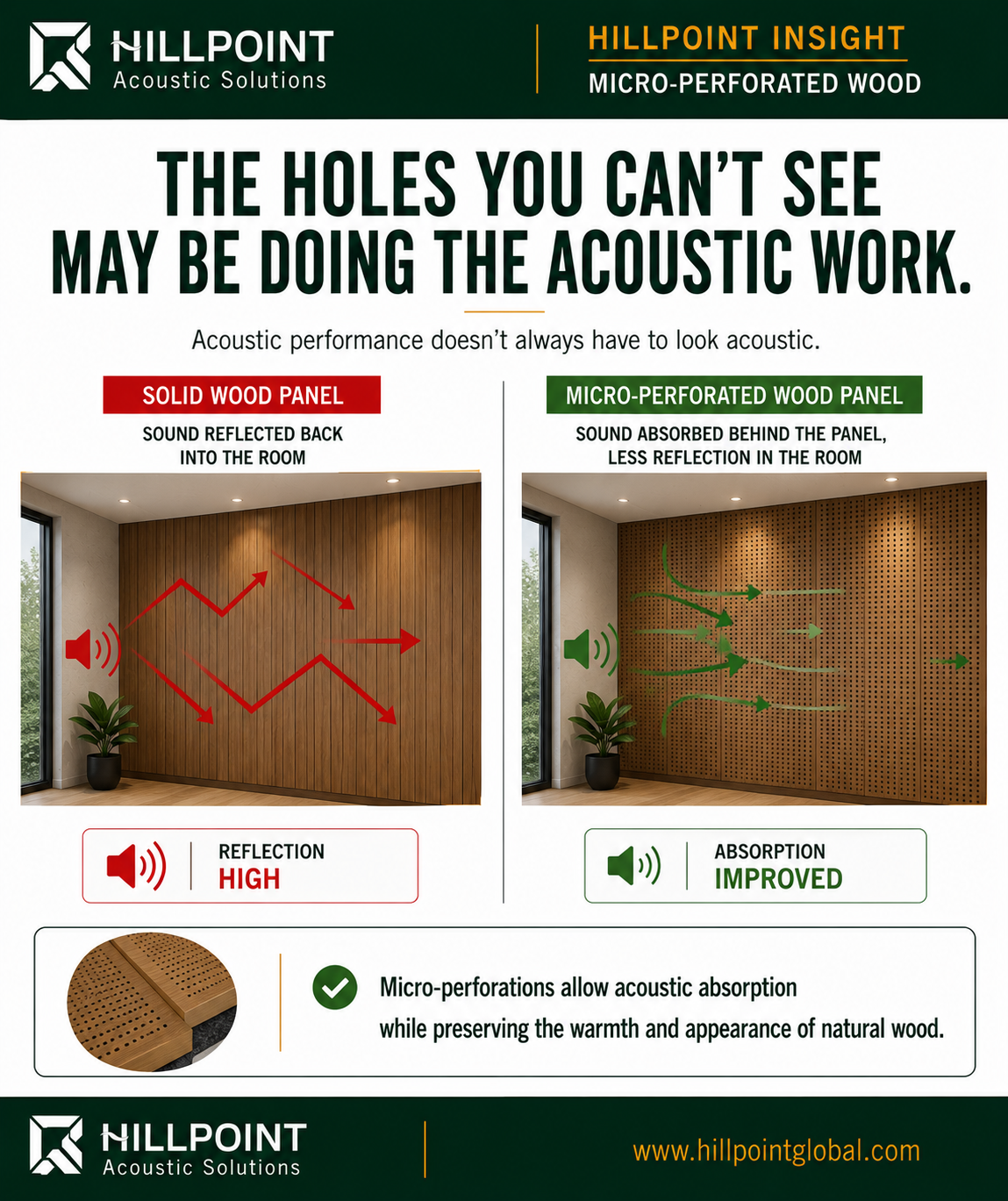
Micro-perforated wood panels keep the look of solid timber while absorbing sound. Here is how the perforations work and what sets their real performance.
Read article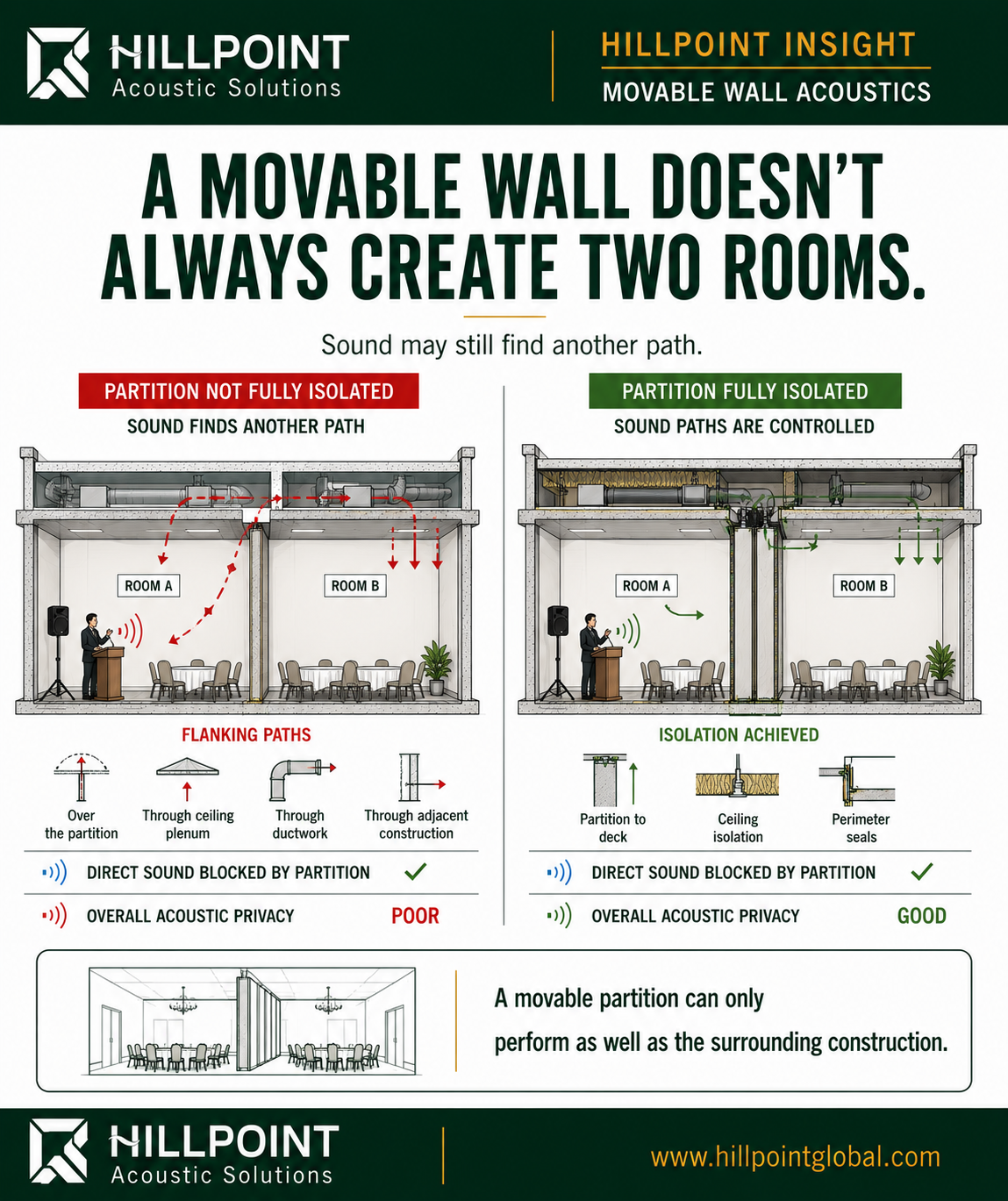
A movable wall with a great STC rating can still leak sound between rooms. Flanking transmission is usually why, and here is how to design around it.
Read article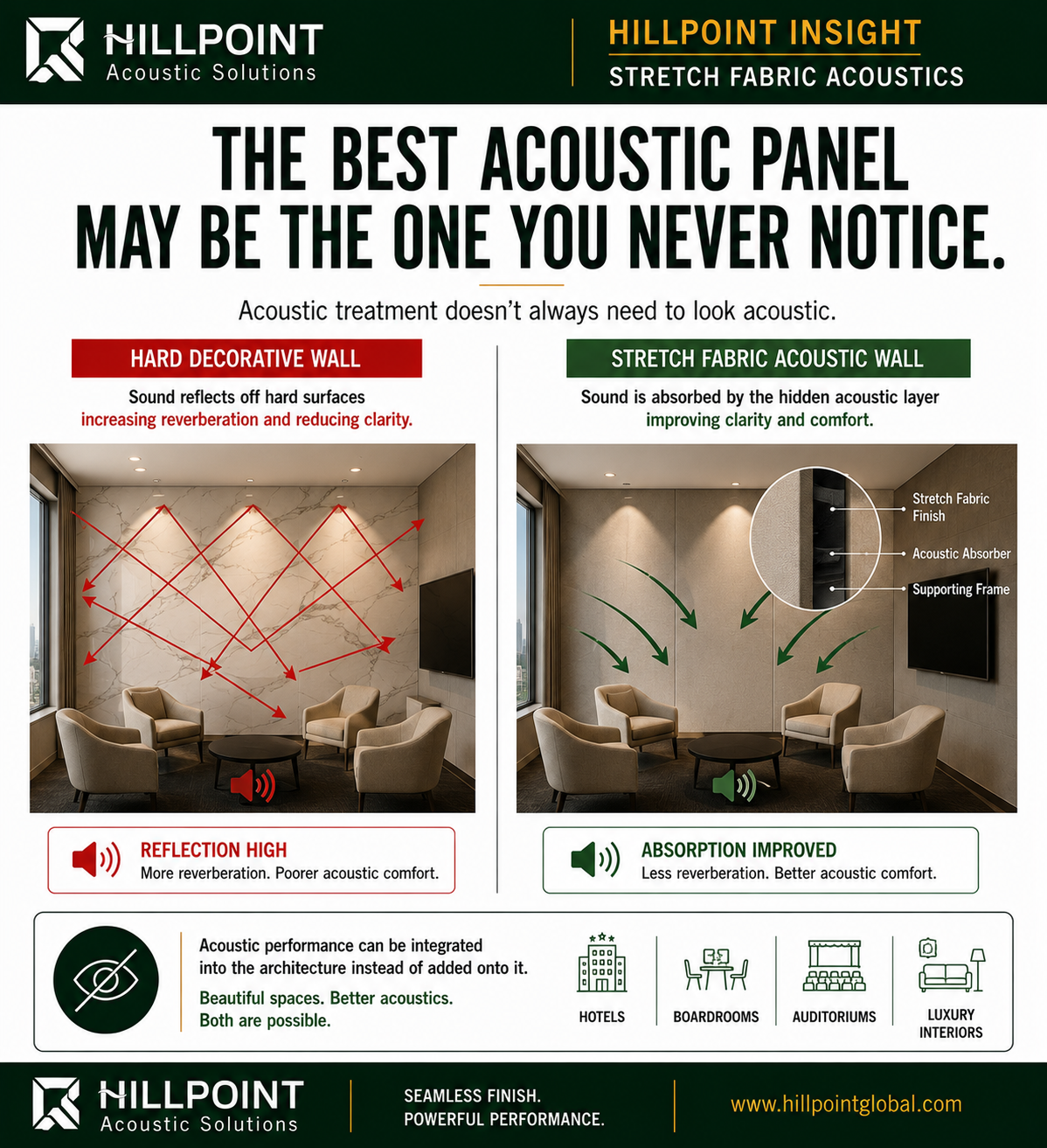
Stretch fabric acoustic systems hide the absorber behind a clean fabric wall. Here is how they work and why the fabric choice decides the performance.
Read article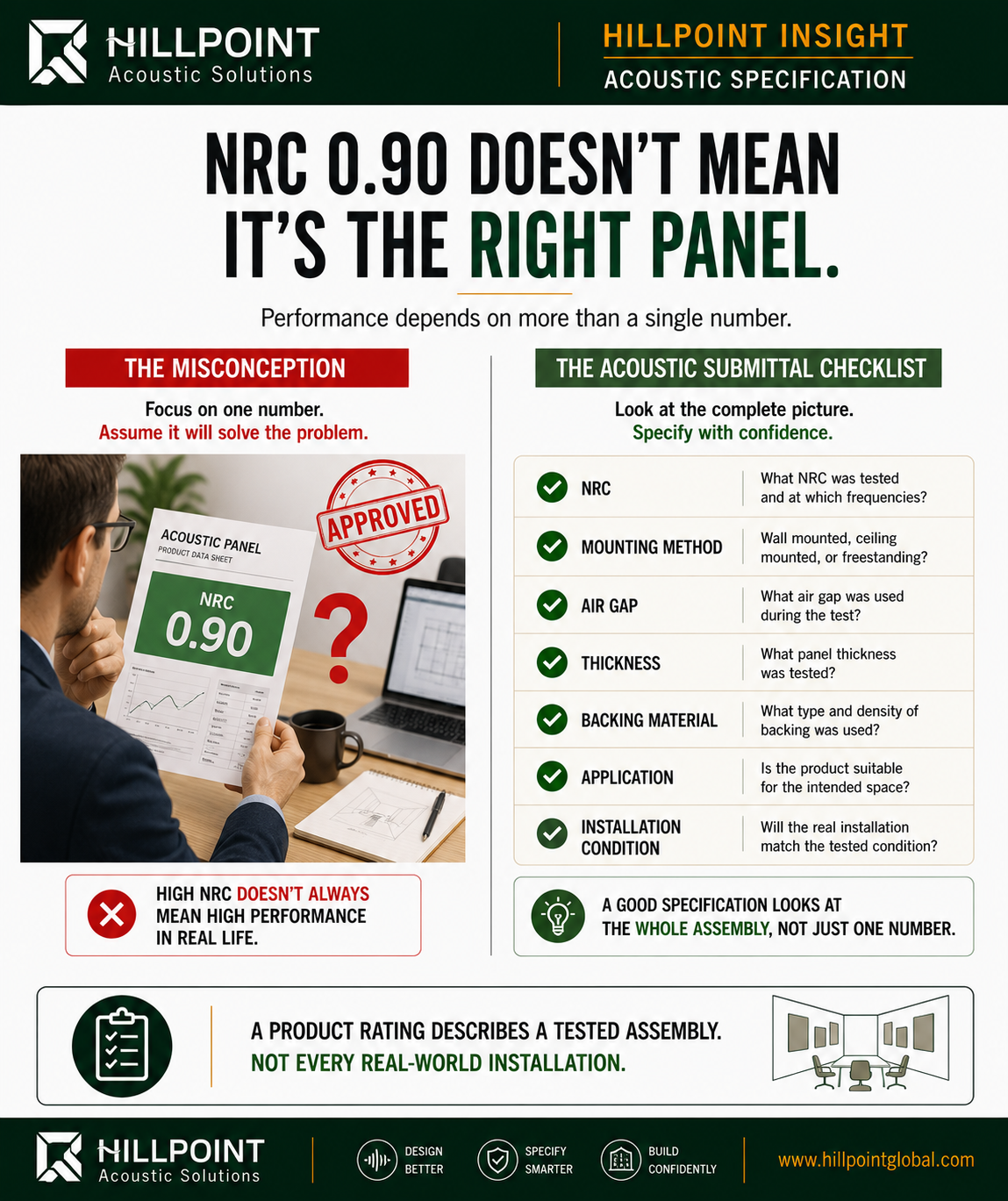
The same acoustic panel can show two different NRC numbers depending on how it was mounted for the test. Here is how to read an NRC rating with confidence.
Read article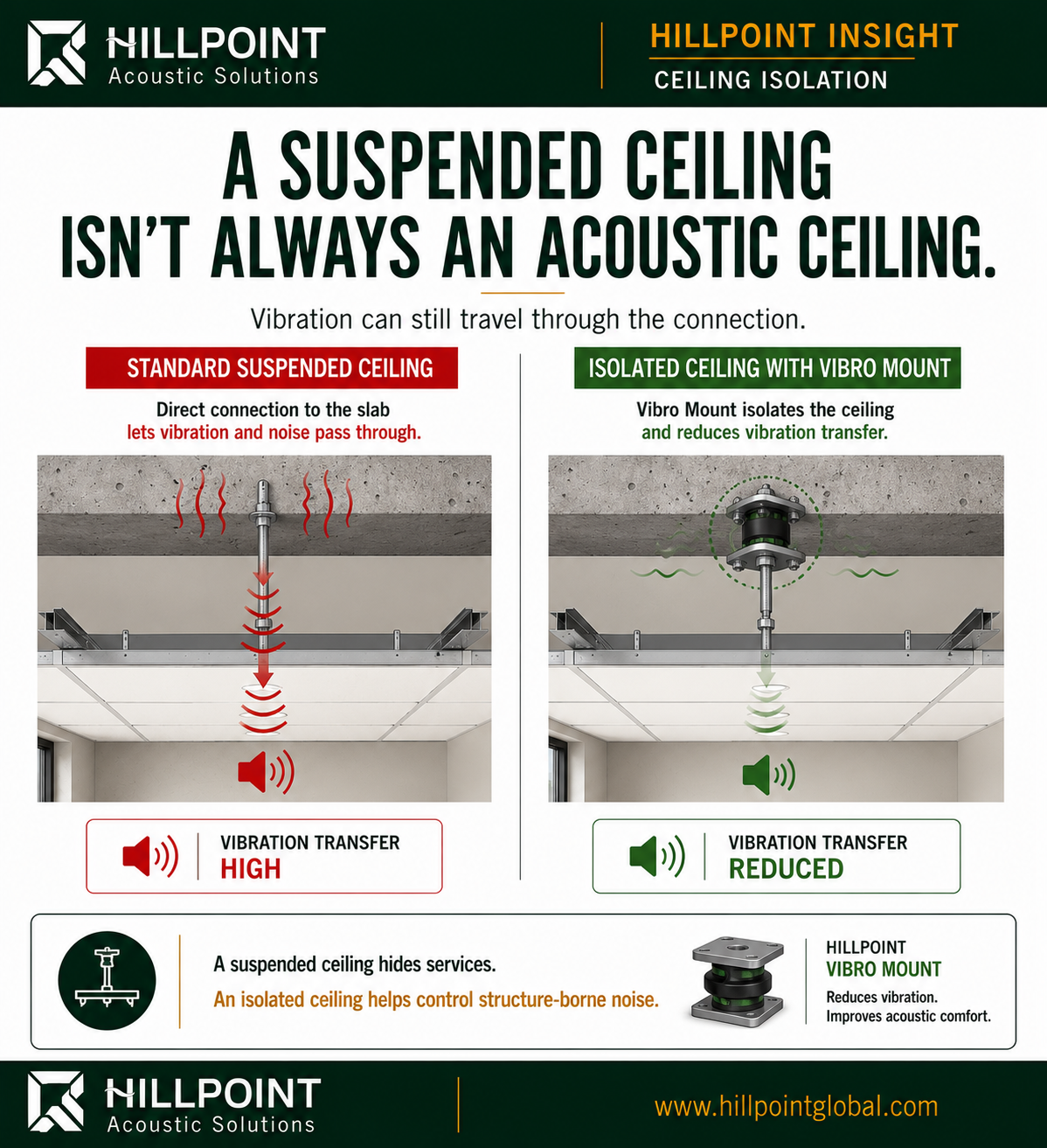
A suspended ceiling hides services. It usually won't stop vibration from the slab above. Here is the difference an isolated ceiling makes and when you need one.
Read article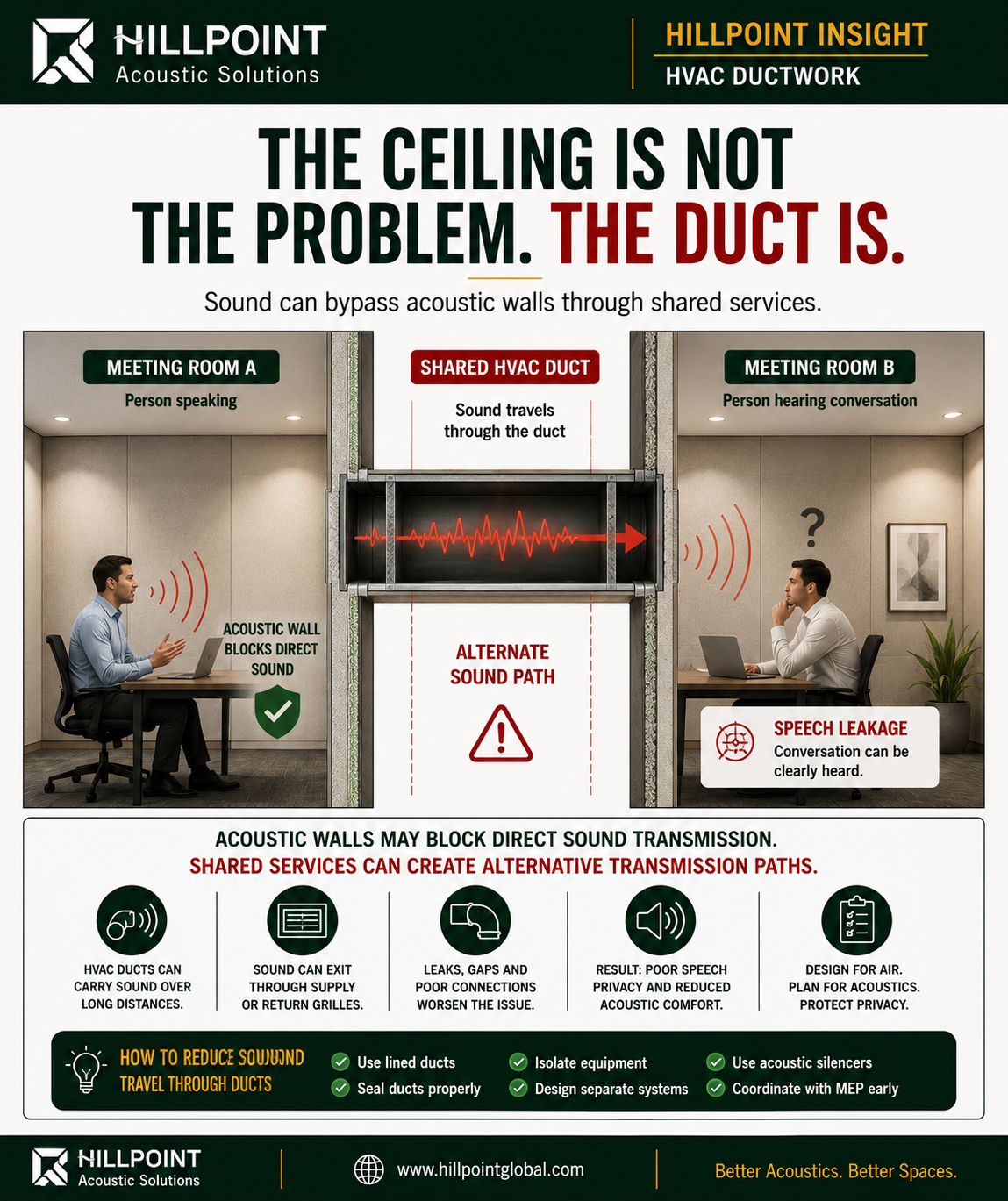
A great acoustic wall can't stop sound that travels through a shared HVAC duct. Here is how duct cross-talk works and where the fix actually sits.
Read article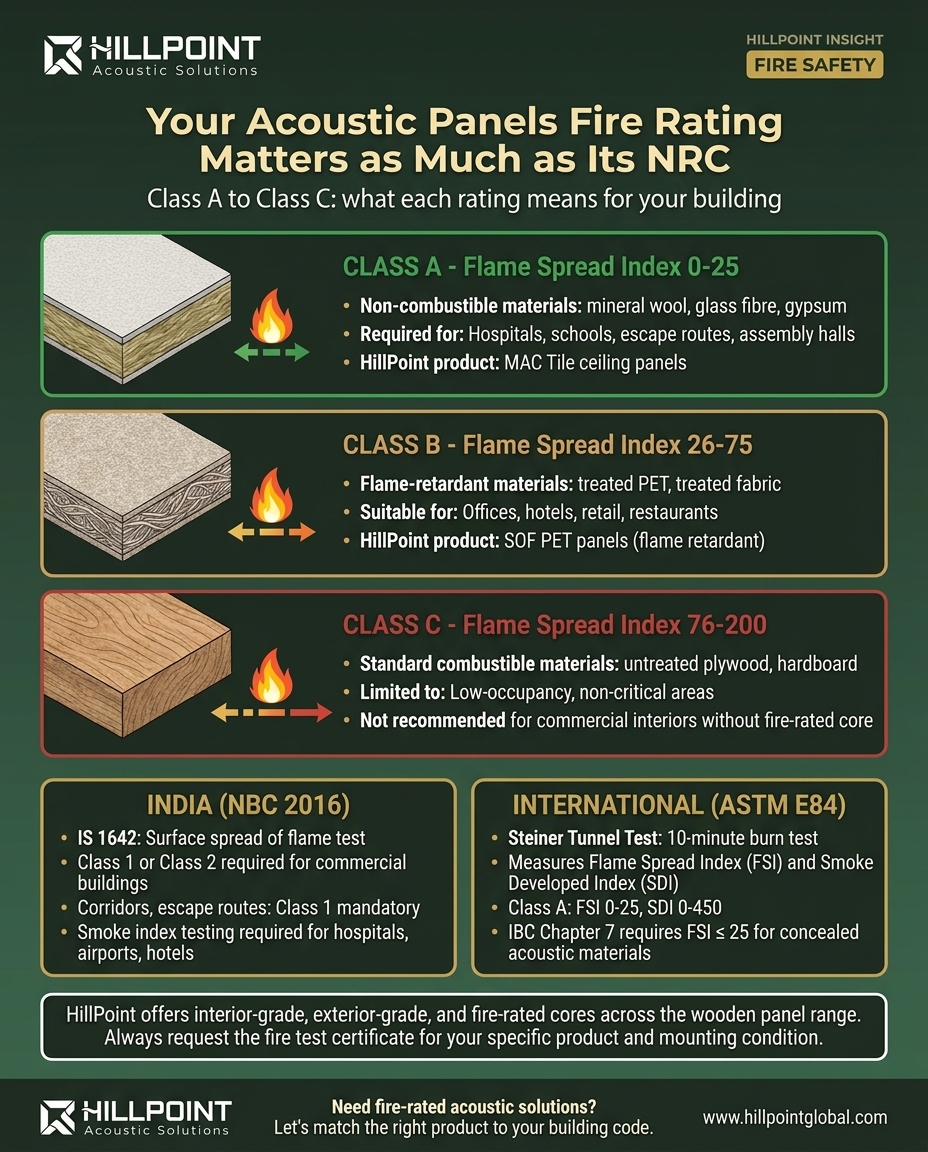
Class A, B, and C fire ratings determine where acoustic panels can go in your building. Here is what each class means under NBC 2016 and ASTM E84.
Read article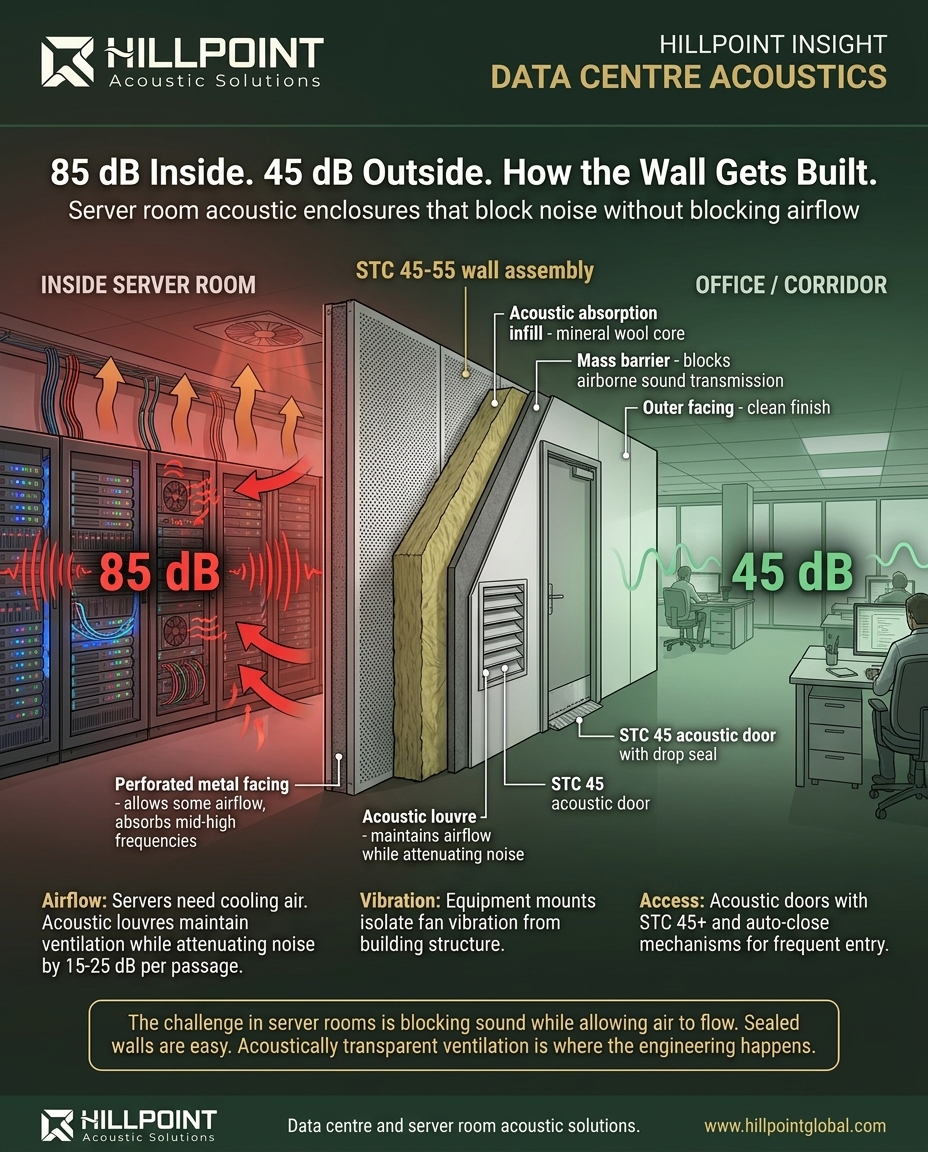
Server rooms run at 85 dB. The office next door needs 45 dB. Here is how acoustic wall assemblies, louvres, and doors deliver that 40 dB gap without blocking airflow.
Read article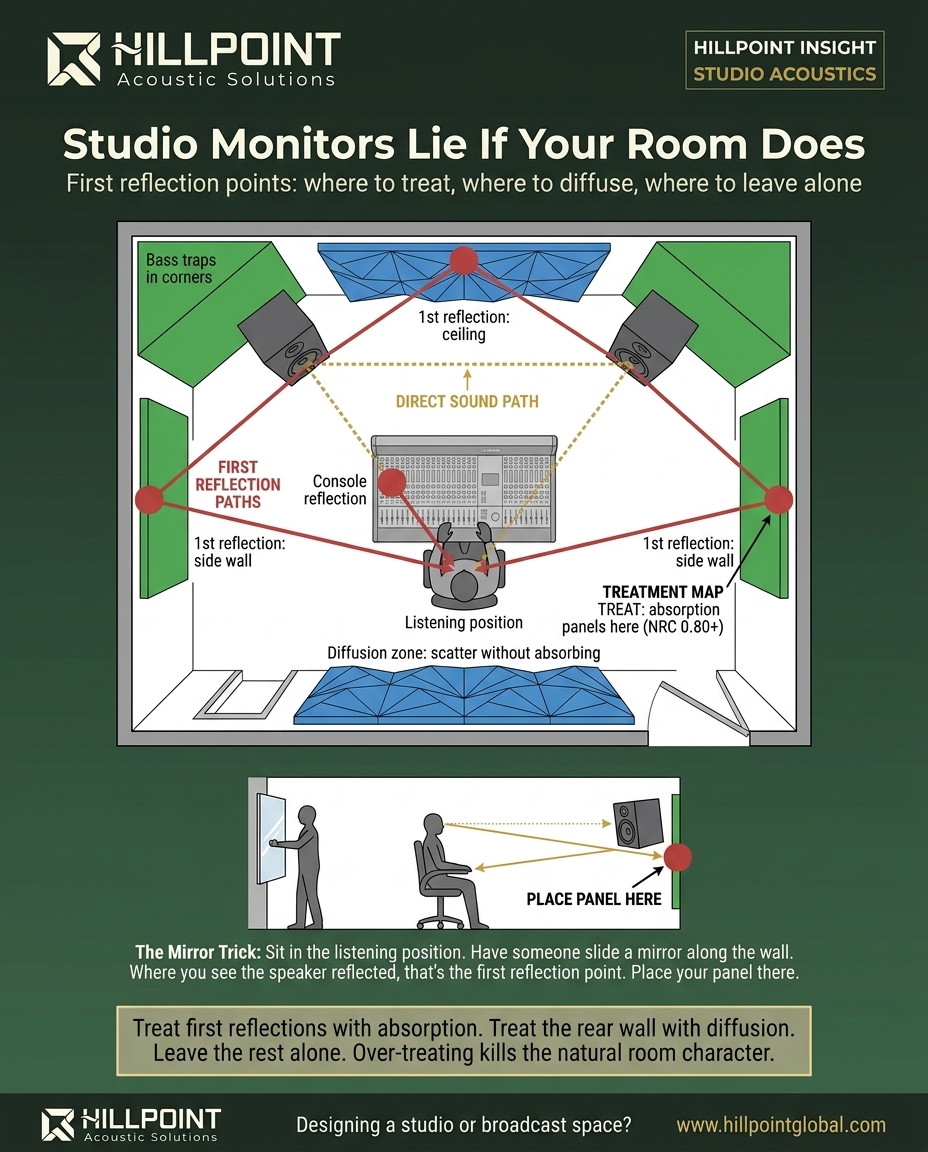
First reflection points colour your monitor sound. The mirror trick finds them. Here is where to place absorption and diffusion in a control room.
Read article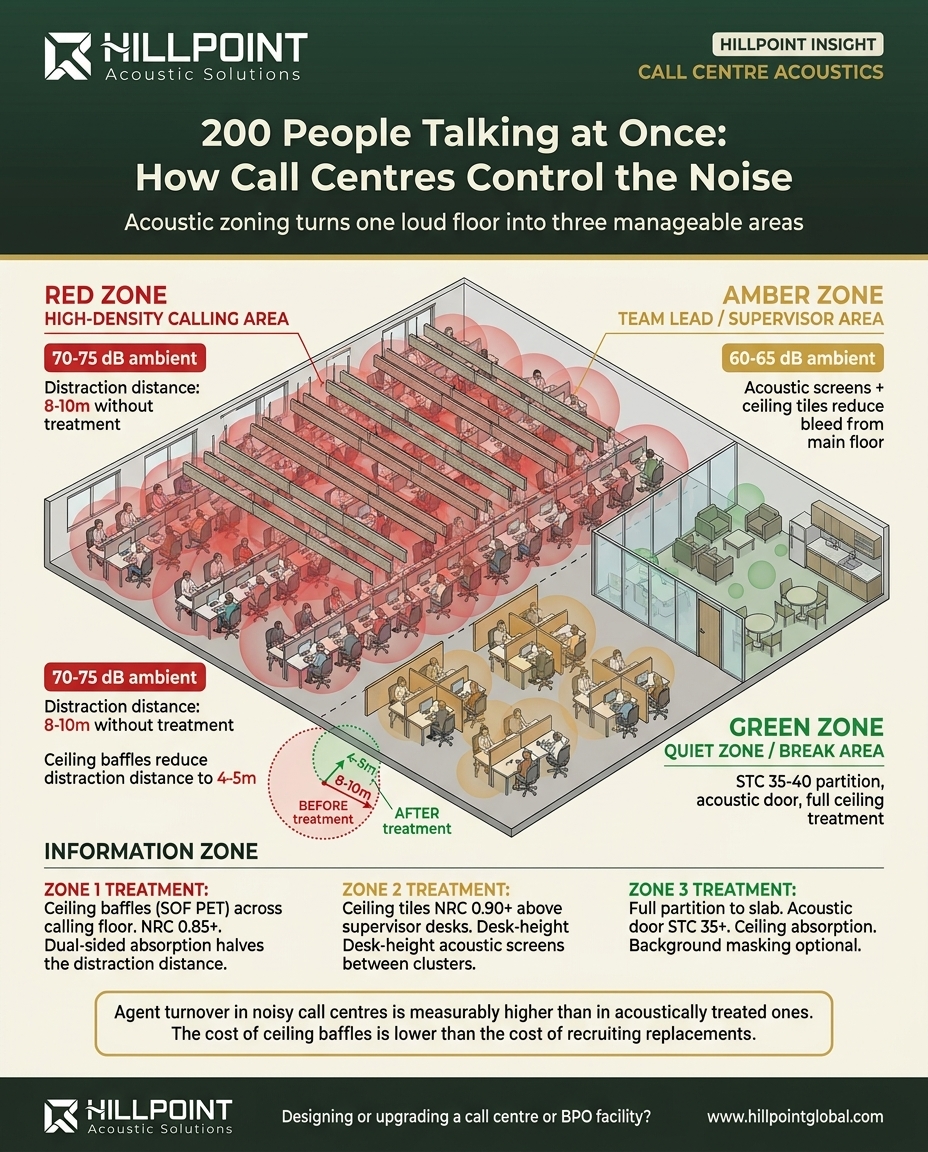
Call centres hit 70-75 dB ambient noise. Distraction distance reaches 8-10 metres. Ceiling baffles and acoustic zoning cut it in half. Here is the approach.
Read article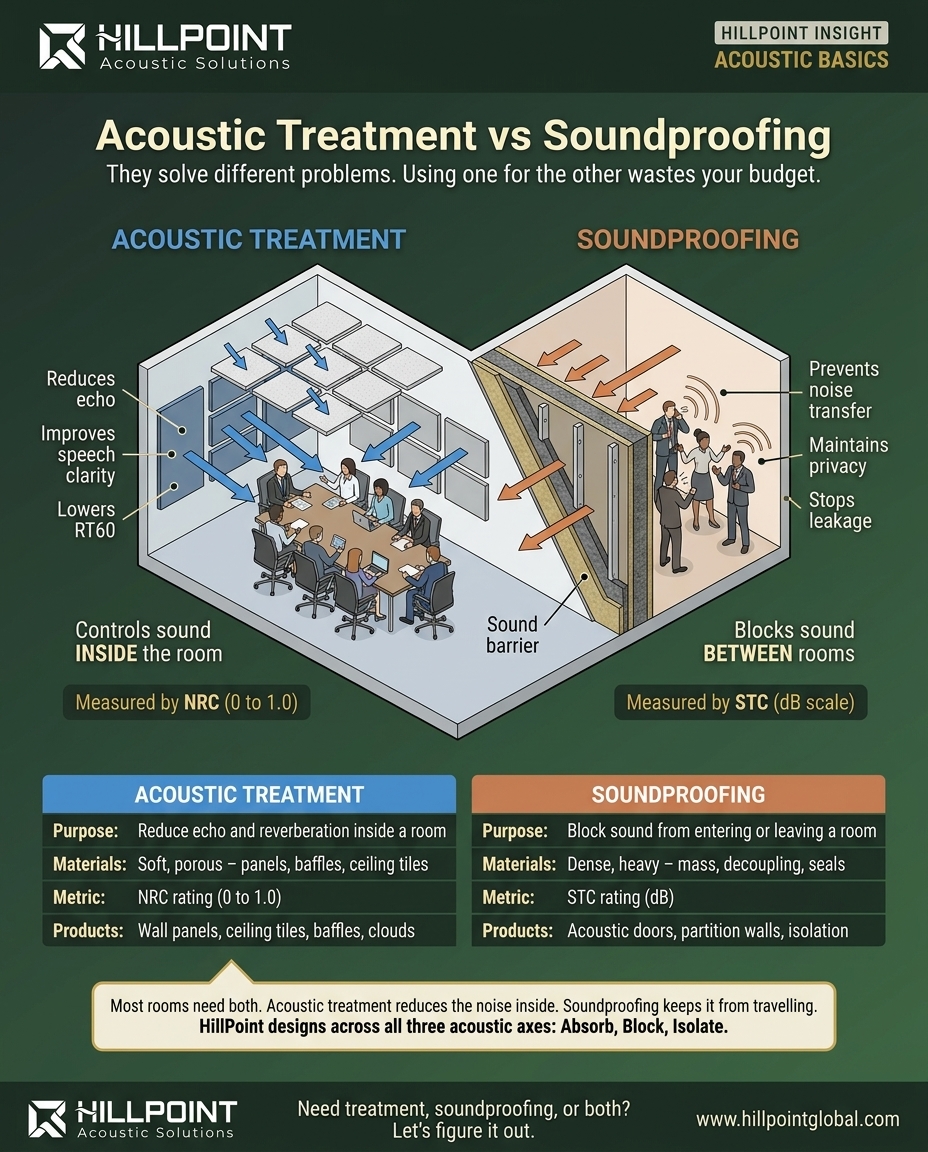
Acoustic treatment absorbs echo inside a room. Soundproofing blocks sound between rooms. Different problems, different products. Here is how to tell which you need.
Read article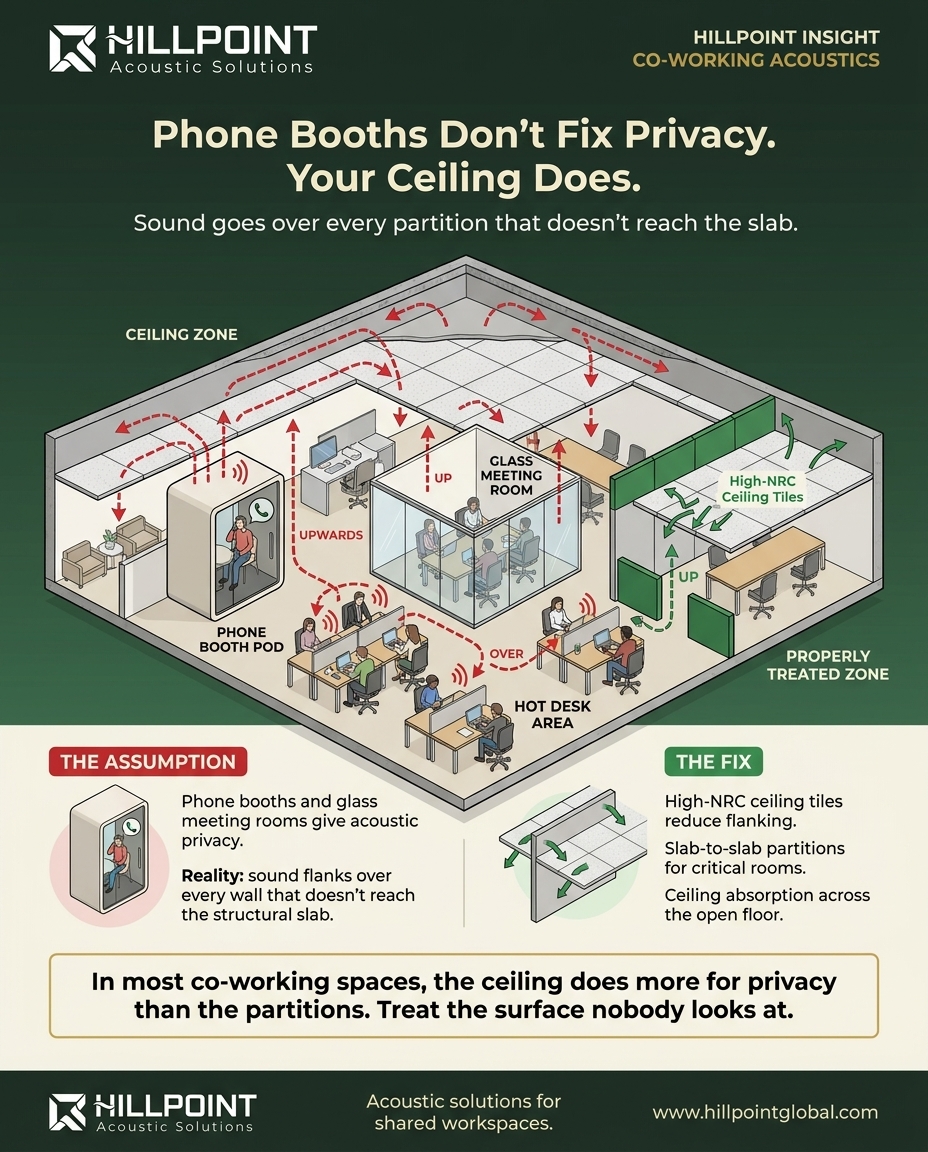
Phone booths and glass meeting rooms look private. Sound flanks over their walls through the ceiling plenum. Here is what actually delivers acoustic privacy.
Read article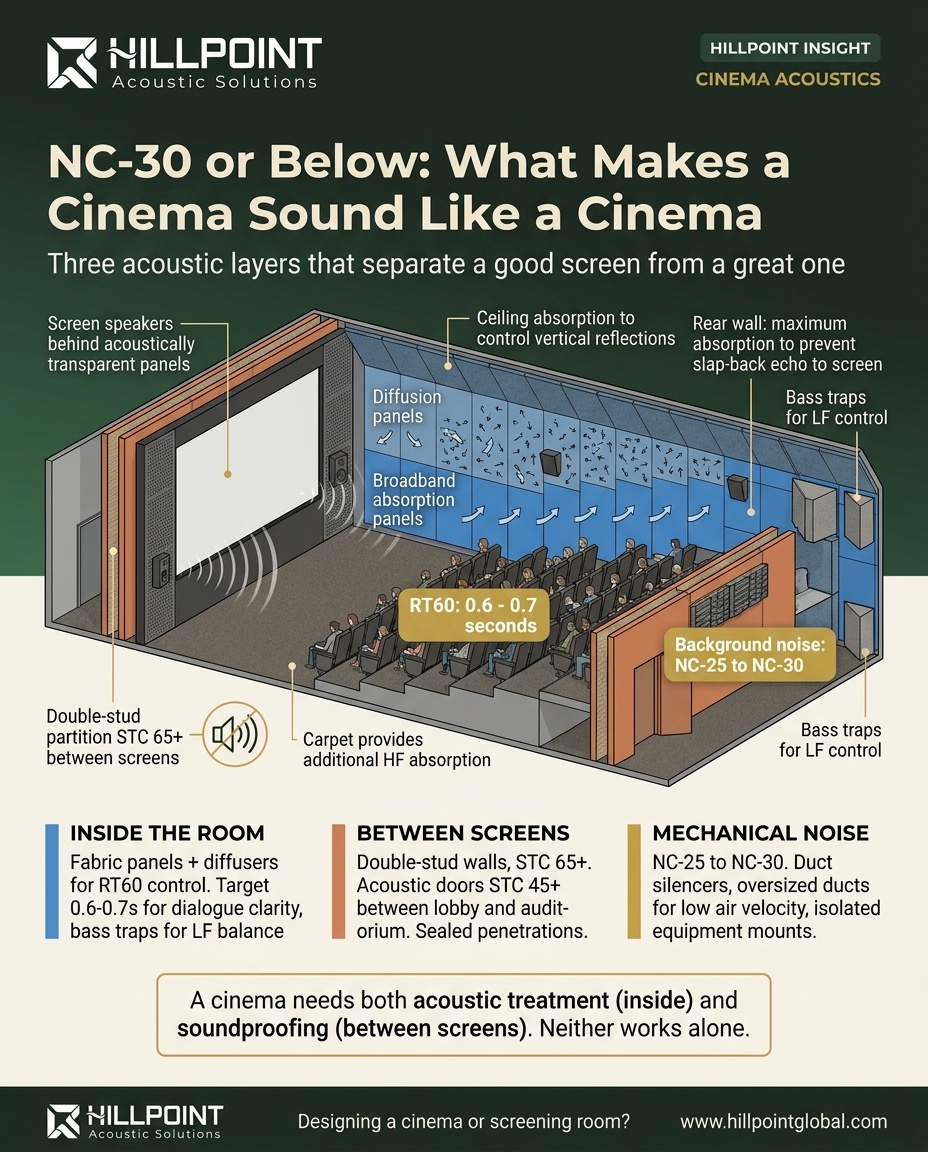
Cinema acoustic design targets RT60 of 0.6 to 0.7 seconds and NC-25 to NC-30 background noise. Here is how treatment and isolation work together.
Read article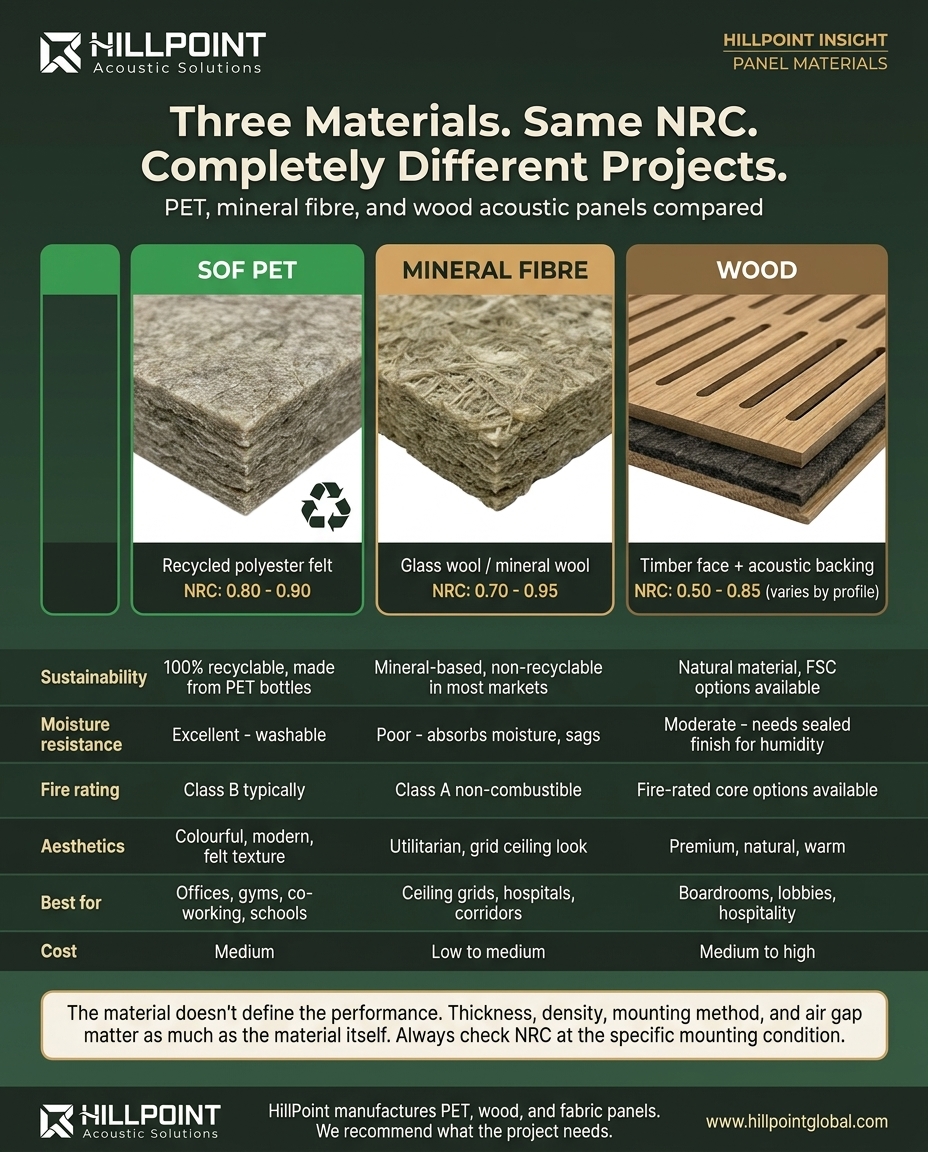
PET, mineral fibre, and wood panels can all reach similar NRC values. Sustainability, moisture resistance, fire rating, and aesthetics determine which fits your project.
Read article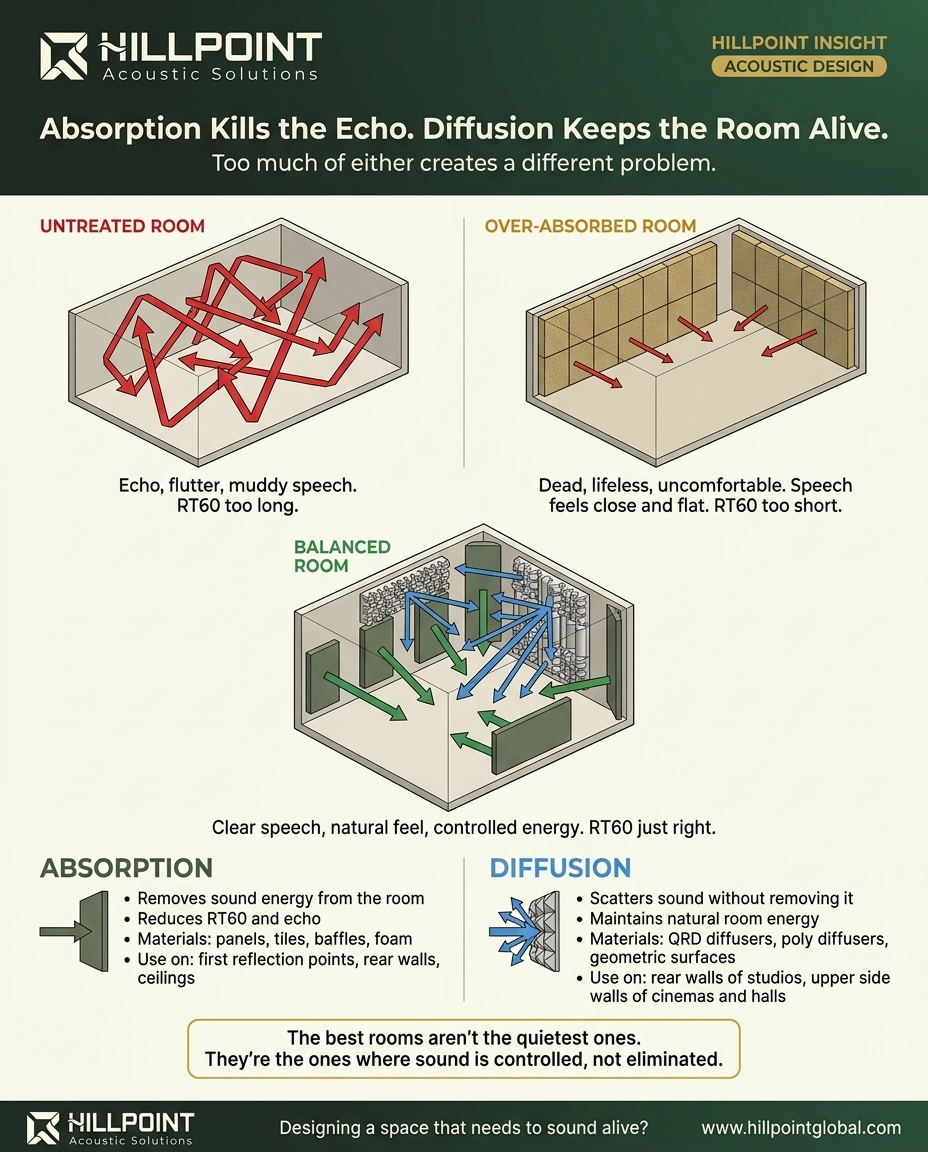
Absorption removes sound energy. Diffusion scatters it. Too much of either creates a problem. Here is how to balance both for rooms that sound natural.
Read article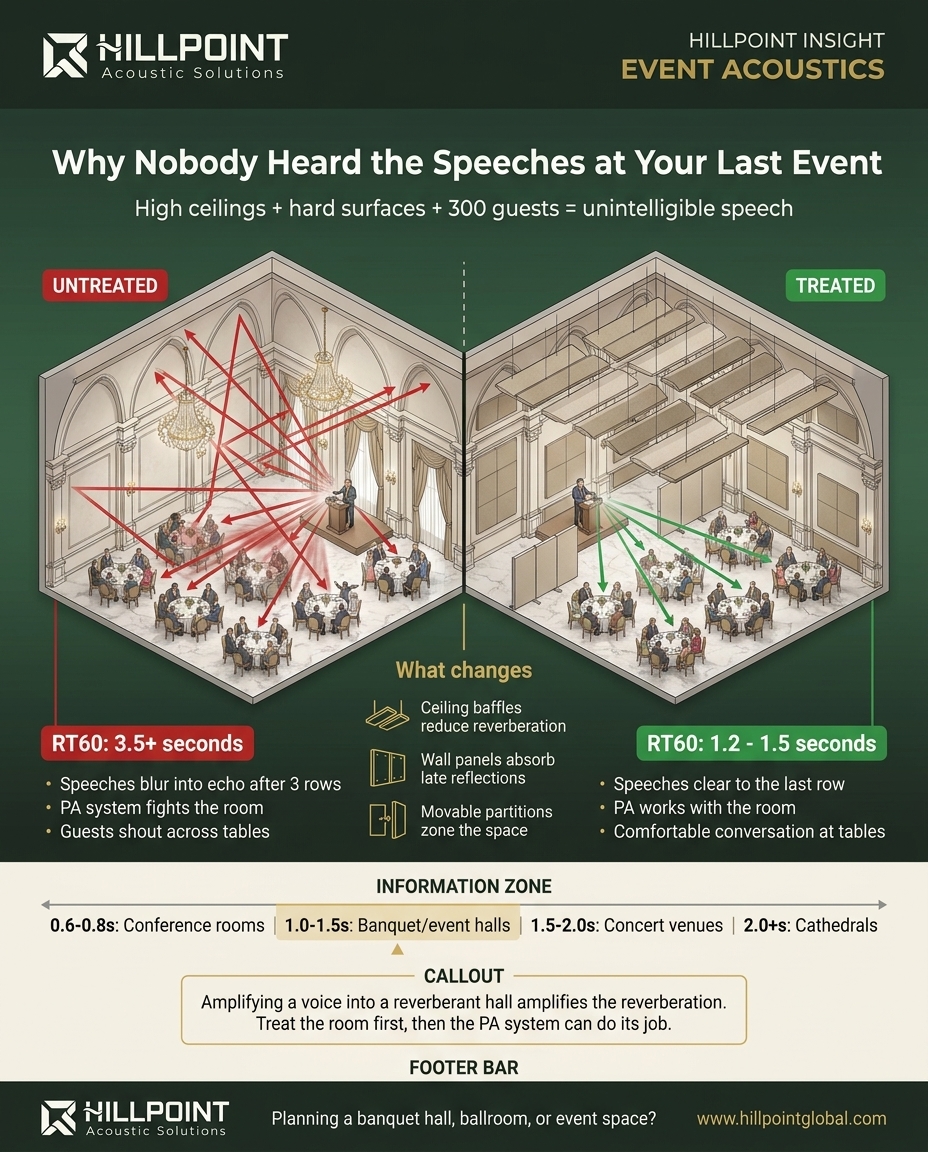
Banquet halls with 6m ceilings and hard surfaces push RT60 past 3.5 seconds. Speeches blur after three rows. Here is what treatment fixes.
Read article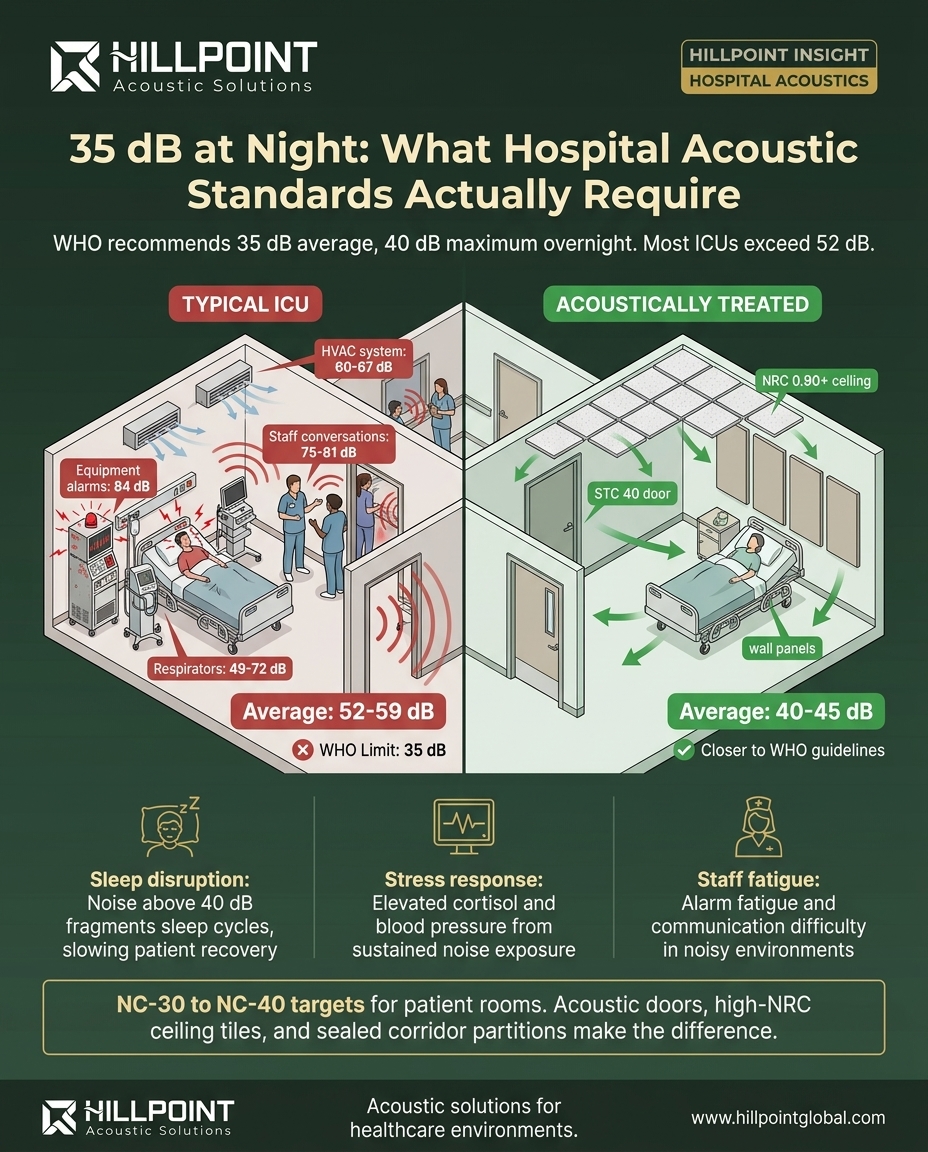
WHO recommends 35 dB overnight in hospitals. Most ICUs average 52 to 59 dB. Here is where the noise comes from and what acoustic treatment actually changes.
Read article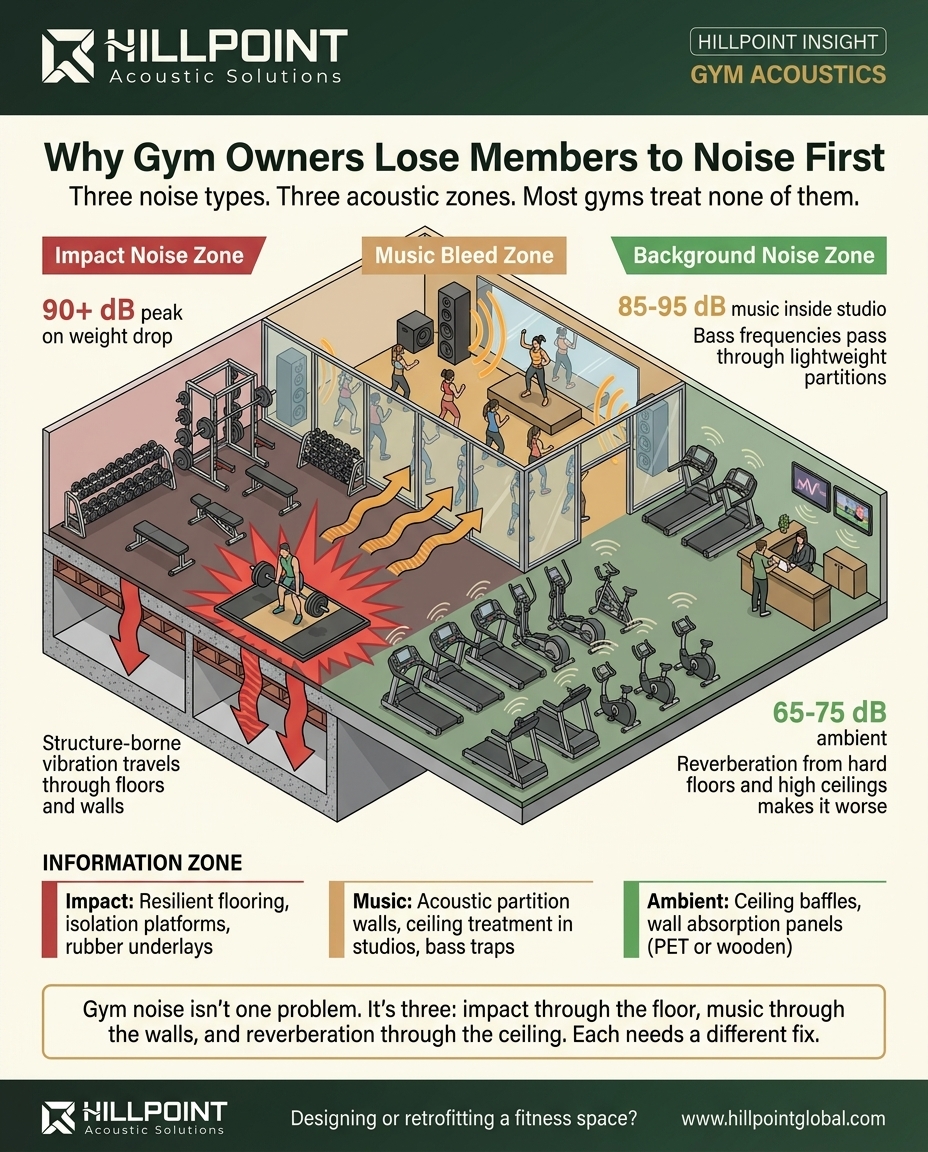
Gyms face three noise problems: impact from weights, music bleed from studios, and reverberation from hard surfaces. Here is how to treat each zone.
Read article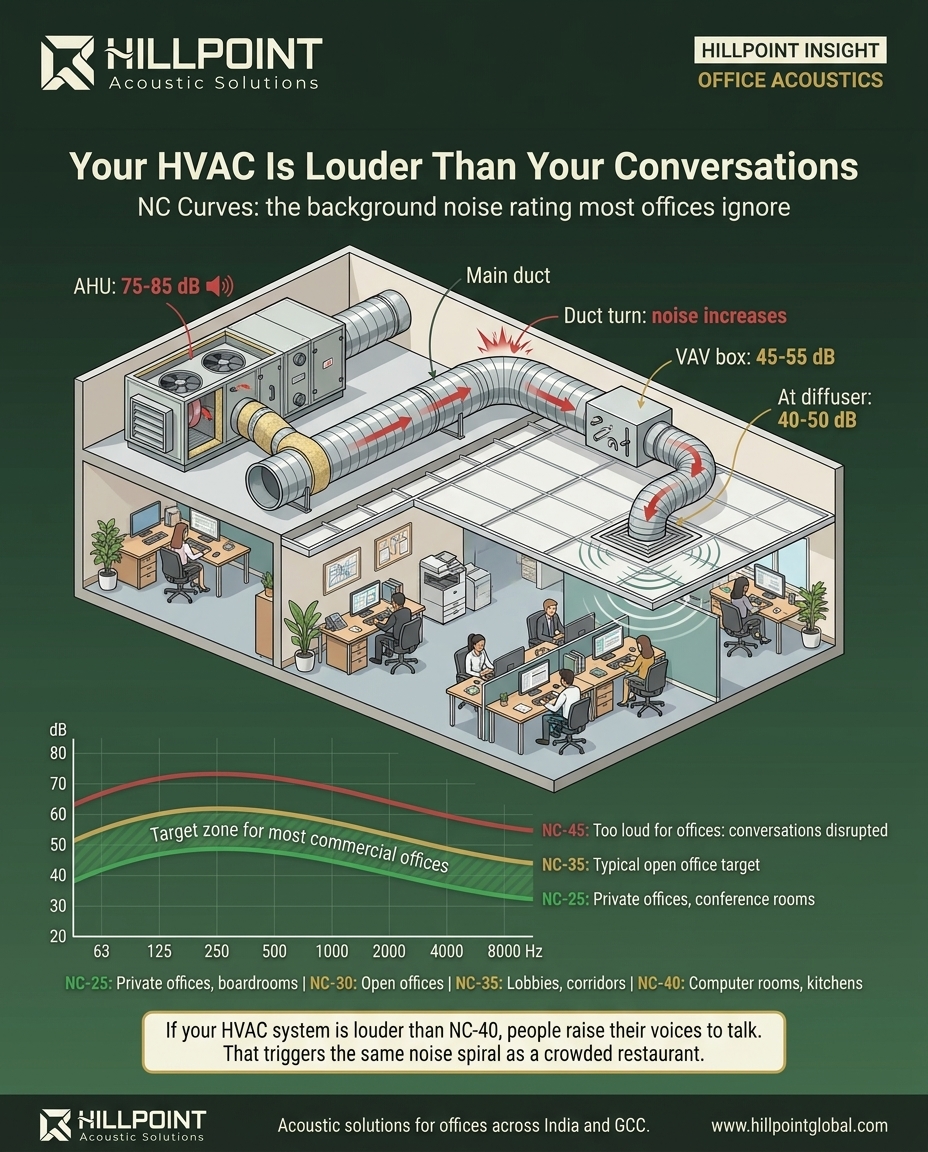
HVAC systems are the biggest source of background noise in offices. NC curves define acceptable levels. Here is what the ratings mean and how to hit them.
Read article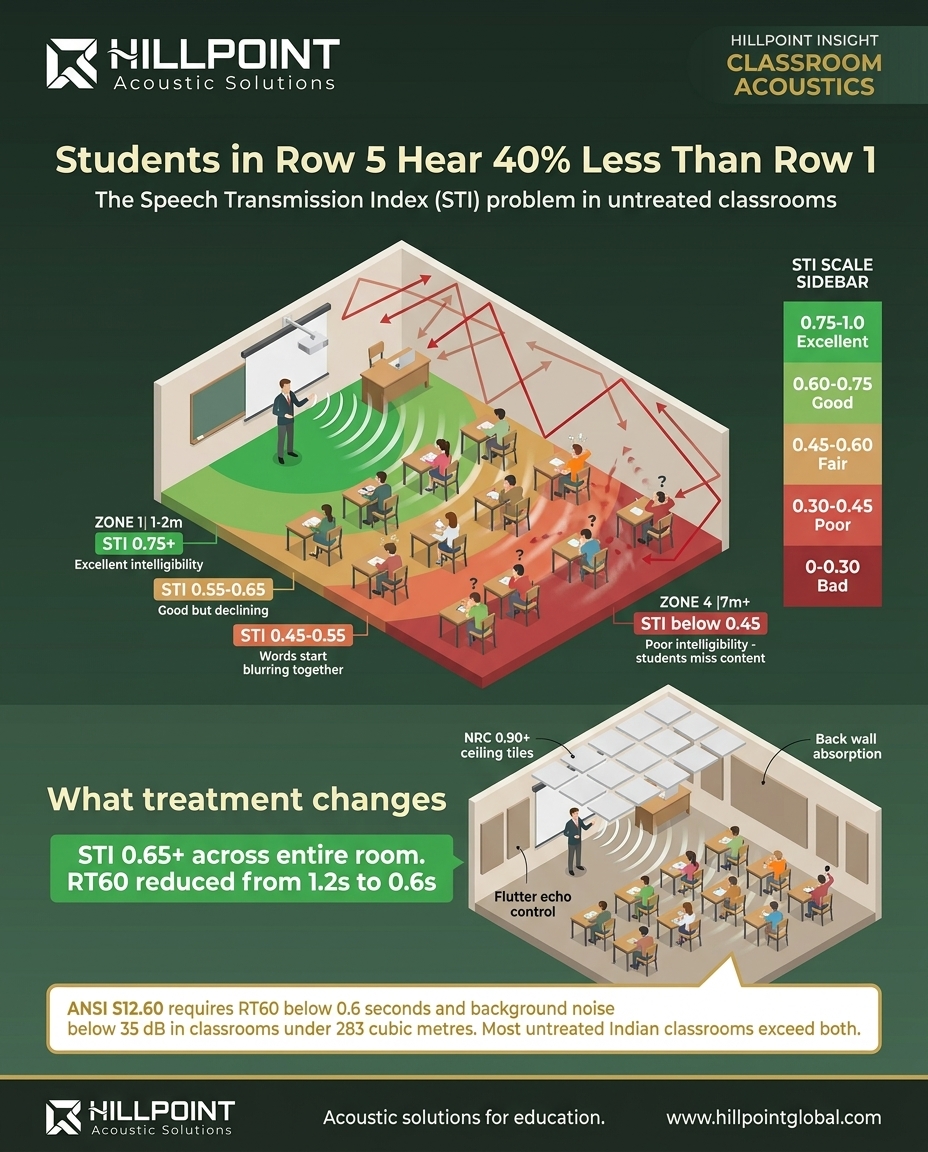
Students in the back row can lose 40 percent of speech clarity in untreated classrooms. STI and RT60 explain why. Here is what treatment fixes.
Read article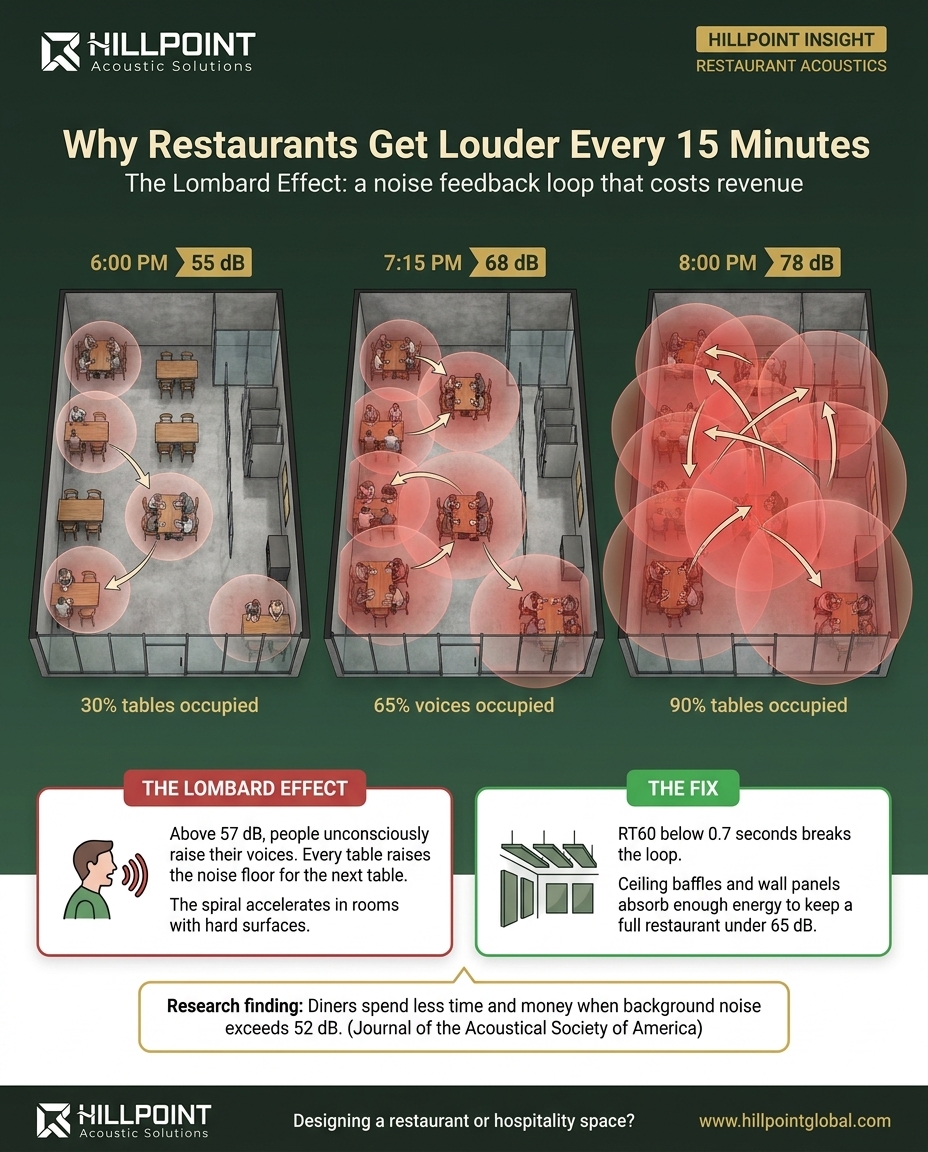
Restaurant noise levels can climb from 55 dB to 78 dB in two hours. The Lombard Effect creates a feedback loop that acoustic treatment breaks. Here is what works.
Read article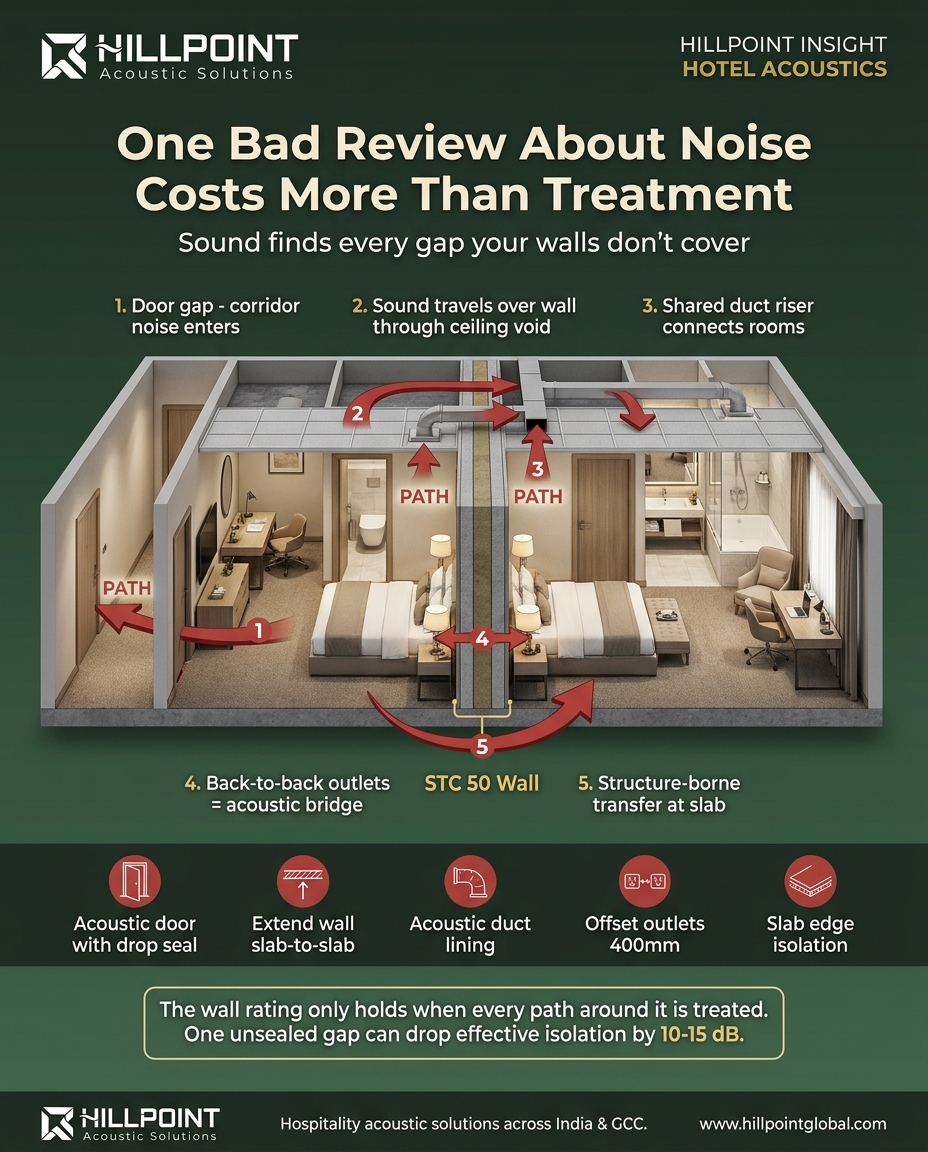
STC 50 walls don't help if sound flanks through door gaps, ducts, and back-to-back outlets. Here are the noise paths in hotel rooms and how to treat each one.
Read article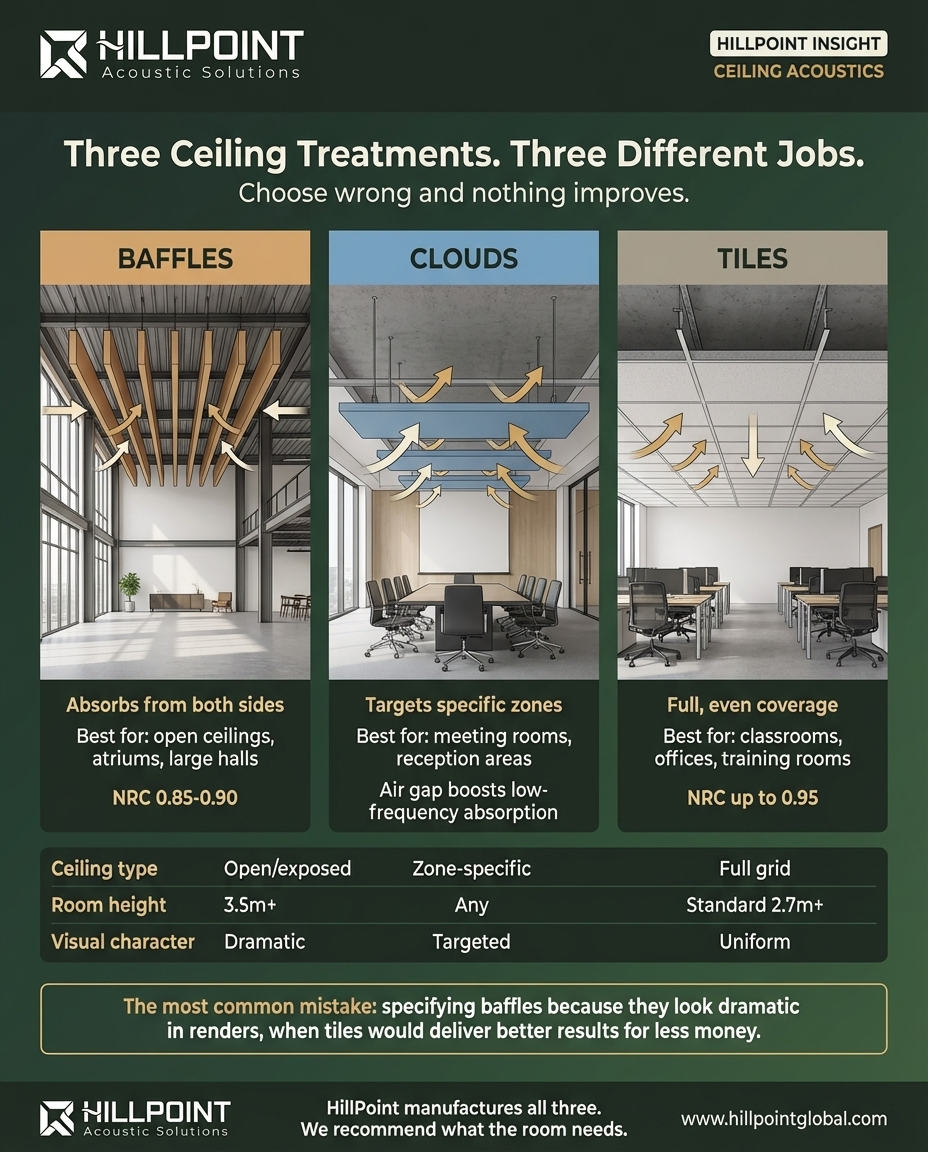
Baffles, clouds, and ceiling tiles all absorb sound. They solve different problems. Here is when to spec each one and what happens when you pick wrong.
Read article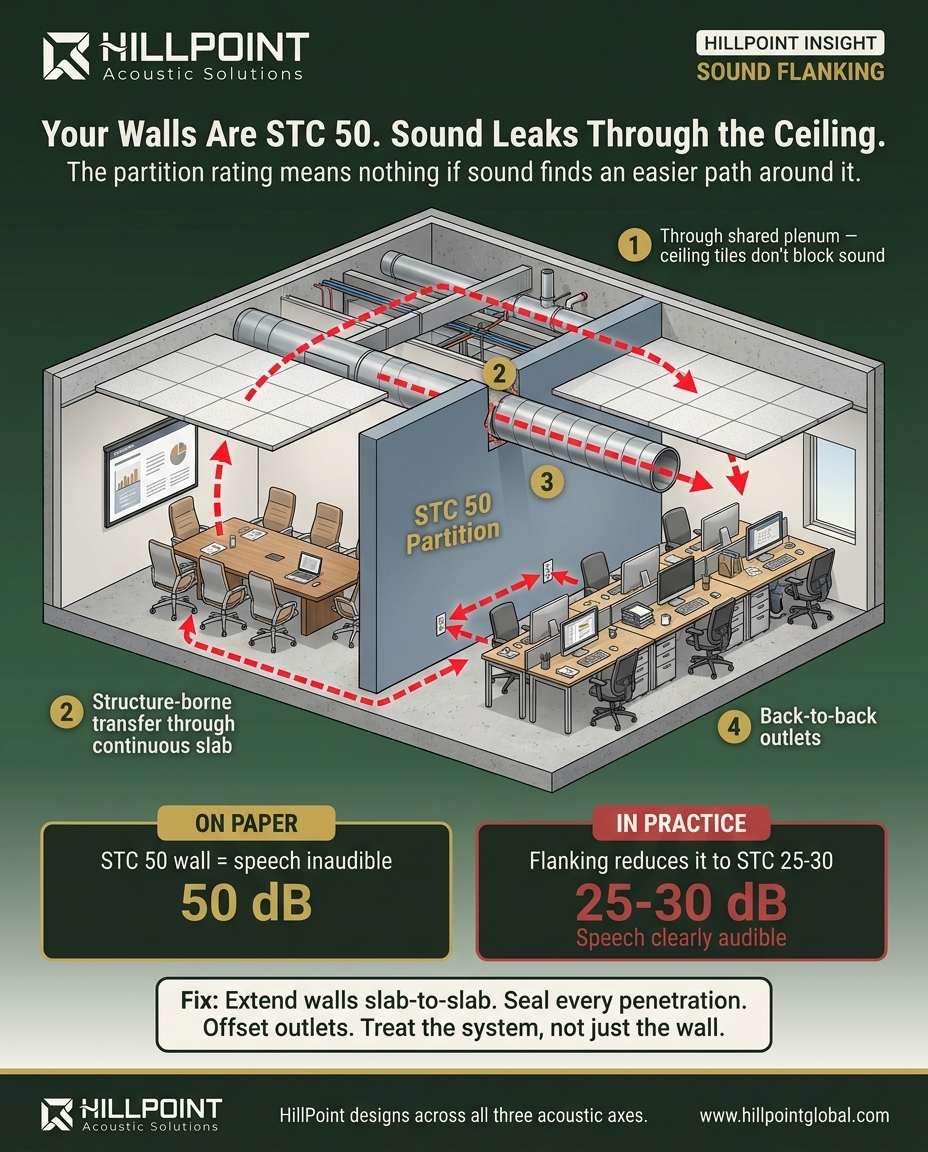
Partition walls rated STC 50 often deliver STC 25 to 30 in practice because sound flanks over, under, and around them. Here are the paths and fixes.
Read article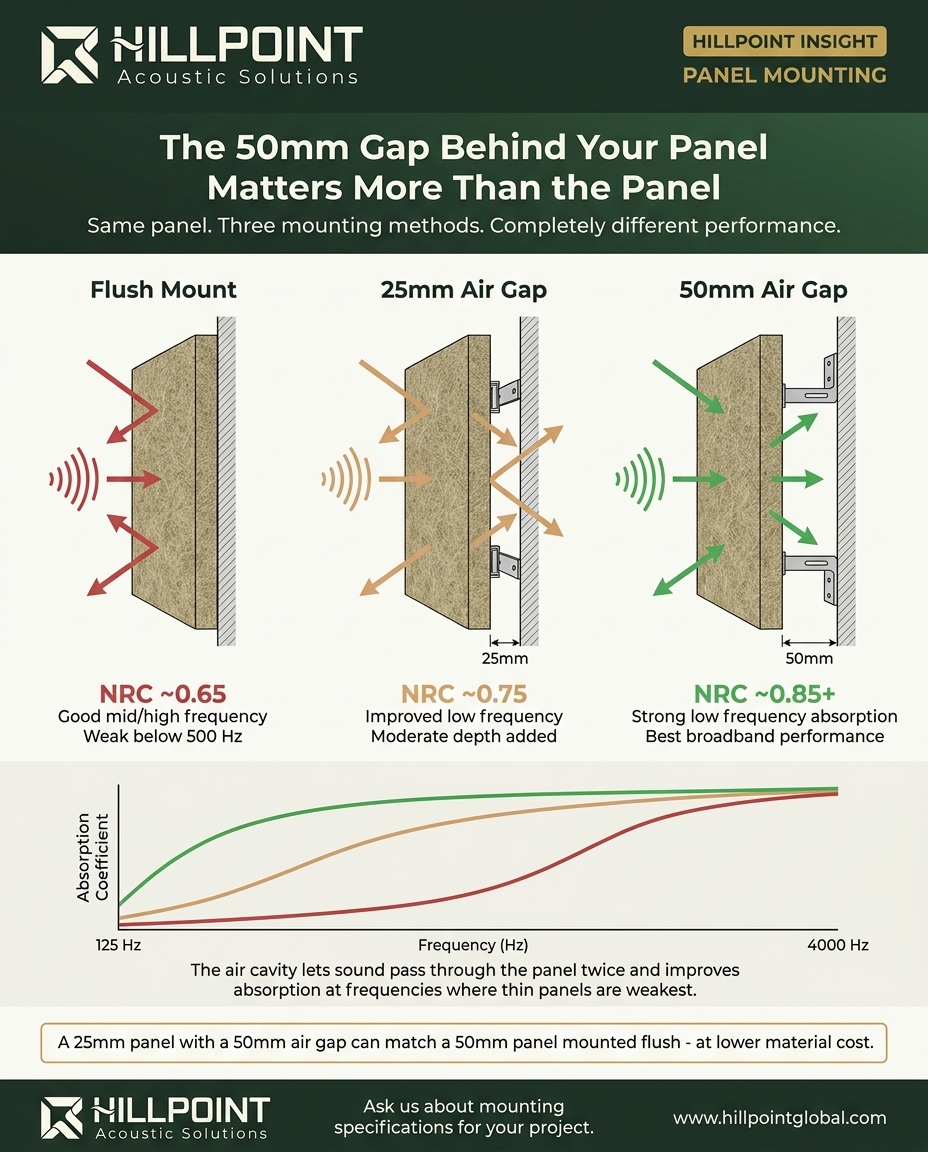
A 50mm air gap behind an acoustic panel can improve low-frequency absorption as much as doubling the panel thickness. Here is how mounting method changes NRC.
Read article
Domed ceilings and marble floors push mosque RT60 past 4 seconds. Here is how acoustic treatment restores speech clarity while preserving architectural identity.
Read article
SOF PET panels turn recycled bottles into high-NRC acoustic treatment with lower water use, lower energy use, zero VOC emissions, and a practical end-of-life recycling path.
Read article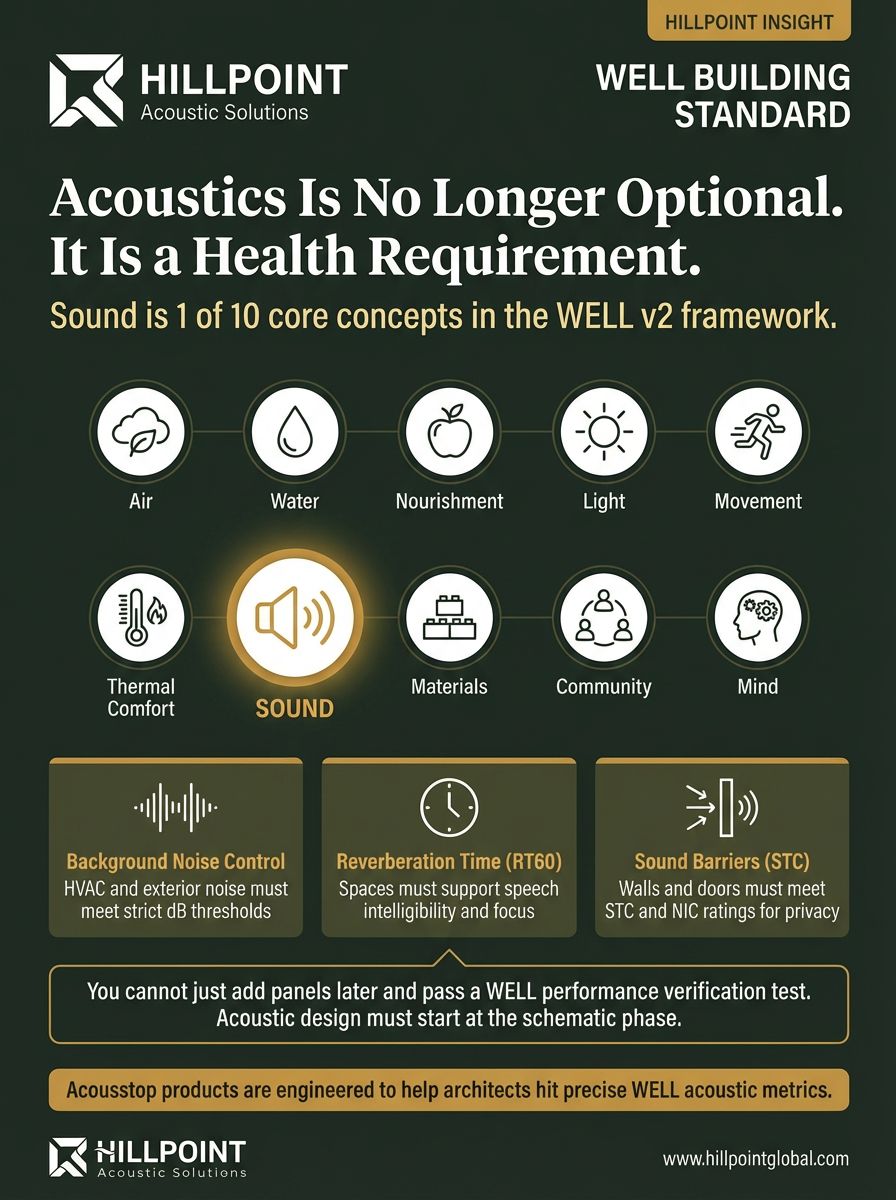
WELL v2 treats sound as a core building-health requirement, which means acoustic planning has to start early enough to shape partitions, doors, ceilings, and HVAC noise targets.
Read article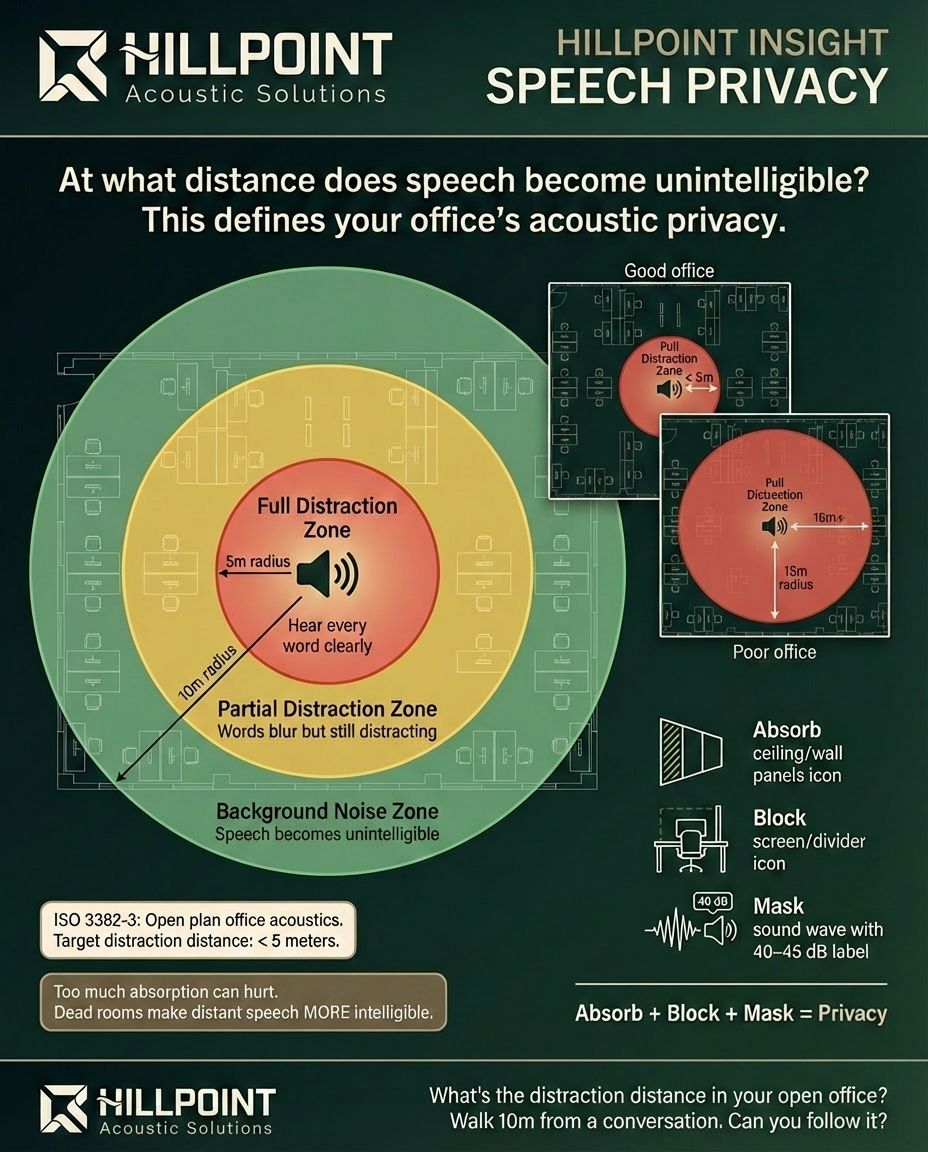
Distraction distance explains why some open offices leak conversations across the floor and why absorption, barriers, and controlled background sound have to work together.
Read article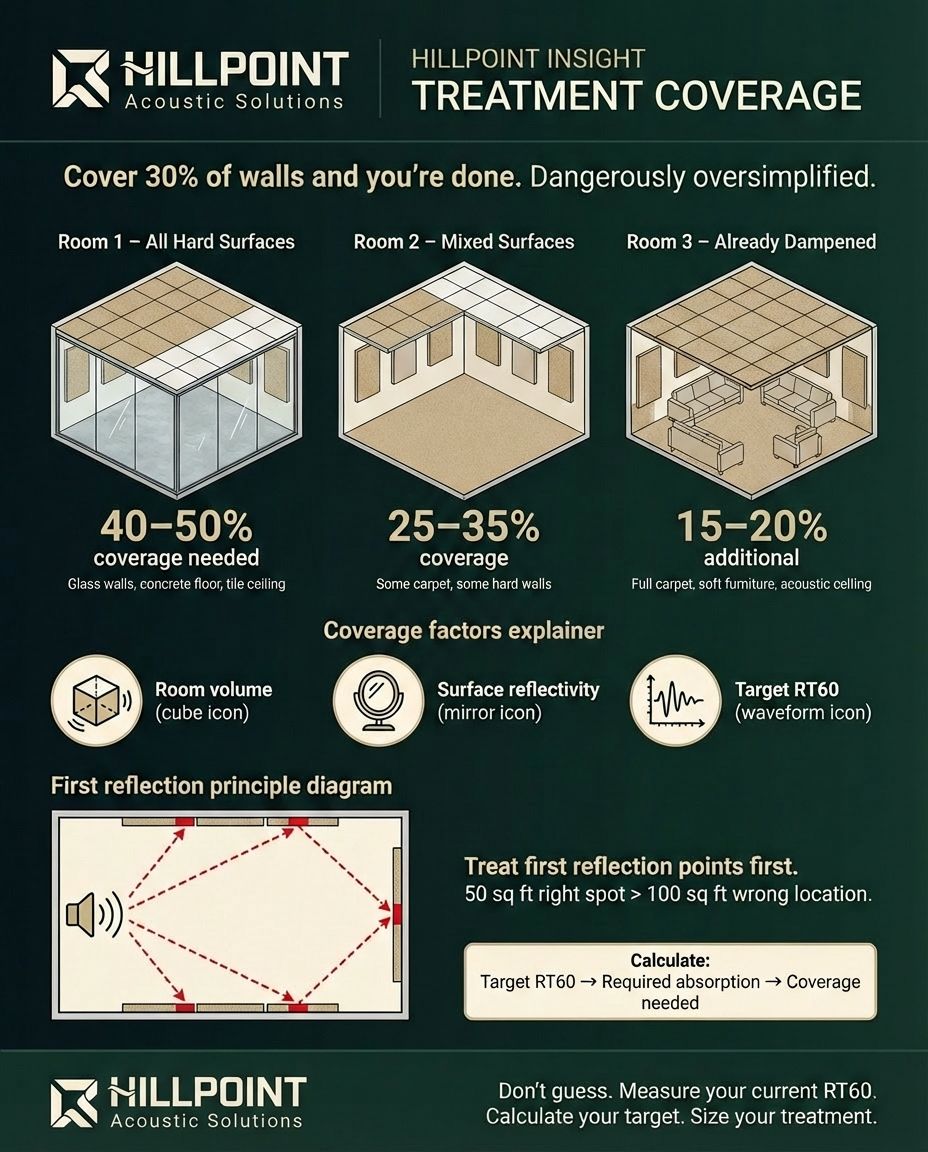
Panel coverage is not a fixed percentage. Room volume, existing finishes, target RT60, and first reflection points decide how much treatment a space actually needs.
Read article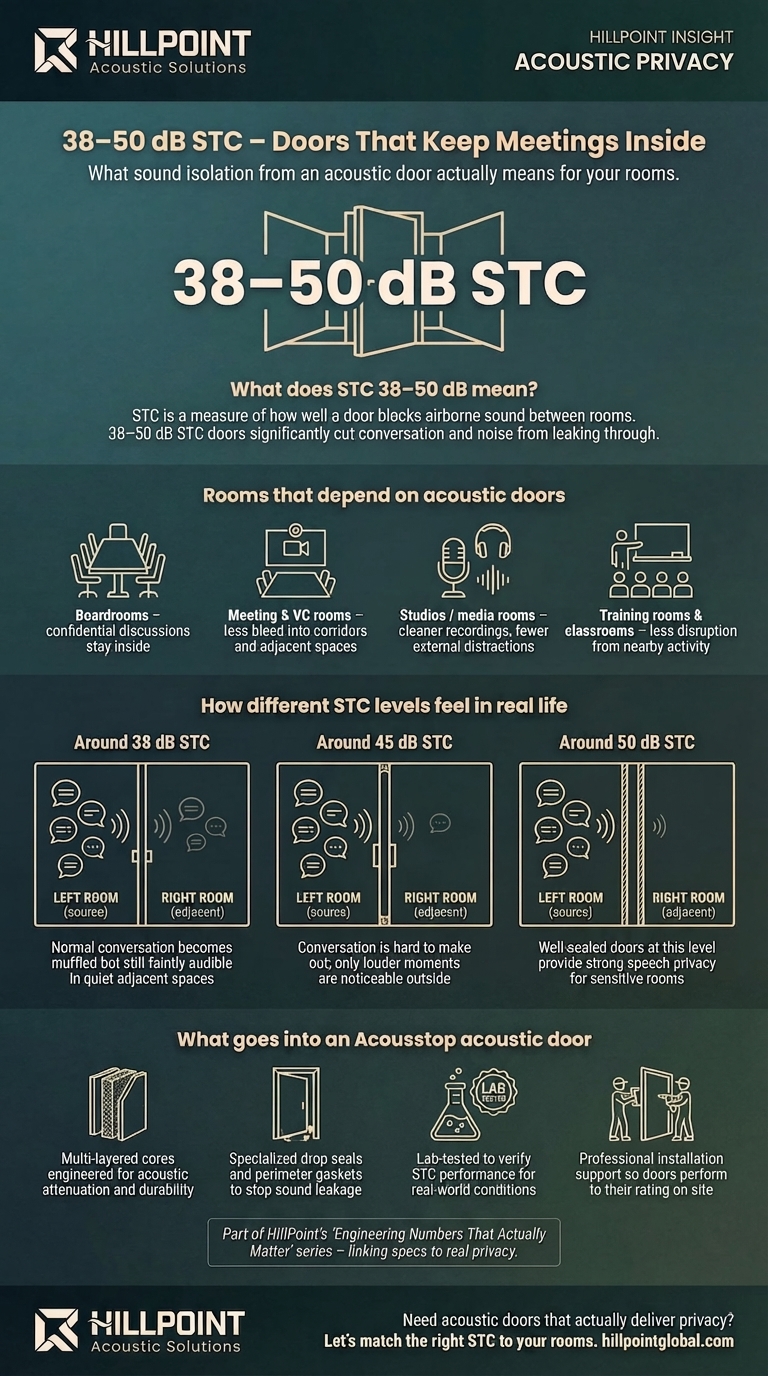
STC ratings turn door privacy into a measurable specification, but the rating only matters when the core, seals, frame, and installation all work together.
Read article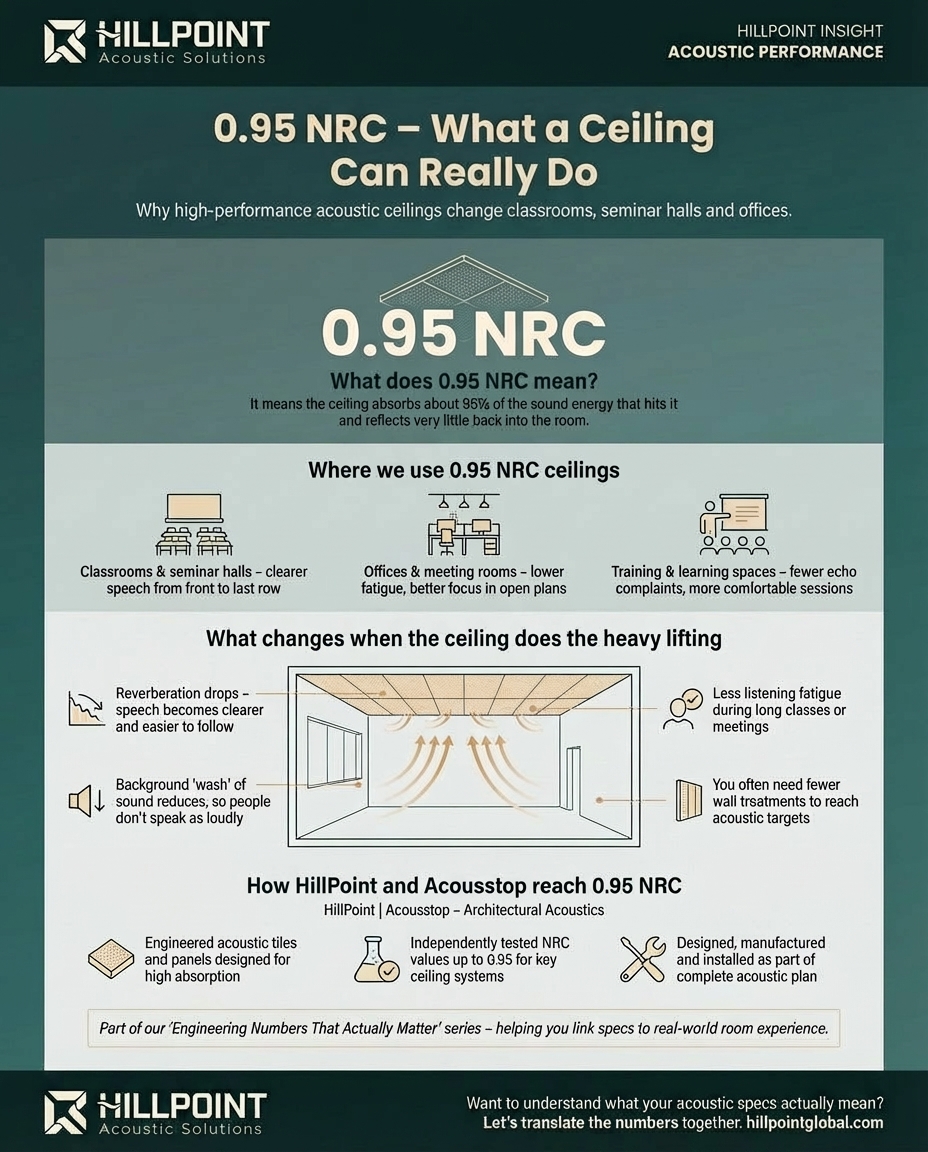
High-NRC ceiling panels change a room at the surface that matters most, lowering reverberation, improving speech clarity, and reducing the need for excessive wall treatment.
Read article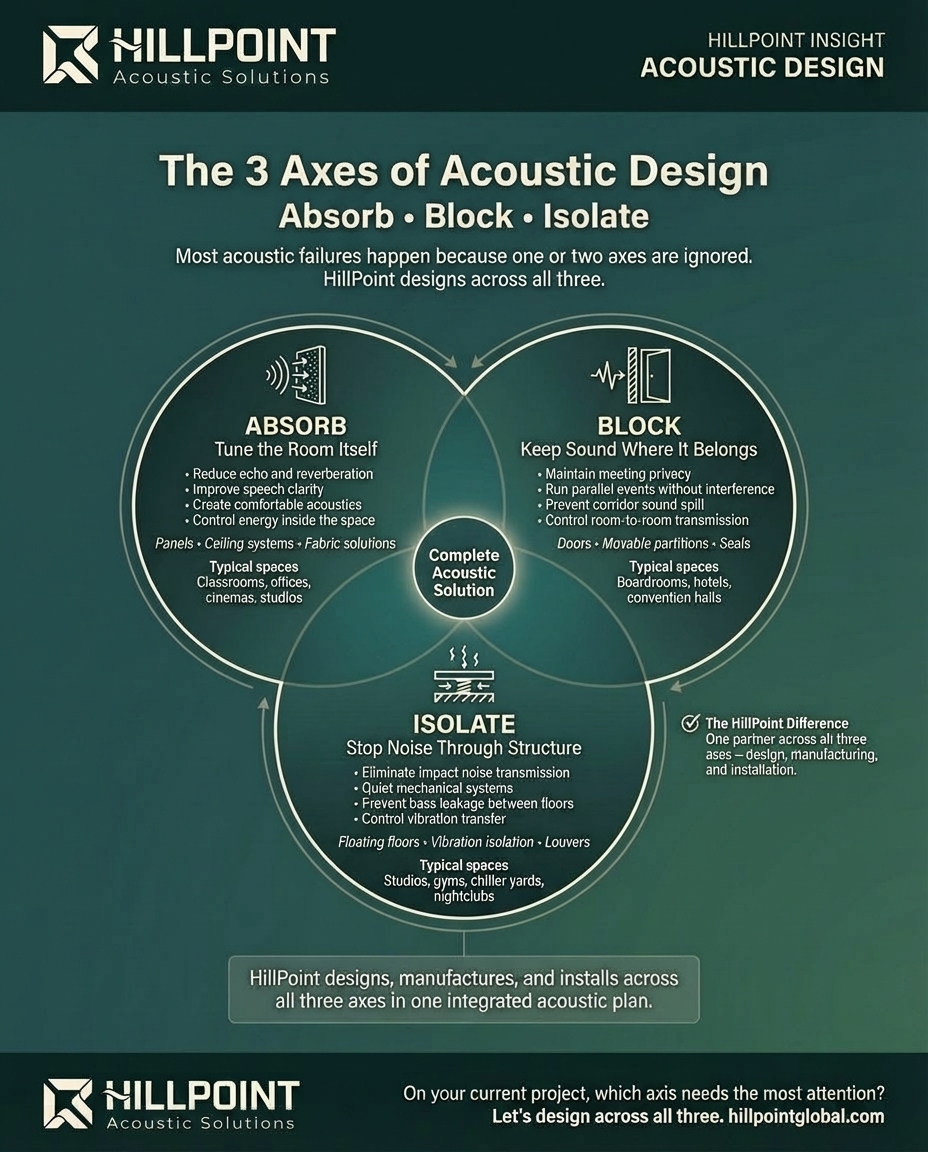
Acoustic treatment, sound blocking, and vibration isolation solve different problems. Strong acoustic design only works when all three axes are considered together.
Read article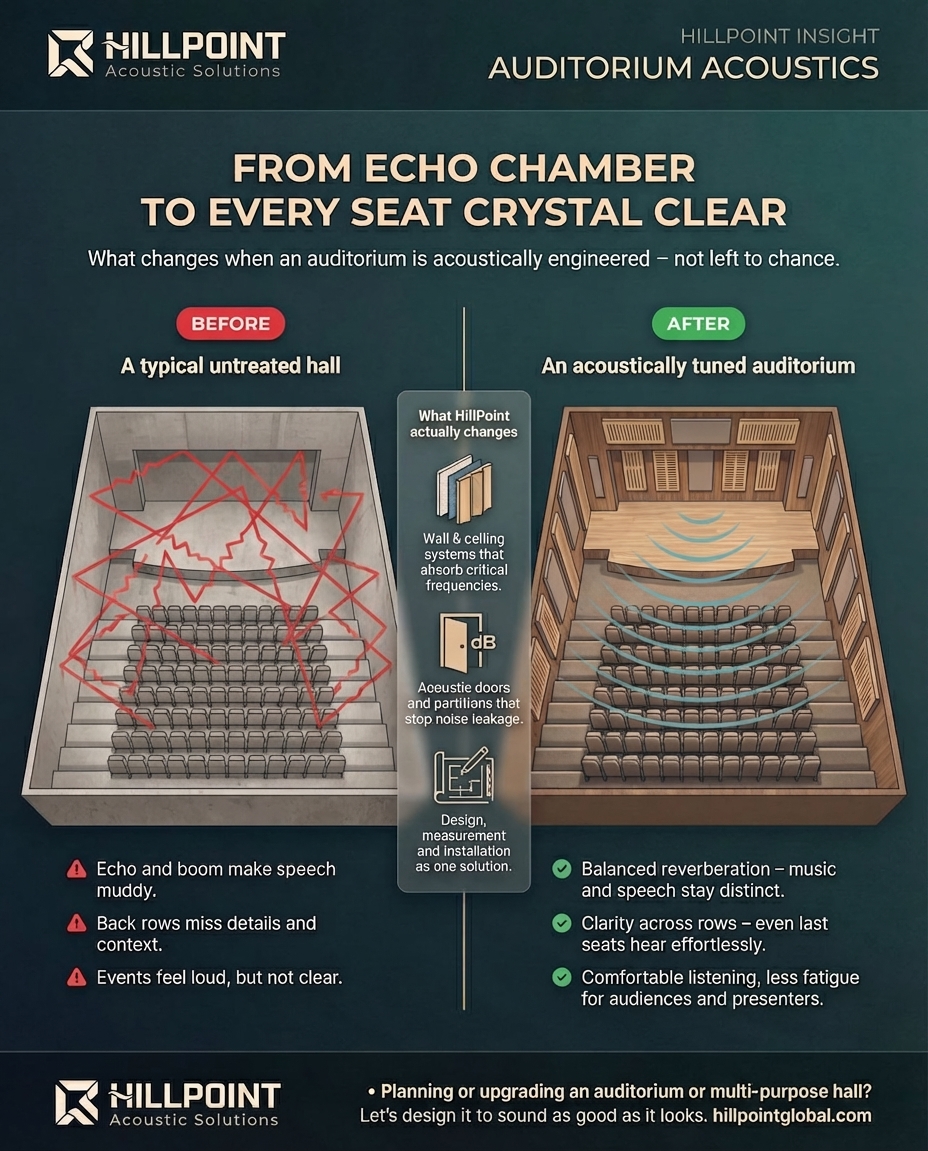
Auditorium acoustics are judged from the back row: speech must stay clear, reverberation must stay controlled, and the room still needs enough life for events.
Read article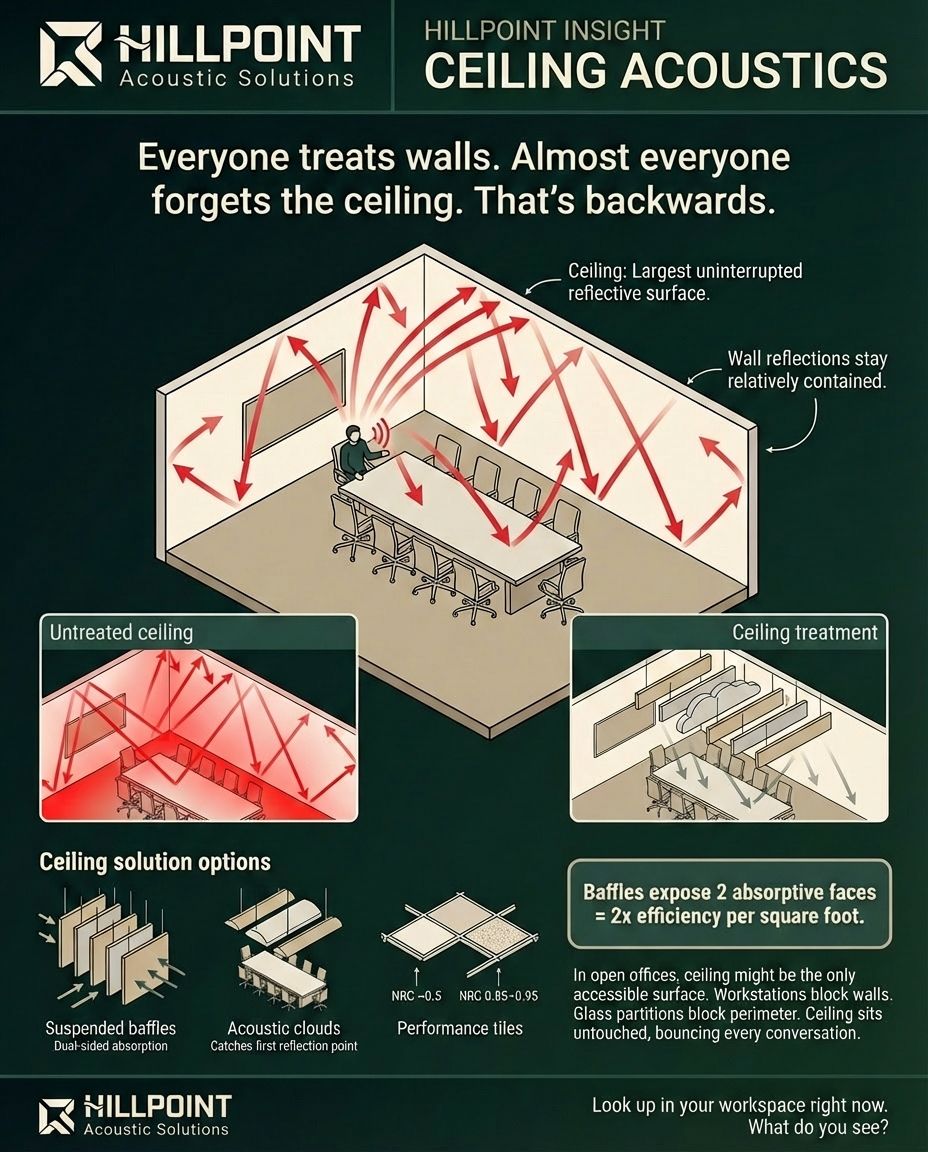
In most offices, the ceiling spreads speech and background noise farther than the walls, which is why ceiling treatment often delivers the biggest acoustic improvement.
Read article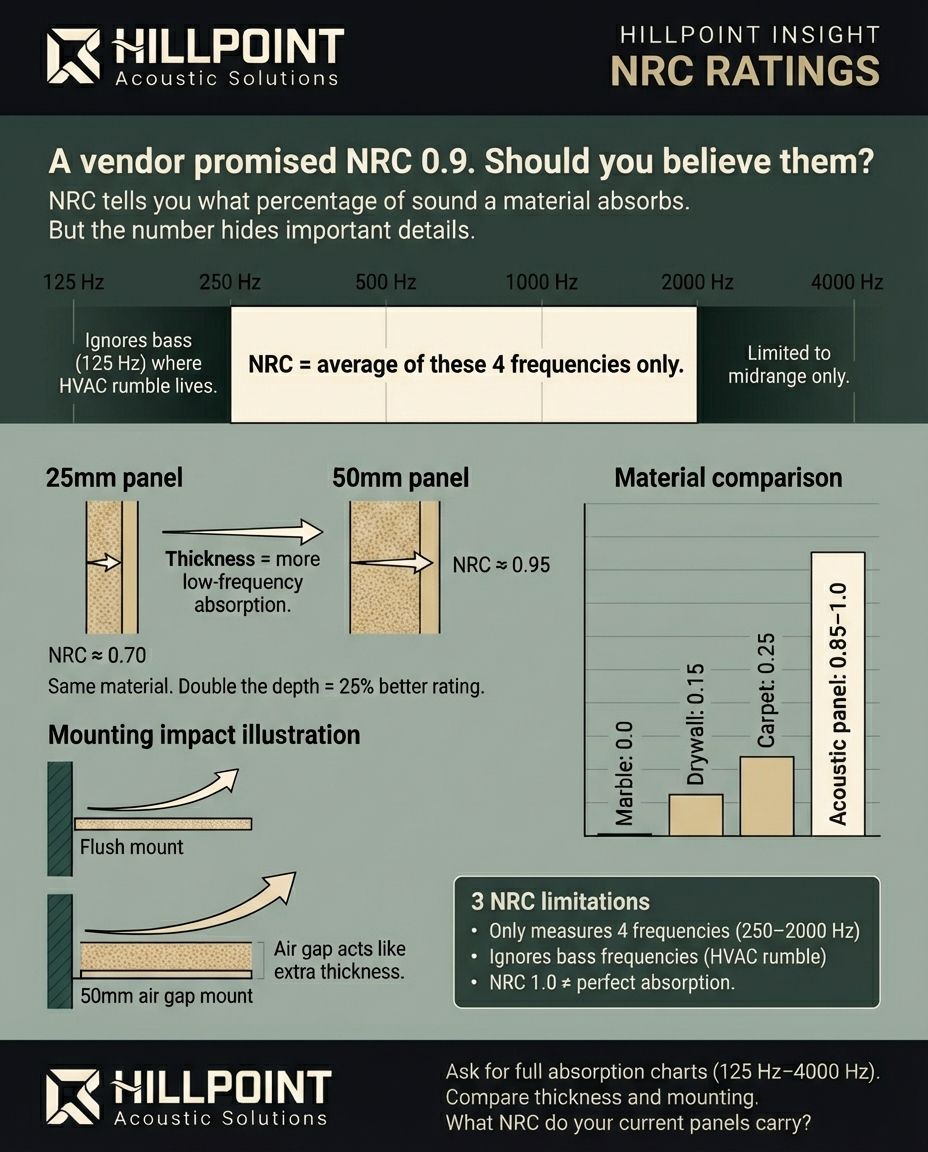
NRC is a useful shorthand for acoustic absorption, but it leaves out the frequency range, panel thickness, and mounting details that decide how a product performs in a real room.
Read article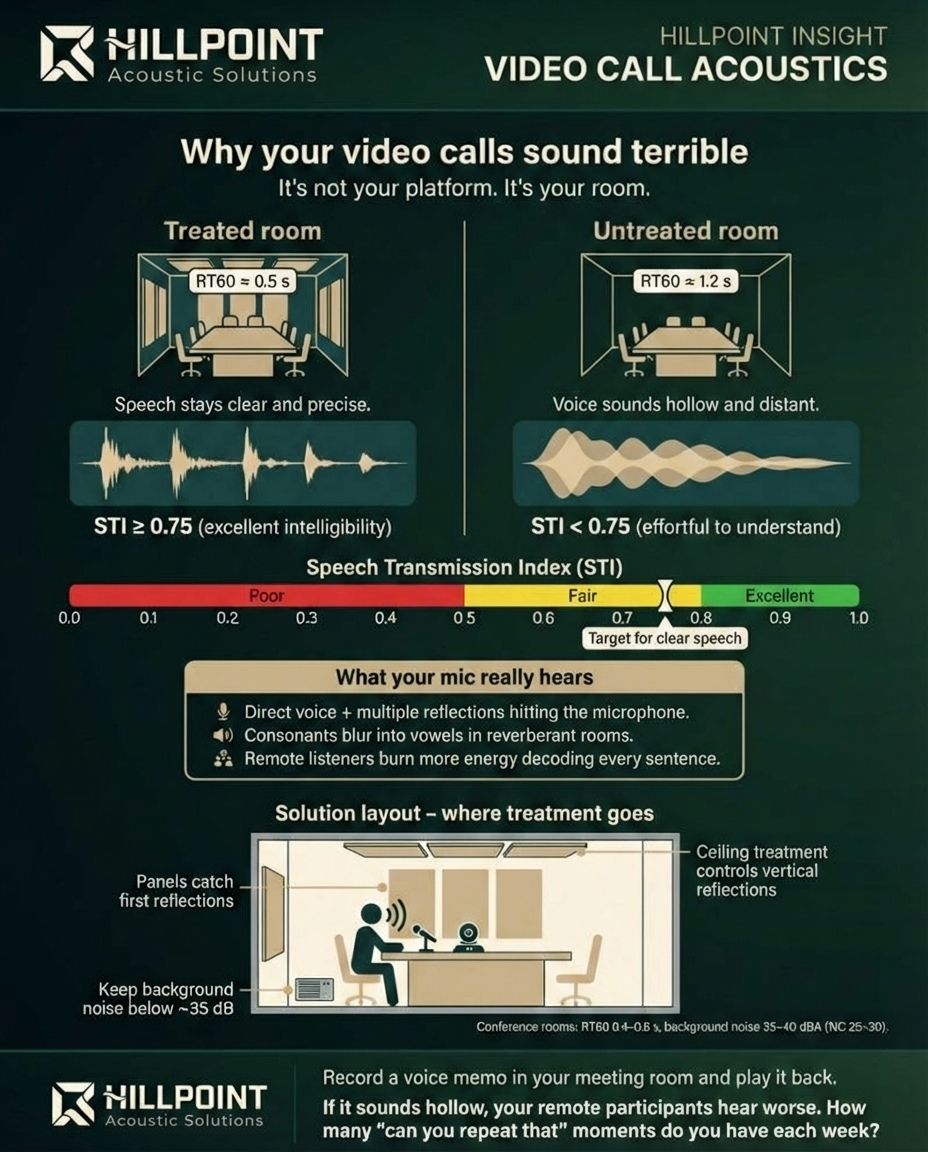
Most bad video-call audio is not the platform or the microphone. It is the conference room sending reflections into the mic.
Read article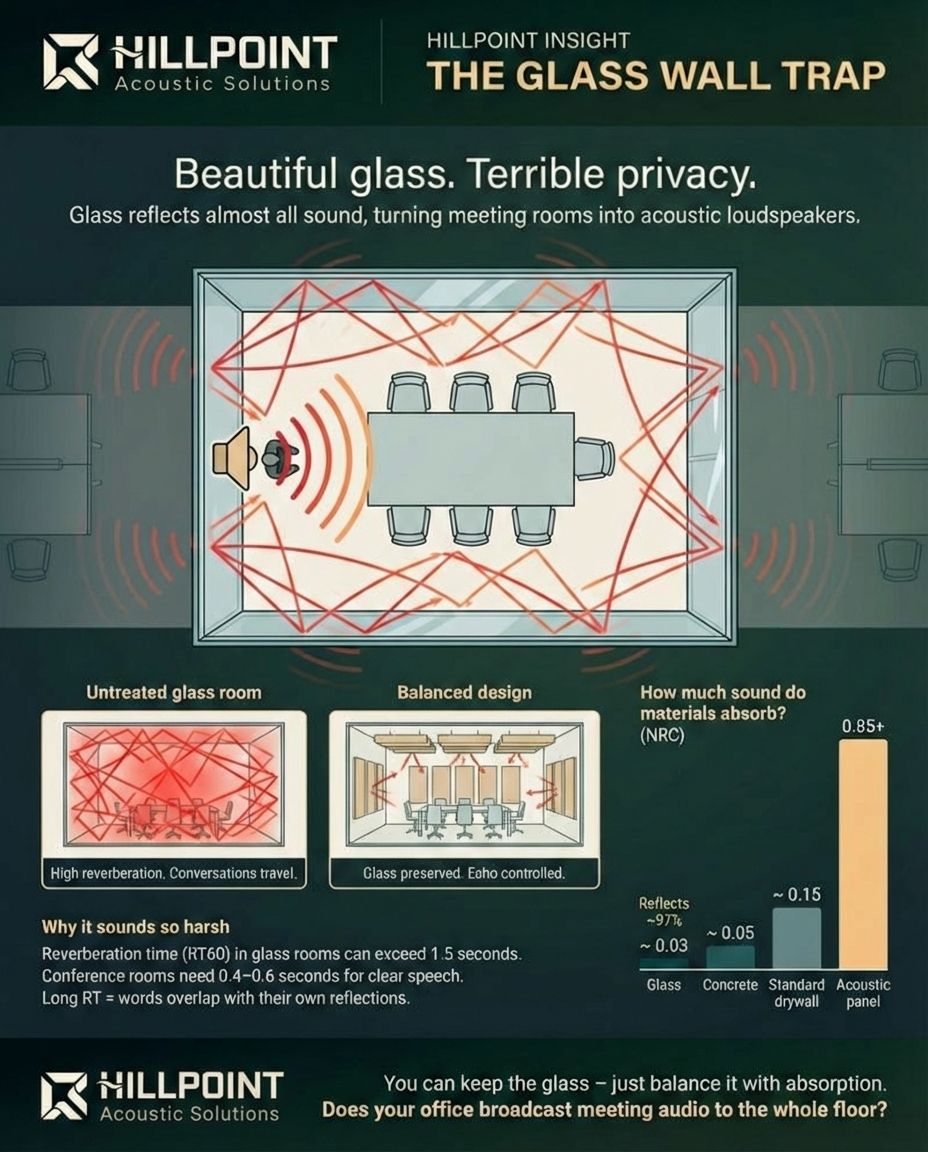
Glass makes offices look open and modern, but it reflects almost all sound and can turn meeting rooms into loudspeakers for the whole floor.
Read article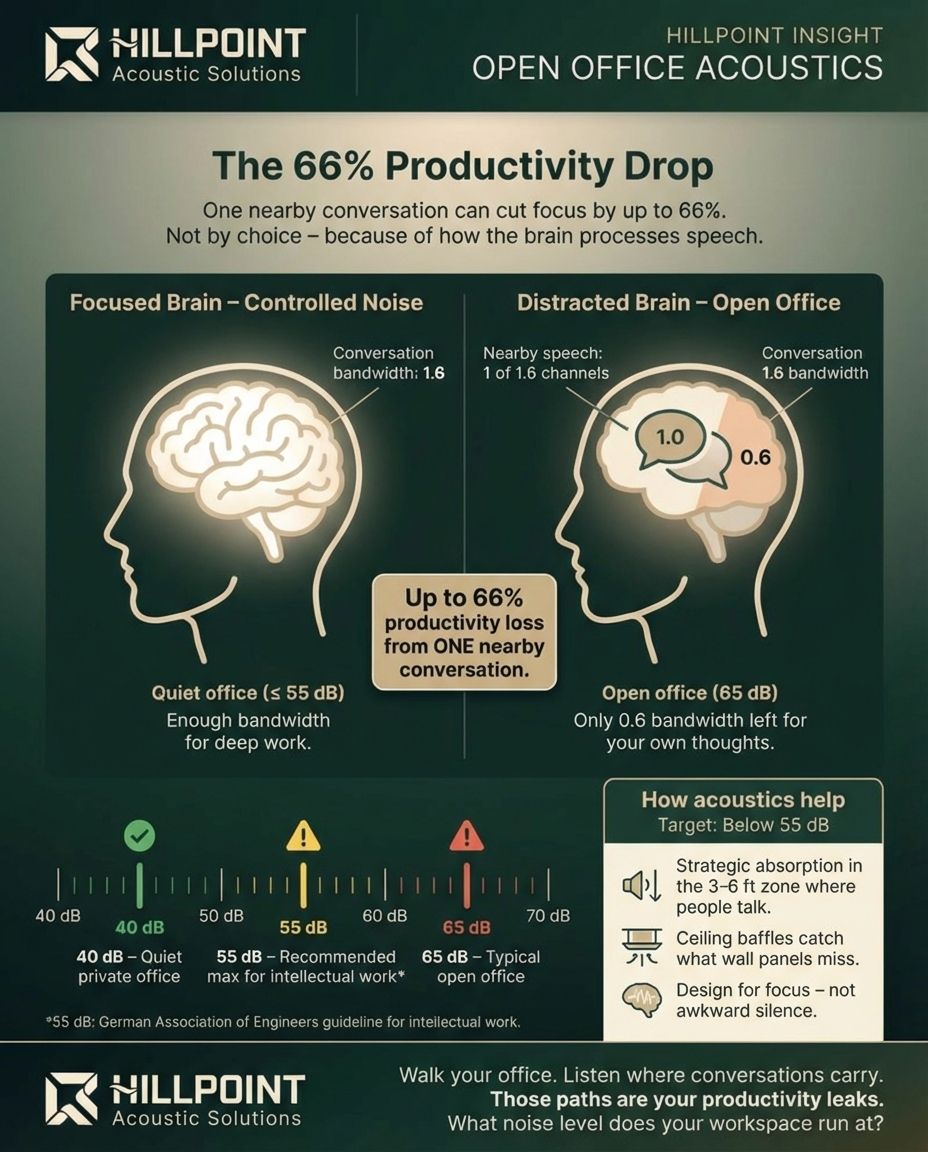
Open office speech is uniquely distracting because the brain is wired to process language, even when employees are trying not to listen.
Read article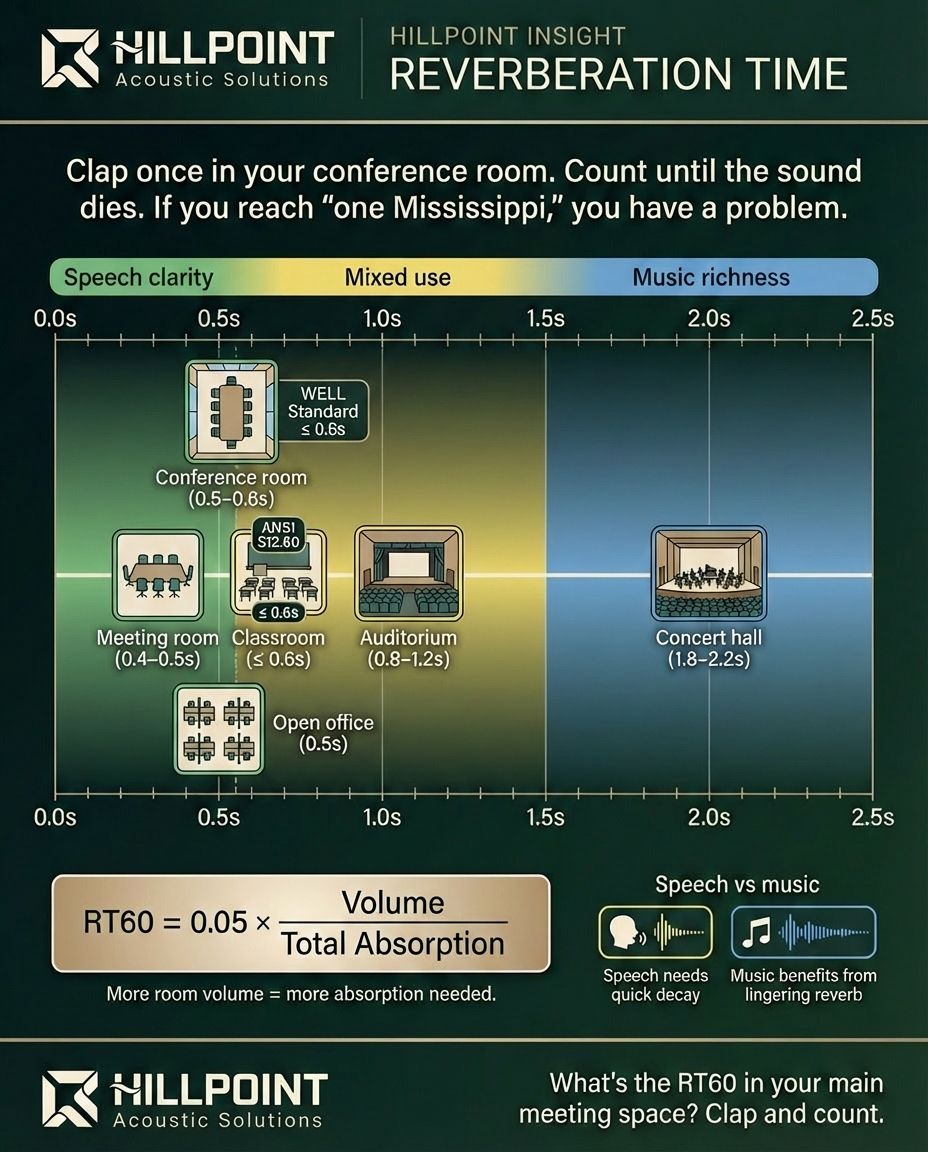
RT60 measures how long sound lingers in a room, and it explains why a boardroom, classroom, office, and concert hall need very different acoustic targets.
Read article