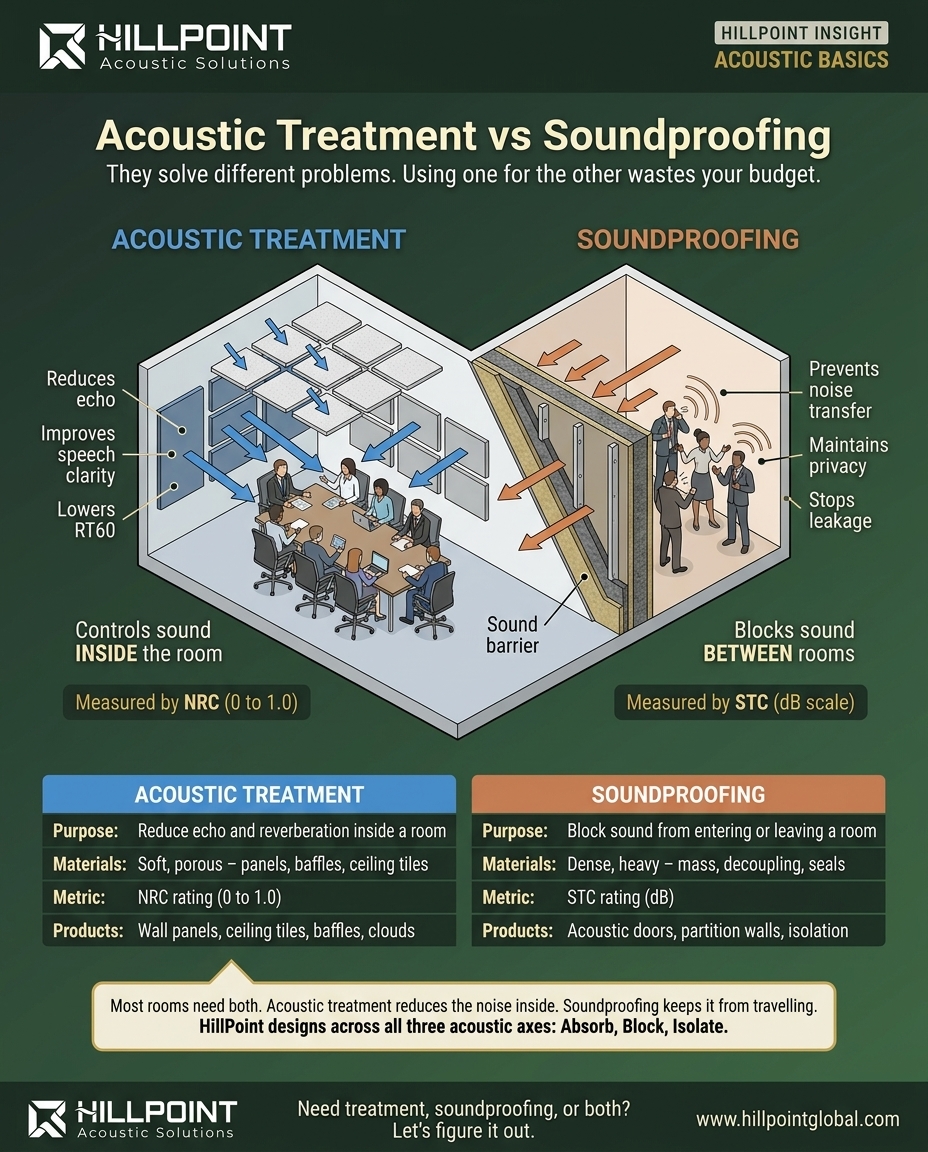
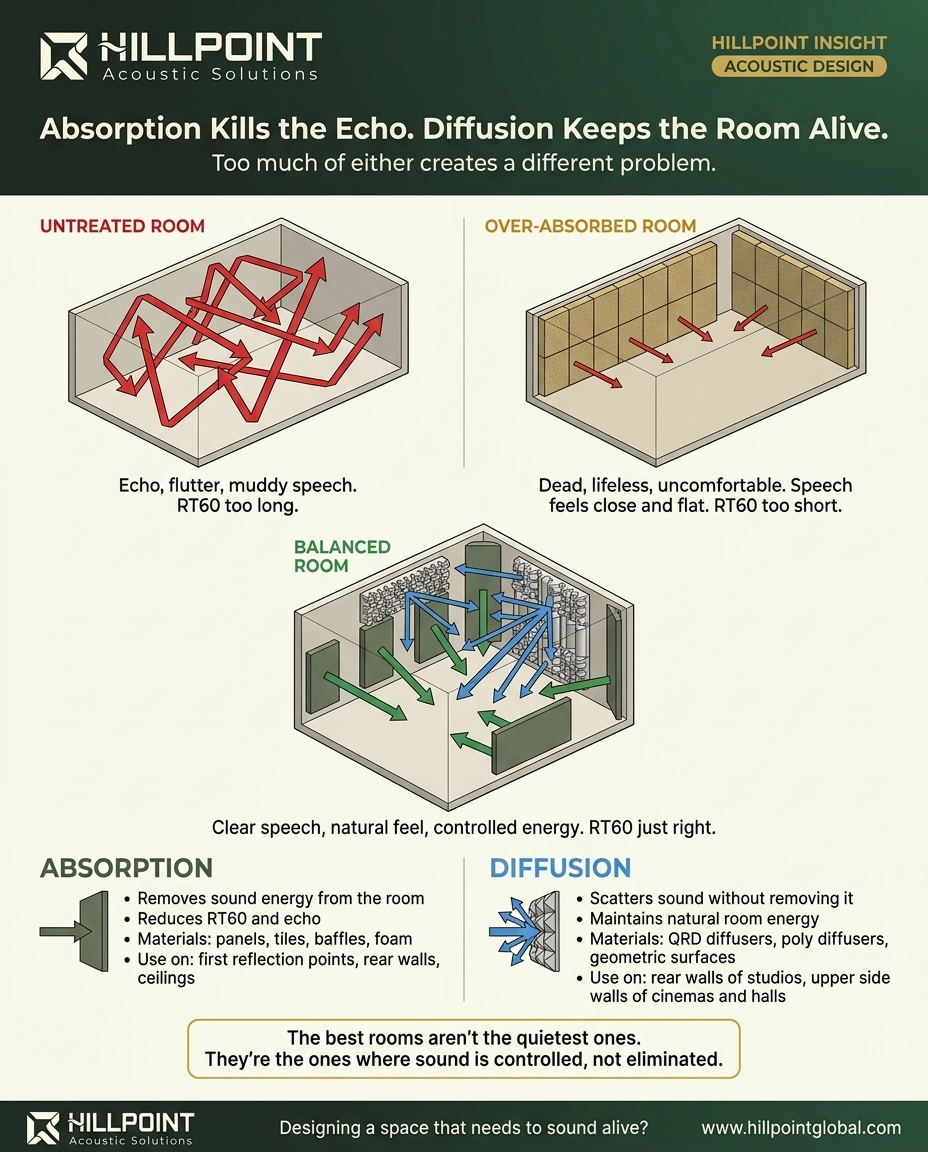
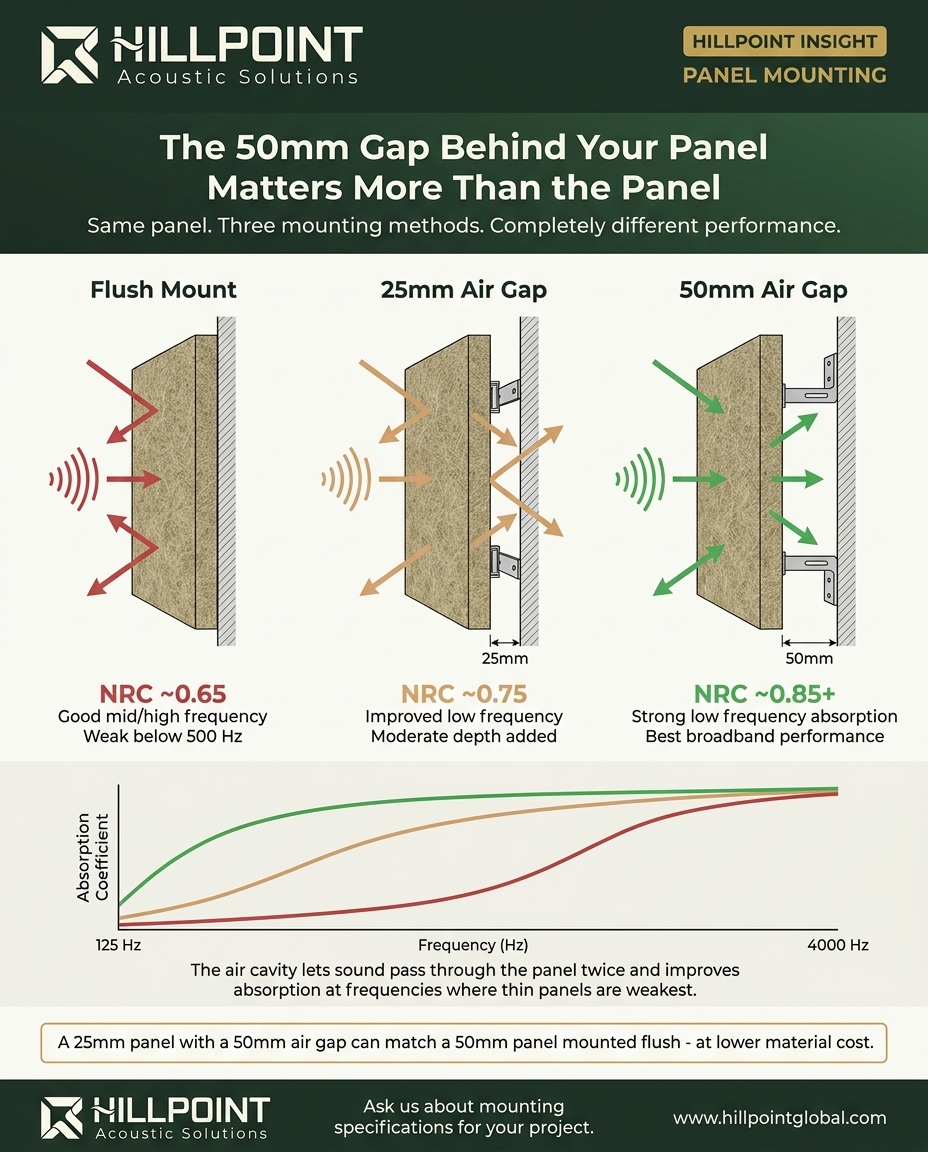
What 0.95 NRC ceiling panels actually do for your room
High-NRC ceiling panels change a room at the surface that matters most, lowering reverberation, improving speech clarity, and reducing the need for excessive wall treatment.
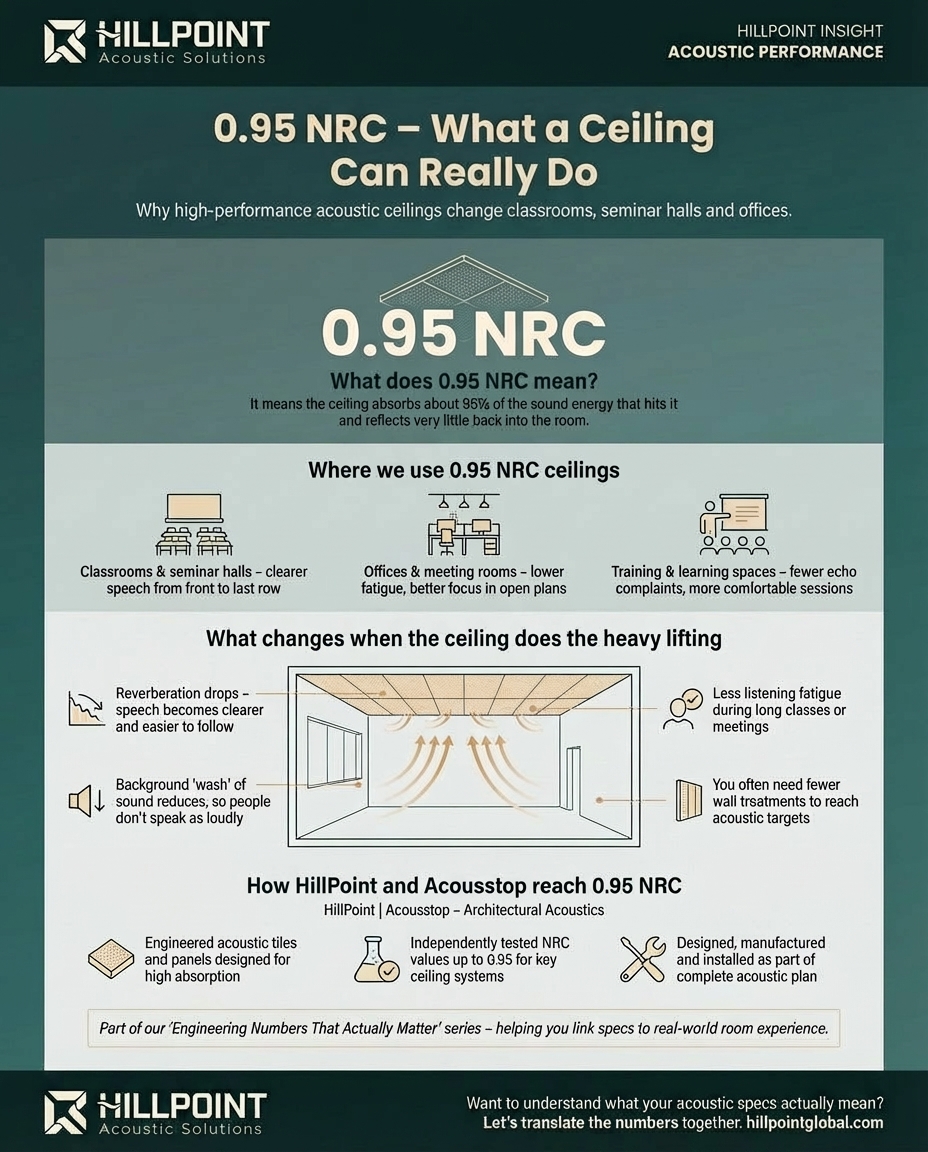
0.95 NRC is just a number on a datasheet until you understand what it means in a real room. It means the ceiling absorbs 95% of the sound energy that hits it, and reflects only 5% back. In practical terms, the ceiling stops being a reflective surface and starts acting almost like an open sky above you, acoustically speaking.
The ceiling is usually the largest single surface in any room. In a typical classroom, it might be 60 to 70 sq metres. In an open office floor, it could be 500 sq metres or more. When that entire surface is reflecting sound back down at people, it creates a wash of reverberation that makes speech harder to follow, forces speakers to raise their voices, and builds background noise levels that compound through the day.
What changes when the ceiling does the heavy lifting
When you replace a standard hard ceiling with high-performance acoustic ceiling tiles or panels at NRC 0.95, four things change fairly quickly.
Reverberation drops. Speech gets clearer and easier to follow, which matters most in classrooms and training rooms where the person at the back of the room needs to hear as clearly as the person in the front row.
Background noise reduces. In open offices, people unconsciously raise their voices when the room is reverberant, which adds more sound energy, which makes other people raise their voices further. Treating the ceiling breaks that cycle. The room actually gets quieter because people stop compensating.
Listening fatigue decreases. This one is harder to measure but easy to notice. People in rooms with high reverberation get tired faster because their brains are constantly working to separate direct speech from reflections. An hour-long meeting in a reverberant room is more tiring than the same meeting in a treated one.
You often need less wall treatment. If the ceiling is absorbing 95% of what hits it, the wall panels are dealing with a much smaller residual problem. In some classrooms and meeting rooms, getting the ceiling right means you can skip wall panels entirely and still hit your RT60 target. That's not always the case, but it happens more often than people expect.
Where this matters most
Classrooms and seminar halls are the clearest use case. The ANSI S12.60 standard caps classroom reverberation time at 0.6 seconds for rooms under 283 cubic metres. A hard ceiling makes that target almost impossible without massive wall treatment. A ceiling at NRC 0.95 often gets you there on its own or with minimal wall panels.
Open offices benefit from the reduced speech propagation. When the ceiling stops bouncing conversations across the floor, the distraction distance drops, which is the metric we talked about in the ISO 3382 piece.
Training spaces and conference rooms benefit from the reduced listening fatigue. If your people are sitting through three hours of presentations, the ceiling treatment pays for itself in attention span alone, although that's admittedly hard to put on a procurement form.
How HillPoint gets to 0.95
Our acoustic ceiling systems reach independently tested NRC 0.95 through engineered tile construction and panel design, not through thickness alone. The products carry test reports you can reference against WELL building standard thresholds or ANSI classroom standards. We handle everything from manufacturing in Tamil Nadu through to on-site installation as part of a complete acoustic plan, because a ceiling that's spec'd at 0.95 but installed with air gaps around the edges won't actually perform at 0.95 on site.
If you need a product overview rather than the educational explainer, start with our acoustic ceiling systems guide. It brings together tiles, clouds, baffles, and the room types they are usually specified into.
Technical Guides
Need the full acoustic treatment and soundproofing guides?
The long-form acoustic panels India guide covers panel types, NRC logic, standards, and room treatment. The soundproofing solutions India guide covers STC logic, doors, walls, floors, and the block-and-isolate side of the same design problem.