Call Centre Acoustics: How to Control Noise When 200 People Talk at Once
Call centres hit 70-75 dB ambient noise. Distraction distance reaches 8-10 metres. Ceiling baffles and acoustic zoning cut it in half. Here is the approach.
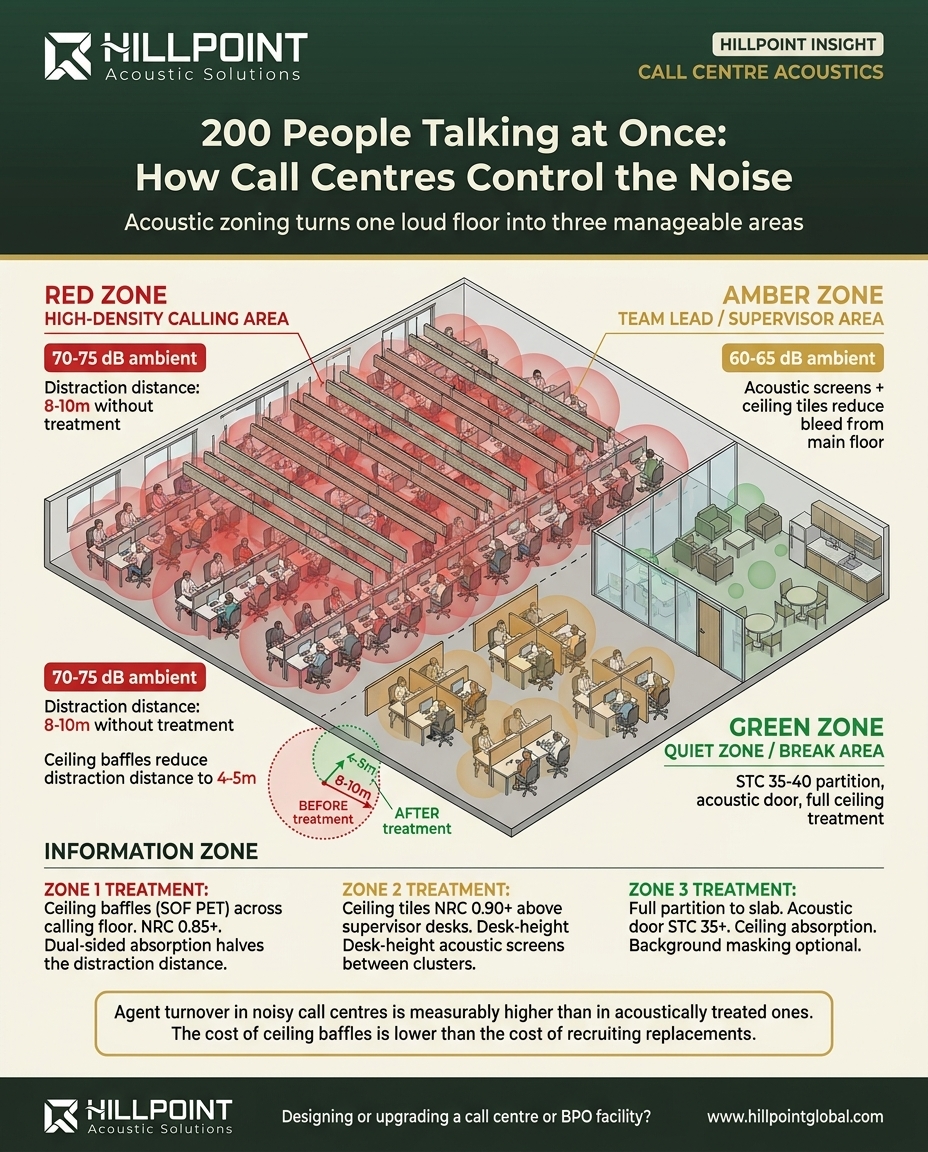
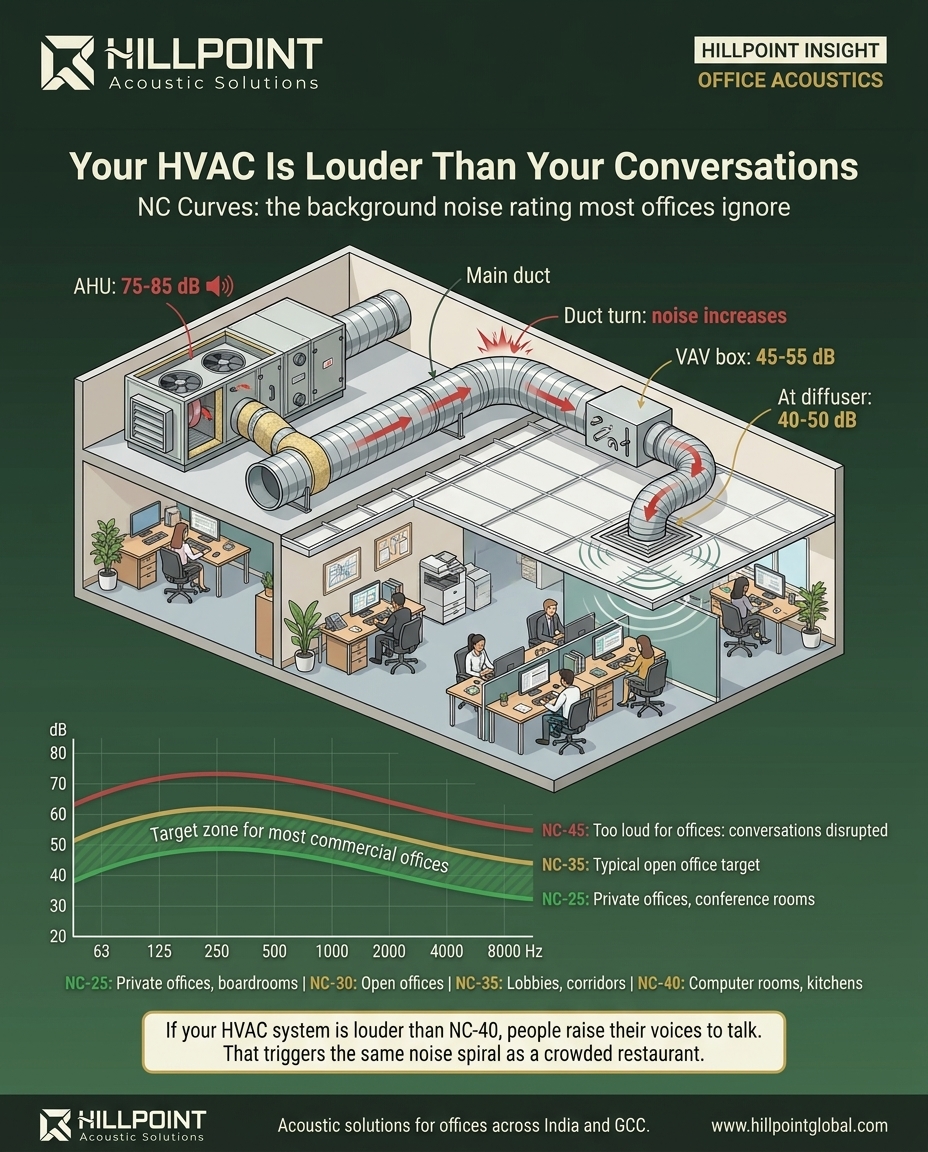
A call centre with 200 agents on a single floor generates a noise environment that's acoustically worse than most other commercial space types. Every person is talking simultaneously, the conversations overlap, the ceiling reflects all of it back down, and the net result is an ambient noise level of 70 to 75 dB across the floor. That's louder than a busy restaurant during peak service, and it runs for 8 to 10 hours straight.
The people on the other end of each call hear it too. Background noise from adjacent agents bleeds into headset microphones, which affects call quality, customer experience scores, and the agent's ability to hear the customer clearly. It's a genuine operational problem, not just a comfort issue.
Distraction distance: the metric that defines the problem
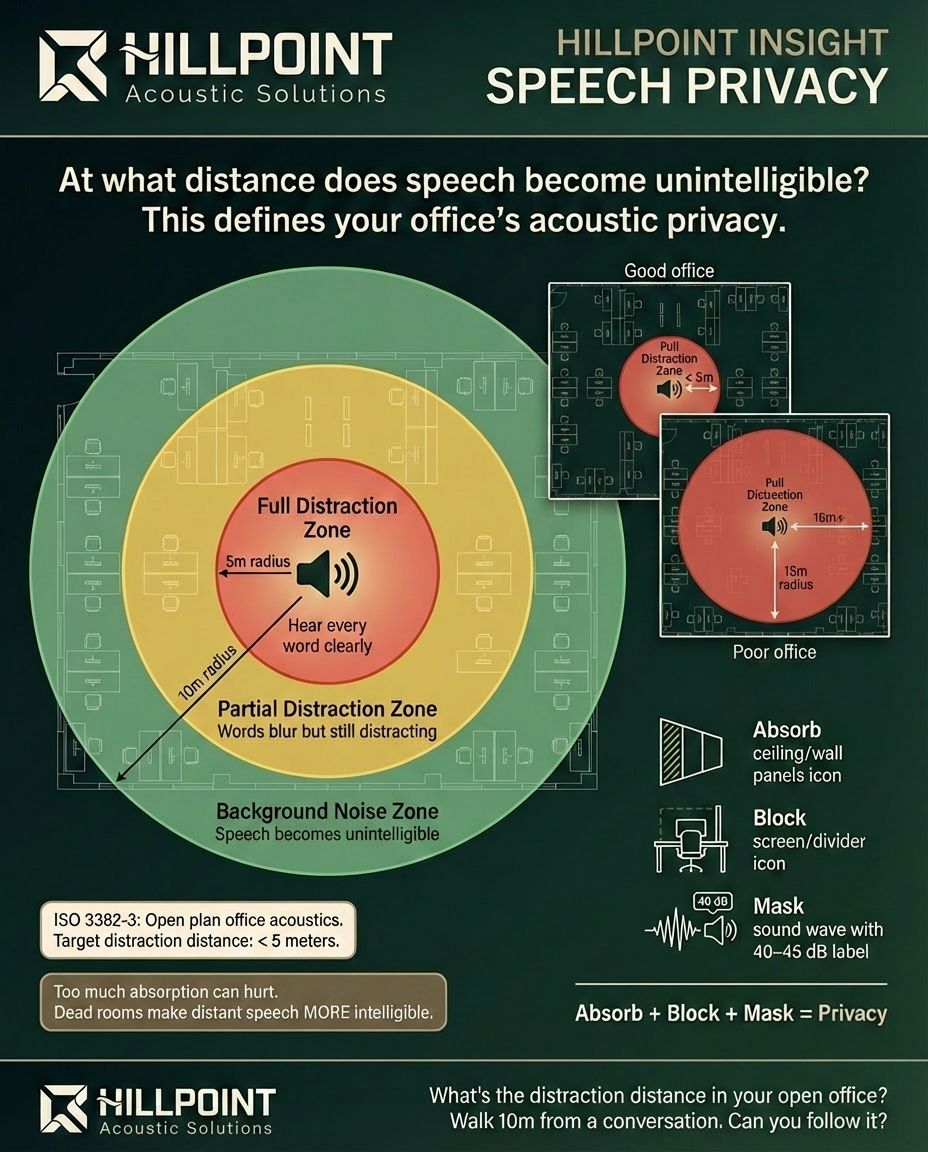
Distraction distance measures how far from a speaker you need to be before their speech drops below intelligibility. In a standard office, a distraction distance of 5 metres is considered acceptable. In an untreated call centre with a hard ceiling, the distraction distance can reach 8 to 10 metres.
That means an agent's conversation is intelligible to every colleague within a 10-metre radius, which on a dense BPO floor can encompass 30 to 40 other workstations. Each of those agents is generating their own intelligible speech bubble of the same size, and all of them overlap. The result is a cacophony that makes sustained concentration genuinely difficult.
The goal of acoustic treatment isn't to make the room silent. Two hundred people talking will always produce noise. The goal is to reduce the distraction distance so each conversation is contained to a smaller radius, and the overlapping conversations from further away blur into an unintelligible background hum rather than competing, intelligible speech.
Ceiling treatment is the primary fix
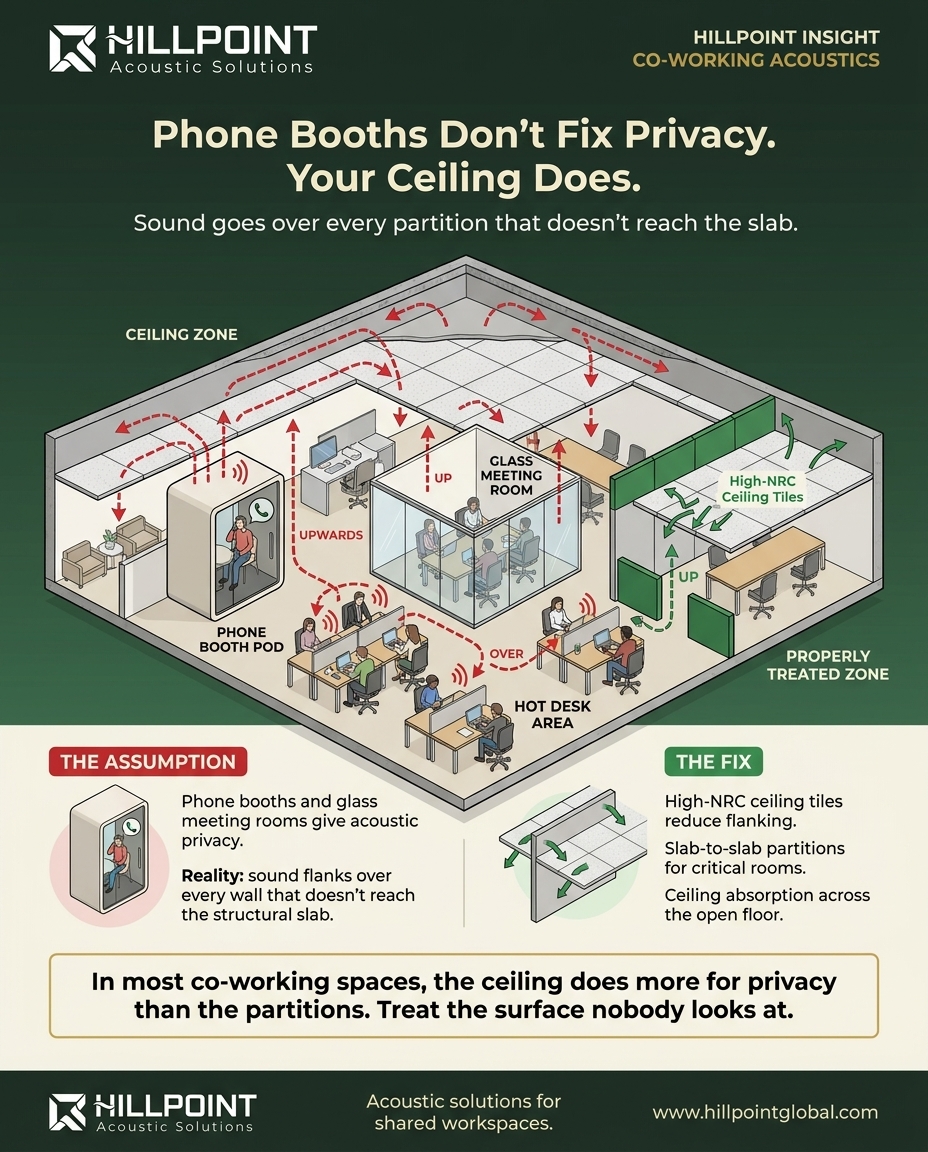
The ceiling is the surface that spreads speech noise farthest across an open call centre floor. Sound from each agent's voice travels upward, reflects off the hard ceiling, and radiates back down across the entire floor. Treating the ceiling absorbs this reflected energy and reduces how far each voice carries.
Ceiling baffles are the most effective ceiling treatment for call centres because BPO floors typically have exposed ceilings with no T-grid system. Baffles hang vertically from the structure and absorb from both sides, delivering roughly double the absorption per unit area compared to flat panels. HillPoint's SOF PET baffles achieve NRC 0.85 to 0.90 and are lightweight enough for ceiling structures that weren't designed for heavy suspended loads.
With ceiling baffles in place, the distraction distance on a typical BPO floor drops from 8 to 10 metres to 4 to 5 metres. That reduces the area of speech intelligibility around each workstation by roughly 75 percent, which transforms the acoustic character of the floor from a competing-conversations environment to a manageable background-hum environment.
High-NRC ceiling tiles (NRC 0.90+) are an alternative for call centres that do have a suspended ceiling grid. HillPoint's MAC Tile panels at NRC 0.95 deliver the maximum absorption from a ceiling tile format and can be swapped into existing grid systems without changing the infrastructure.
Acoustic zoning
A single acoustic treatment across the entire floor helps, but zoning the floor into areas with different acoustic characteristics helps more.
The main calling floor is the highest-noise zone. Ceiling baffles across this area bring the distraction distance down and reduce the overall ambient level by 5 to 8 dB. That's the difference between 72 dB and 64 to 67 dB, which sounds like a modest number but represents a perceived halving of loudness.
Team lead and supervisor areas need a quieter environment for coaching conversations and quality monitoring. These areas benefit from higher-NRC ceiling treatment (tiles rather than baffles, for a more enclosed feel) and desk-height acoustic screens between workstation clusters. The screens don't block sound from travelling over them (they're too short), but they attenuate the direct path between immediately adjacent desks.
Quiet zones for break rooms, training areas, and HR discussions need genuine sound isolation. A partition wall extended to the slab (not just the ceiling line), an acoustic door with STC 35 to 40, and full ceiling treatment inside the room create a space where the call floor noise is reduced by 30 to 40 dB, enough for comfortable conversation and focused training.
The business case
Agent turnover in India's BPO industry is a persistent operational cost. Noise is consistently cited as one of the top workplace dissatisfiers in employee surveys across the sector. The connection between acoustic environment and retention isn't speculative. Agents who work in noisy conditions fatigue faster, take more breaks, make more errors, and leave sooner.
The cost of ceiling baffles across a 2,000 square metre call centre floor is a one-time capital expense. The cost of recruiting and training replacement agents is a recurring operational expense. On most BPO projects we've analysed, the acoustic treatment pays for itself within 12 to 18 months through reduced turnover alone, before accounting for improvements in call quality scores and customer satisfaction.
For BPO and call centre projects across India, HillPoint manufactures the ceiling baffles, tiles, and acoustic screens that handle the treatment side, plus acoustic doors and partitions for the quiet zone enclosures. The products ship from our Tamil Nadu facility, and we coordinate installation with the fit-out programme to minimise disruption to operations.
Technical Guides
Need the full acoustic treatment and soundproofing guides?
The long-form acoustic panels India guide covers panel types, NRC logic, standards, and room treatment. The soundproofing solutions India guide covers STC logic, doors, walls, floors, and the block-and-isolate side of the same design problem.