
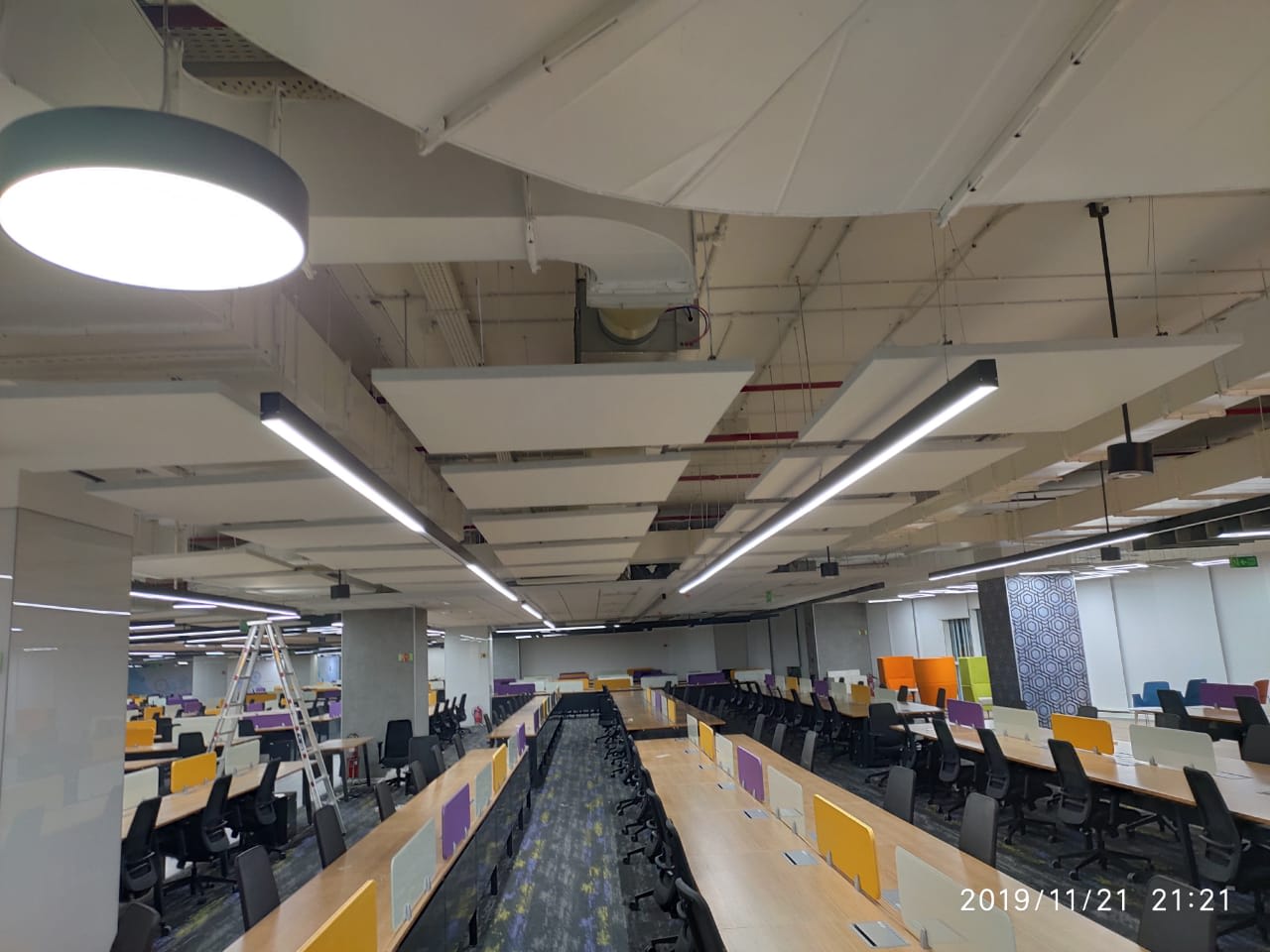
Acoustic Treatment
Office acoustic treatment
Most offices sound bad. Open floors running at 60-65 dB, conference rooms where 'can you repeat that?' happens every other call, glass meeting rooms that broadcast conversations to the whole floor. People blame the Wi-Fi, the microphone, the building. Usually it's the acoustics.
The fix is not complicated, but it depends on what kind of space you are treating. An open-plan IT floor with 200 workstations has different problems than a 6-person meeting room. That is why the product mix changes from one office zone to another.
Related guide
Need the office soundproofing side as well?
Open-plan office treatment and meeting-room privacy are usually different specifications. The soundproofing guide covers slab-to-slab partitions, acoustic doors, glazing weak points, and flanking paths for office fit-outs.
Read the office soundproofing guideOpen-plan offices
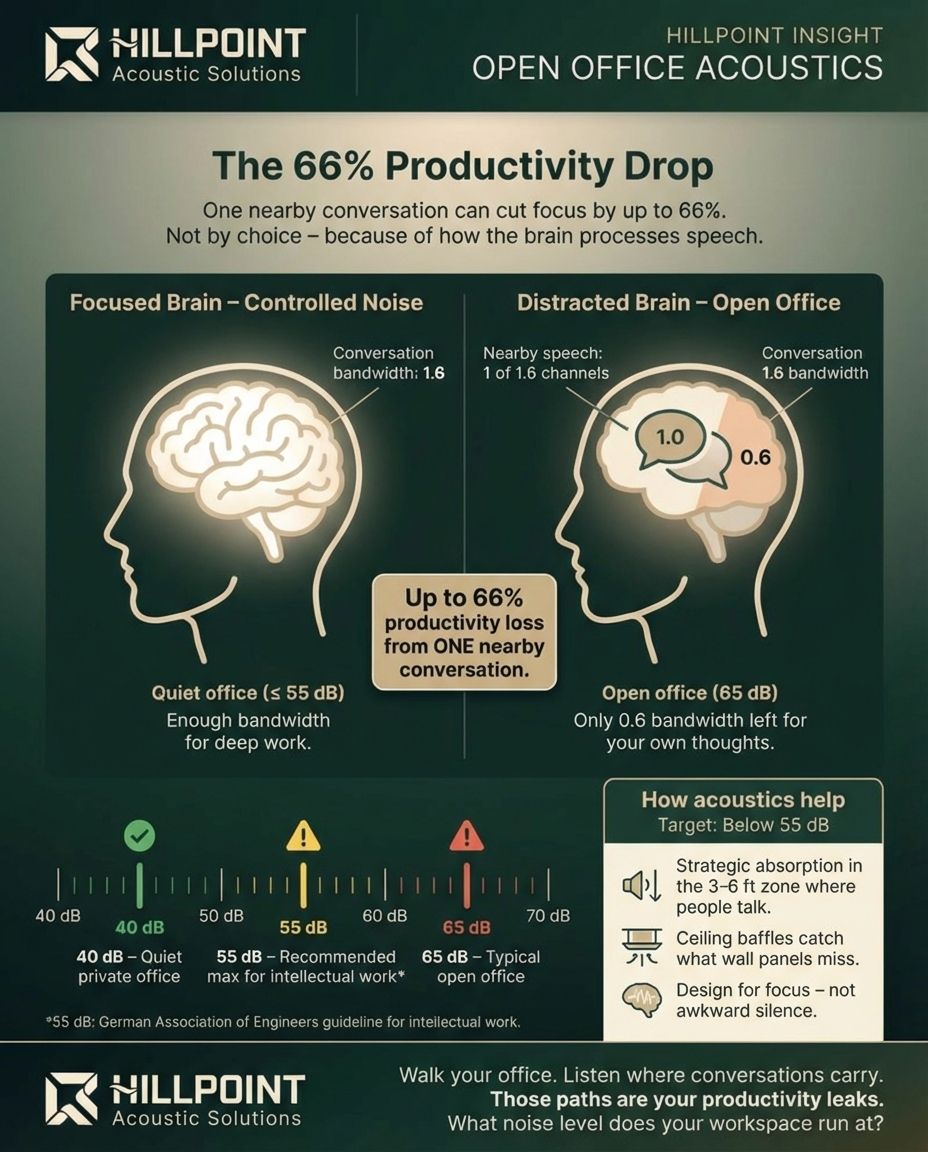
The biggest issue in open offices is speech travelling where it should not. Someone takes a call at their desk and three rows away, people are distracted. Research shows one nearby conversation can cut focus by up to 66%. Not because people choose to listen in. The brain just cannot ignore speech.
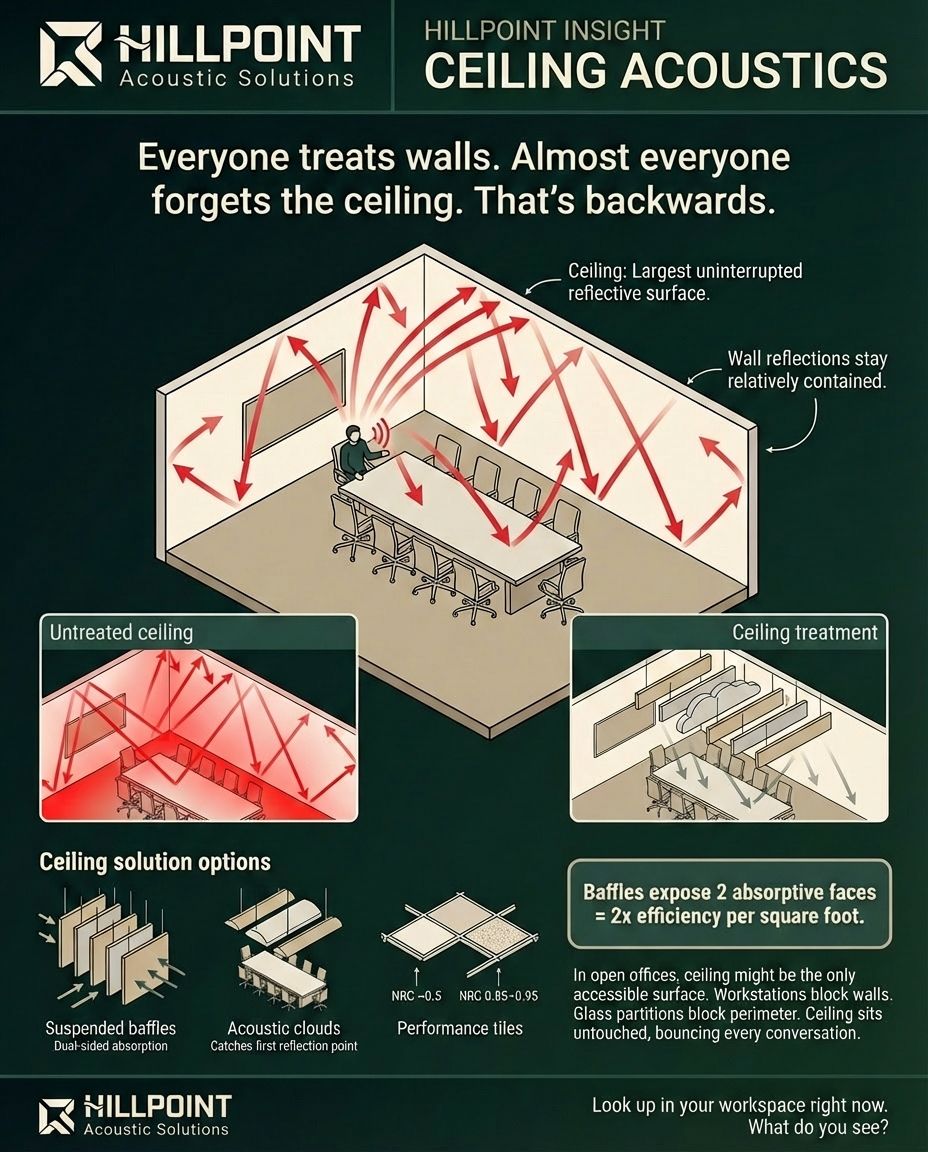
The ceiling is usually the only treatable surface. Workstations block the walls, and glass partitions cover the rest. So that is where treatment goes. Suspended baffles work well because they hang in the plenum and absorb from both sides, giving you twice the absorption per square meter. Our Wood Baffles and SOF Baffles are what we install most in these environments.
If the office has a standard drop ceiling, swapping tiles to a higher-NRC product is the simplest upgrade. Our Comfy Tile panels fit standard grids and reach NRC 0.85 and above. No structural work, just pull and replace.
The target is getting ambient noise below 55 dB without making the space feel dead. Some background sound is actually useful in an open office because it masks nearby conversations. The goal is balance, not silence.
Conference rooms and meeting rooms
Conference rooms have a different problem. Here it is about speech clarity inside the room and sound leaking out. Reverberation time needs to be 0.4 to 0.6 seconds for clear speech. Most untreated rooms sit around 1.0 seconds or higher.
The most important surface to treat is the wall behind the presenter. That catches the first bounce before it reaches the microphone or the people across the table. A few Comfy fabric panels at 50 mm thickness on that wall make a noticeable difference, usually on the first call after installation.
Ceiling treatment is second priority. A Contour cloud above the table catches vertical reflections that muddy speech. For smaller meeting rooms, treating just the back wall and ceiling often gets you below 0.6 seconds RT60 without touching the side walls.
Then there is sound isolation. Panels on walls reduce echo inside the room but they do not stop sound from leaking through the walls or the door. If confidentiality matters, the door is usually the weak point. Our Acousstop acoustic doors have STC-rated performance for proper isolation, which is why we specify them regularly for executive rooms and sensitive meeting spaces.
Glass offices
Glass conference rooms look great but they reflect nearly 100 percent of sound. NRC is around 0.03. If you have glass partitions, concrete floors, and metal fixtures, you have built a room where sound keeps bouncing instead of dying away.
You do not need to cover the glass. You compensate with more absorption on the ceiling and on whichever walls are not glass. Ceiling clouds or baffles do most of the work. Some fabric panels on the back wall handle the rest. You keep the aesthetic the architect designed, you just balance it acoustically.
What we typically install in offices
The product mix for offices usually includes Comfy fabric panels or Niche wooden panels on walls, depending on the visual brief, SOF Baffles or Wood Baffles on ceilings for open areas, Comfy Tile panels for drop-ceiling upgrades, Contour clouds for conference rooms, acoustic doors where sound isolation matters, and the Tract stretch fabric system for larger wall surfaces or feature walls.
For vibration and impact noise in offices above gyms or mechanical rooms, the Vibro series handles that separately. We work with the architect or interior designer from the specification stage, recommend products based on the acoustic target and finish requirements, and handle installation across India, the Middle East, and the GCC.
Office projects from our portfolio
These project photos are already part of the HillPoint portfolio and show the kind of corporate environments we support. See the full projects page for the broader portfolio.

Google Hyderabad

IBM Office
Products commonly used for this segment
These are the products that most often come up when we design acoustic treatment for office acoustic treatment.

Comfy Panels-Fabric
Comfy Panels
Multiple shade options
View product
Acousstop Wooden Panels
Niche Panels
Clean, contemporary design
View product
SOF Panels – PET
SOF Baffles
Square, rounded, or custom profiles
View product
Acousstop Wooden Panels
Wood Baffles
Maintains full access to ceiling plenum for building services
View product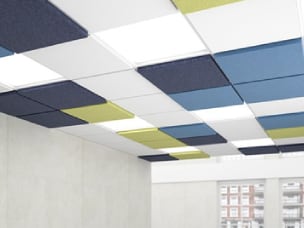
Comfy Panels-Fabric
Comfy Tile Panels
Moisture and humidity resistant
View product
Comfy Panels-Fabric
Contour Panels
Distinctive shaped designs for architectural expression
View product
Doors and Movable Partitions
Wooden Doors
Drop and perimeter seals prevent sound leakage
View product
Comfy Panels-Fabric
Tract Panels
Adaptable to unique architectural requirements
View productStart the conversation
Planning acoustic treatment for an office?
Share the room types, ceiling condition, and any drawings you already have. We can recommend the right product mix and installation approach for open floors, meeting rooms, and glass offices.