

Acoustic Treatment
Acoustic treatment for hotels and restaurants
Noise is one of the most common complaints in hotel reviews after cleanliness. Think about what actually ruins a stay: hallway conversations through the door at 11 PM, the restaurant where you cannot follow the person across the table, or the lobby where every check-in conversation echoes off marble floors and double-height ceilings.
Hotels and restaurants have an acoustic problem offices usually do not. The surfaces that look best are often the ones that sound worst: marble, stone, glass, polished concrete, and metal fixtures. They create the upscale look hospitality designers want, but they also reflect most of the sound hitting them.
Related guide
Need the hotel and restaurant soundproofing side too?
Hospitality projects fail just as often on guest-room privacy, corridor leakage, and duct flanking as they do on reverberation. The soundproofing guide focuses on those wall, door, floor, and service details.
Read the hotel soundproofing guideHotel lobbies and common areas
A hotel lobby with a double-height ceiling, marble floors, and glass facades can have a reverberation time well above 2.0 seconds. That is concert-hall territory, except nobody is performing. It is just guests checking in, rolling suitcases across stone, and staff answering phones, all of it bouncing around and building into a wash of noise.
Ceiling treatment is usually the main intervention because it is the surface easiest to treat without changing the character of the lobby. Suspended clouds or baffles work well in double-height spaces because they can sit high enough to stay visually quiet while still catching the worst vertical reflections. Our Wood Baffles suit many hotel interiors, and Contour fabric panels work where the brief calls for a softer finish.
Wall treatment in lobbies is trickier because the walls are often the feature: stone cladding, mirrors, artwork, or decorative joinery. The usual approach is to treat the surfaces people do not focus on, such as ceilings, soffits, and columns, and leave the feature walls visually intact.
Restaurants and dining areas
Restaurant acoustics are a real business problem. A loud restaurant drives away the exact customers who spend the most: couples, business diners, and anyone trying to hold a conversation instead of a shouting match.
The issue is still ceiling-and-hard-surface reflection, but the room also fills and empties throughout service. An empty restaurant may sound fine. A half-full one starts getting loud. A full restaurant on a Friday night can hit 75 to 80 dB, which is uncomfortable for any extended meal.
Ceiling panels or baffles handle most of it. For restaurants, the finish matters as much as the performance. SOF Baffles in PET felt offer a broad enough colour range for many palettes, while the Tract stretch fabric system works well where the designer wants a cleaner uninterrupted ceiling surface. Wall panels on selected walls, often behind banquette seating, bring the RT60 the rest of the way down.
Banquet halls and event spaces
Banquet halls have a specific challenge: they need to work for multiple configurations. A seated dinner for 200, a conference for 150, and a wedding reception with a dance floor all change the acoustic behaviour because the furniture, people, and activity levels change.
The practical approach is to build in enough fixed absorption to handle the worst-case condition, which is often the empty or half-empty room where there is less natural absorption from people and furnishings. When the room fills up, human bodies add absorption and the acoustics improve.
Our Wooden Wings movable partition system is worth mentioning for banquet halls that subdivide. When you split a large hall into two or three smaller rooms, each section still needs workable acoustics on its own. The partitions help with isolation between sections while the permanent ceiling and wall treatment handles reverberation inside each room.
Hotel rooms and floor-to-floor isolation
Guest-room acoustics are mostly about isolation, not treatment. The guest does not care much about reverberation time inside the room. They care about hearing the television next door or footsteps from the floor above.
That is a sound-transmission problem, so it uses different products. Silenz, our high-density rubber membrane, goes inside wall and floor assemblies to block airborne transmission. The Vibro series goes under flooring to reduce impact sound, especially footsteps, transferring to the room below.
These products disappear into the construction after installation. They belong in the specification during the structural or envelope phase. Retrofitting them into an operating hotel is possible, but more expensive and far more disruptive.
What we provide for hospitality projects
The product range for hotels and restaurants covers both acoustic treatment, which controls sound within a space, and sound isolation, which blocks sound between spaces. Treatment products include Comfy panels, Niche panels, SOF Baffles, Wood Baffles, Contour clouds, and the Tract stretch system. Isolation products include Silenz membrane and the Vibro vibration-control range.
For hospitality projects across India and the GCC, we work with architects, interior designers, and MEP consultants from the design stage onward. That is usually the point where material decisions still have room to change without expensive rework.
Hospitality and amenity spaces from our portfolio
These portfolio images show hospitality environments from the HillPoint project portfolio. See the full projects page for the broader portfolio.
Hotel, Acoustic Ceiling Treatment

Hotel, Acoustic Wall and Ceiling Treatment
Products commonly used for this segment
These are the products that most often come up when we design acoustic treatment for acoustic treatment for hotels and restaurants.

Acousstop Wooden Panels
Wood Baffles
Maintains full access to ceiling plenum for building services
View product
Comfy Panels-Fabric
Contour Panels
Distinctive shaped designs for architectural expression
View product
Comfy Panels-Fabric
Comfy Panels
Multiple shade options
View product
Acousstop Wooden Panels
Niche Panels
Clean, contemporary design
View product
Comfy Panels-Fabric
Tract Panels
Adaptable to unique architectural requirements
View product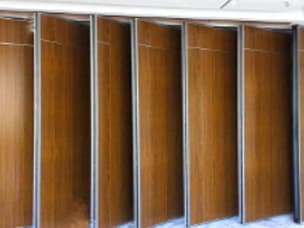
Doors and Movable Partitions
Wooden Wings
Single or twin-point suspension systems
View product
Specialized Products
Acousstop Silenz
High mass for superior airborne sound reduction
View product
Specialized Products
Acousstop Vibro Pad
Interlocking design for fast installation
View productStart the conversation
Working on a hotel, restaurant, or banquet project?
Tell us whether the priority is lobby noise control, dining comfort, banquet flexibility, or guest-room isolation. We can help match the right treatment and sound-blocking products to the brief.