

Acoustic Treatment
Classroom Acoustics: Why Students in the Back Row Miss What the Teacher Says
Students in the back row can lose roughly 40 percent of speech clarity in untreated classrooms. STI, RT60, and background noise explain why some rooms make teaching harder than it needs to be.
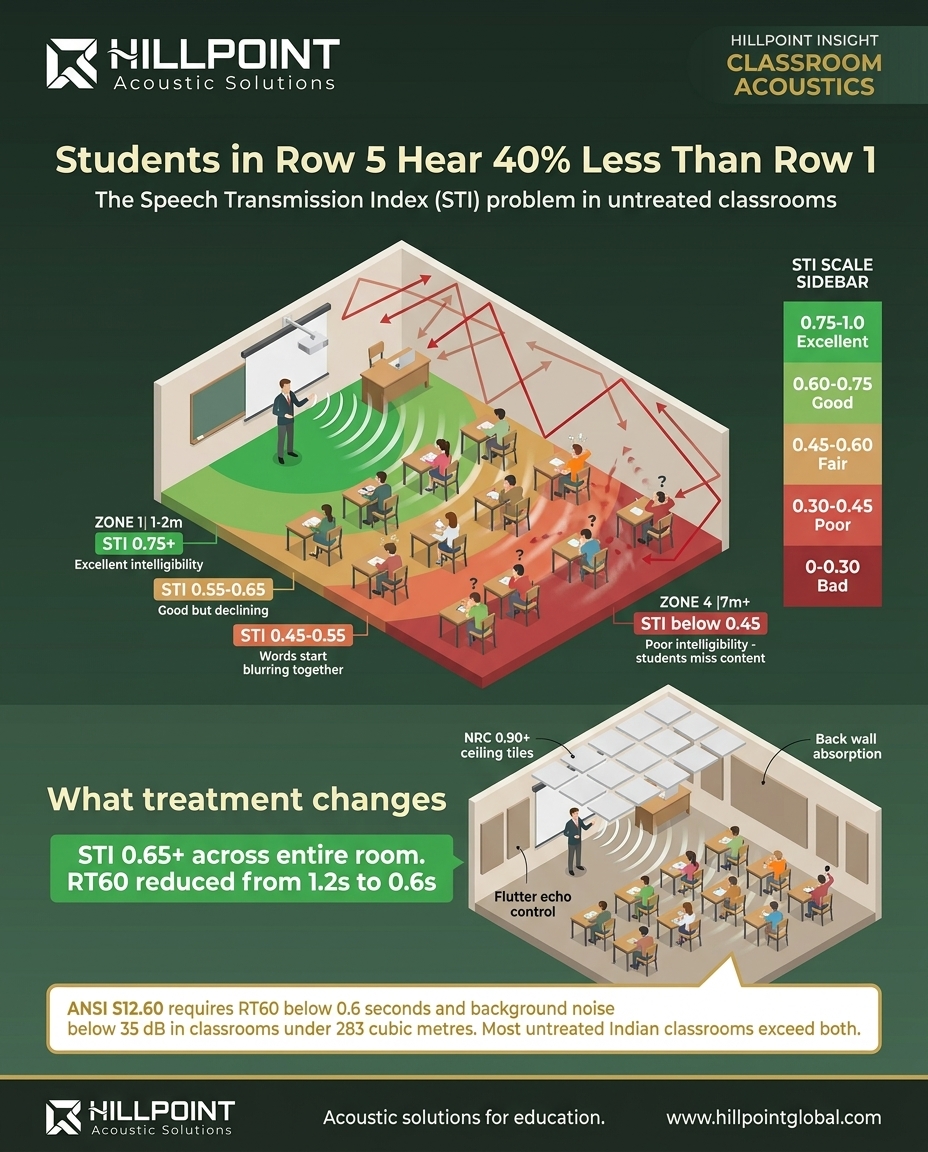
A teacher's voice leaves their mouth at roughly 60 to 65 dB at 1 metre. By the time it reaches a student 7 metres away in the back row, the direct sound has already dropped by about 17 dB. In a well-treated room, early reflections support intelligibility. In an untreated room, they smear it.
Related guide
Need the classroom and campus soundproofing side too?
Education projects often need both reverberation control inside teaching rooms and room-to-room privacy across classrooms, music rooms, and lecture spaces. The soundproofing guide covers the block-and-isolate side of that brief.
Read the classroom soundproofing guideWhere speech clarity breaks down
The Speech Transmission Index (STI) quantifies how much of the original speech signal reaches the listener intact, on a scale from 0 to 1. In an untreated classroom with hard parallel walls and a bare ceiling, STI in the front row might sit at 0.75 (excellent), while the back row drops to 0.45 or below (poor).
That difference means a student 7 metres from the teacher is hearing roughly 60 percent of consonant content clearly enough to distinguish similar words. The room is not just louder. It is less intelligible.
The ceiling is the largest untreated reflective surface and sits directly above the speech path. The rear wall sends back the strongest late reflection in the room, and parallel side walls create flutter echo that adds a metallic edge to speech. Those three surfaces do most of the damage in a typical classroom.
What ANSI S12.60 requires
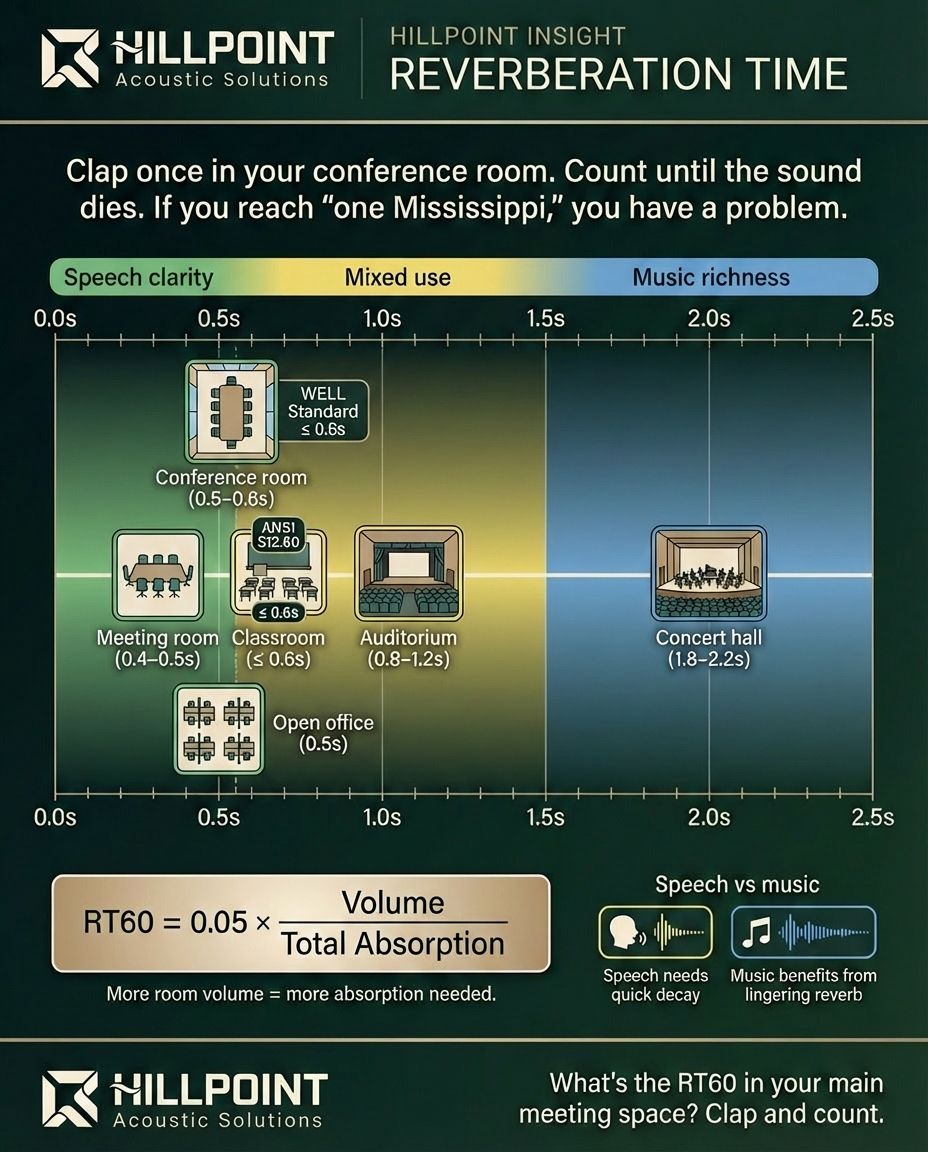
ANSI/ASA S12.60 sets two primary targets: reverberation time (RT60) below 0.6 seconds for classrooms under 283 cubic metres, and 0.7 seconds for larger classrooms and lecture halls. These numbers apply in the mid-frequency range where speech energy is concentrated.
Background noise below 35 dB is the second requirement, typically aligning with NC-25 to NC-30. A classroom with RT60 under control but background noise at 45 dB will still perform badly because the speech signal no longer stands clear of the noise floor.
Most classrooms in India and across the GCC do not meet either threshold without treatment. Untreated rooms commonly sit between 0.8 and 1.5 seconds RT60 because concrete walls, hard ceilings, and hard flooring reflect nearly all of the teacher's voice back into the room.
What treatment changes
Ceiling treatment is the priority. Replacing standard ceiling tiles with high-performance acoustic tiles handles most of the RT60 reduction because the ceiling is the largest uninterrupted reflective surface in the room.
HillPoint's Acousstop MAC Tile panels reach NRC 0.95 in 600x600 T-grid systems. In many classrooms, upgrading the ceiling alone is enough to bring RT60 from 1.0+ seconds down to 0.5 to 0.6 seconds and meet the ANSI target.
Rear wall absorption is the second priority because it catches the strongest late reflection. Side wall treatment at seated head height then controls flutter echo between parallel surfaces without needing full-height coverage.
HillPoint manufactures the panel types typically used in classroom upgrades: MAC Tile ceiling panels, wooden wall panels such as Niche, Perf, and Grille, and SOF PET panels where moisture resistance and colour flexibility matter. The same logic extends to lecture halls and other larger teaching spaces, just at larger coverage areas.
The practical difference
A classroom treated with NRC 0.90+ ceiling tiles and targeted wall absorption typically improves from STI 0.45 to 0.50 in the back row up to STI 0.65 or better. That is the difference between poor intelligibility and solid day-to-day listening comprehension.
Teachers notice it too. They usually describe the room as easier to talk in rather than simply quieter, because the room stops fighting their voice and the back rows stop falling away acoustically.
For education projects, the most cost-effective move is specifying the right ceiling tile from the start. Retrofitting later costs more and disrupts the teaching schedule. The ANSI S12.60 targets are achievable with standard commercial acoustic products if the specification includes them early enough.
Education projects from our portfolio
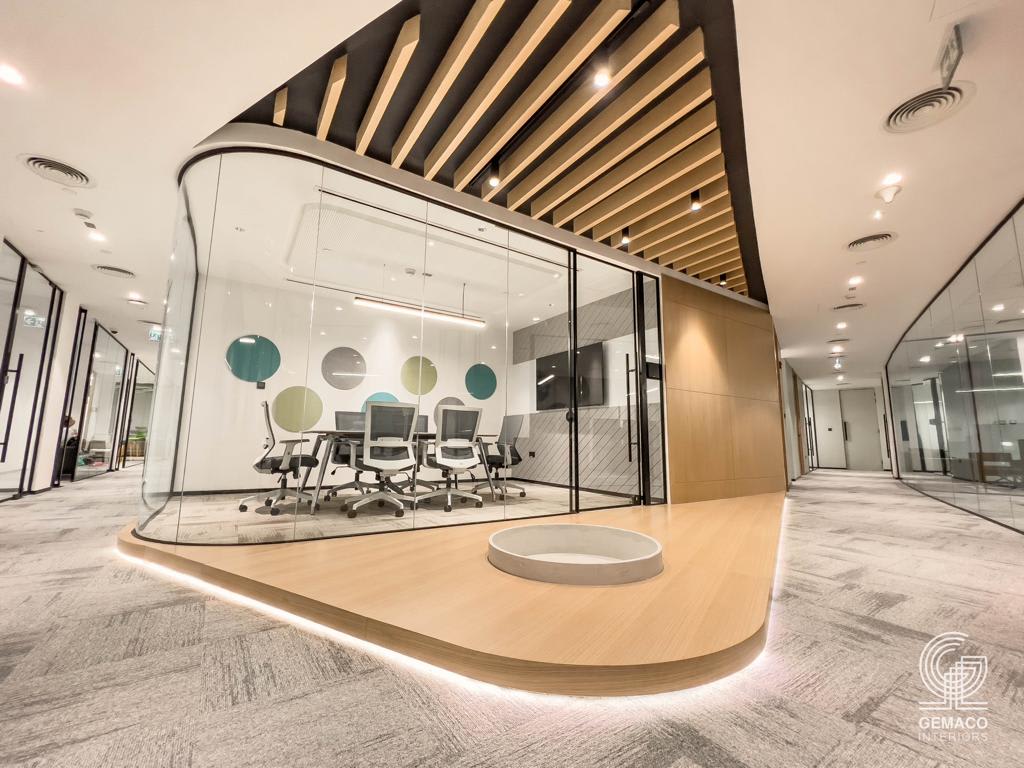
These projects show the kinds of school and university environments where classroom speech clarity and durable acoustic treatment both matter. See the full projects page for the broader portfolio.
Al Nahda School

Qatar University
Products commonly used for this segment
These are the products that most often come up when we design acoustic treatment for classroom acoustics: why students in the back row miss what the teacher says.

Acousstop Wooden Panels
MAC Tile Panels
Engineered for maximum absorption in ceilings
View product
Acousstop Wooden Panels
Niche Panels
Clean, contemporary design
View product
Acousstop Wooden Panels
Perf Panels
Elegant aesthetically pleasing design
View product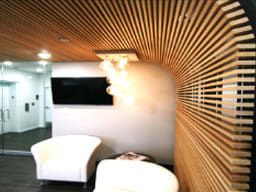
Acousstop Wooden Panels
Grille Panels
Open grille design allows integration of building systems
View product
SOF Panels – PET
SOF Baffles
Square, rounded, or custom profiles
View product
Doors and Movable Partitions
Wooden Doors
Drop and perimeter seals prevent sound leakage
View productStart the conversation
Planning acoustic treatment for classrooms?
Send the classroom types, ceiling condition, and any RT60, STI, or ANSI S12.60 brief you already have. We can help map the right ceiling and wall treatment package to the teaching spaces on the project.