Distraction distance: the metric that defines open office acoustics
Distraction distance explains why some open offices leak conversations across the floor and why absorption, barriers, and controlled background sound have to work together.
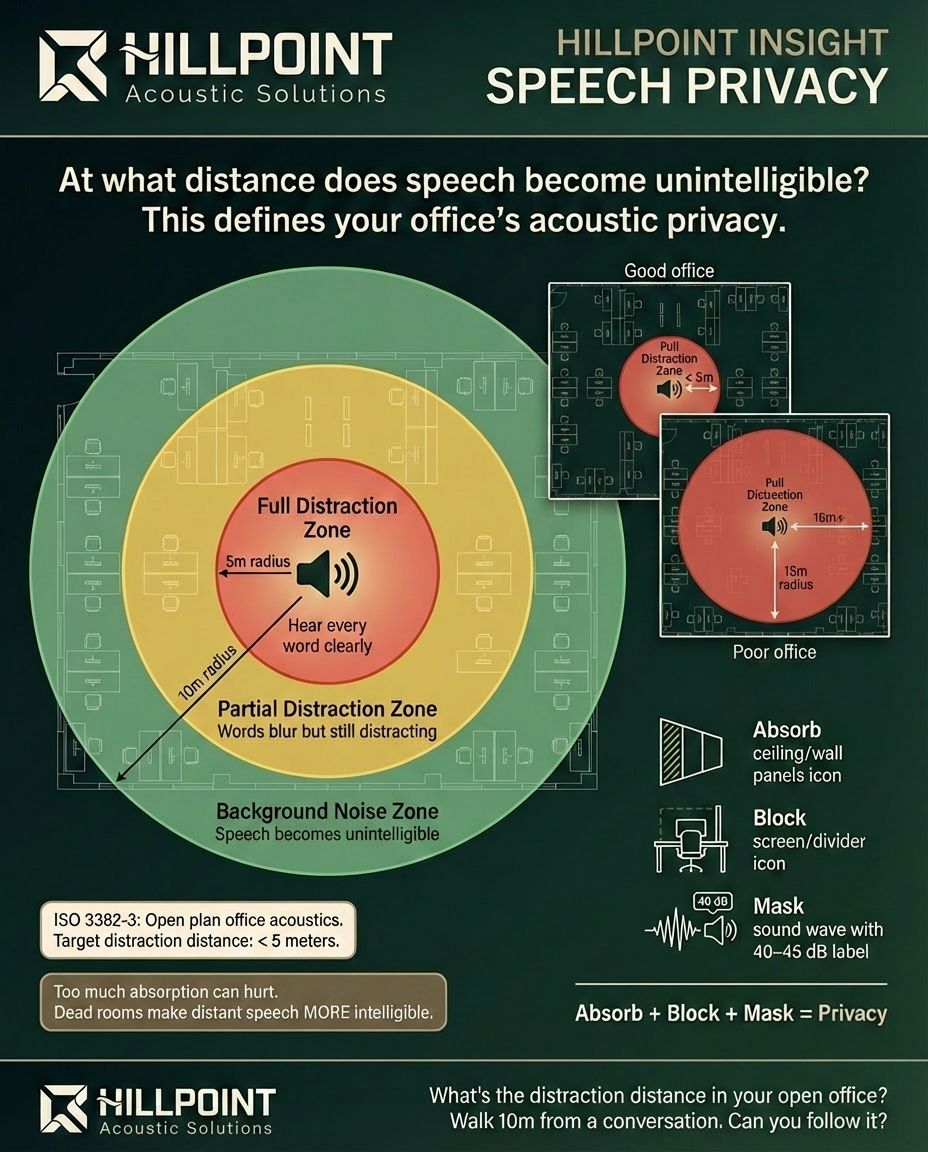
ISO 3382 has a metric called distraction distance. It measures the radius around a speaker where overheard conversation still disrupts concentration. Outside that radius, speech blurs into background noise and stops being a problem.
A good open office keeps that number under 5 metres. In a poorly treated one it can stretch past 15 metres, which means you're hearing conversations from across the entire floor.
The difference between those two numbers usually comes down to three things working together: ceiling absorption to catch the sound before it spreads, some kind of screen or partial barrier to break the direct sound path between desks, and a controlled background noise level around 40 to 45 dB that masks speech at a distance.
Why quieter isn't always better
The background noise part is actually the one that trips people up. You'd think a quieter room is always better, but it's not that simple. Extremely dead spaces can make distant speech more intelligible, not less. There's no reverberant field left to mask it. The room gets so quiet that a conversation 12 metres away sounds almost as clear as one right next to you.
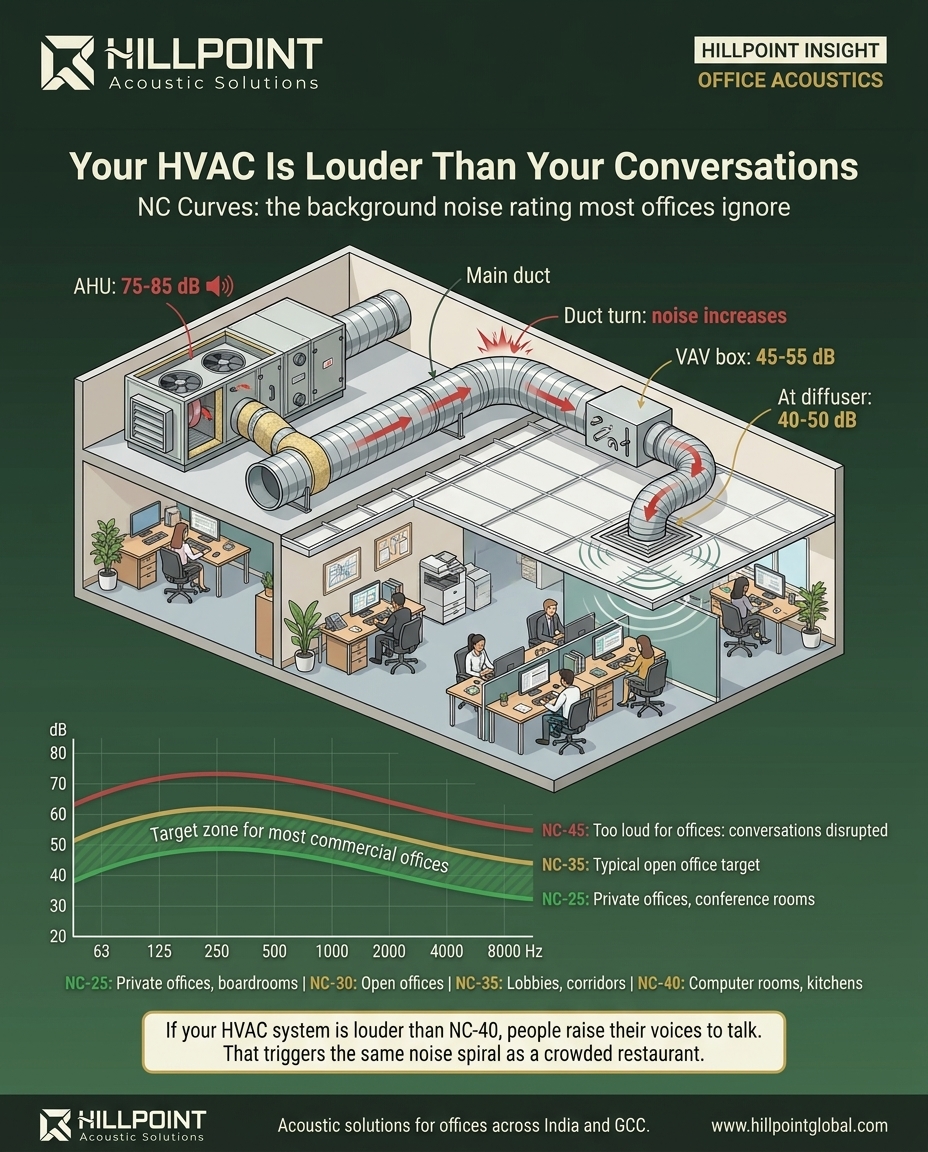
So there is a balance to get right. Enough sound absorption to reduce the distraction distance, but not so much that you strip out all the ambient masking. This is why sound masking systems exist for open offices. They add a controlled layer of broadband background noise, usually around 40 to 45 dB, that fills in the silence and makes distant speech harder to follow. It sounds counterintuitive, adding noise to fix a noise problem, but the physics supports it.
What ceiling treatment actually does to the numbers
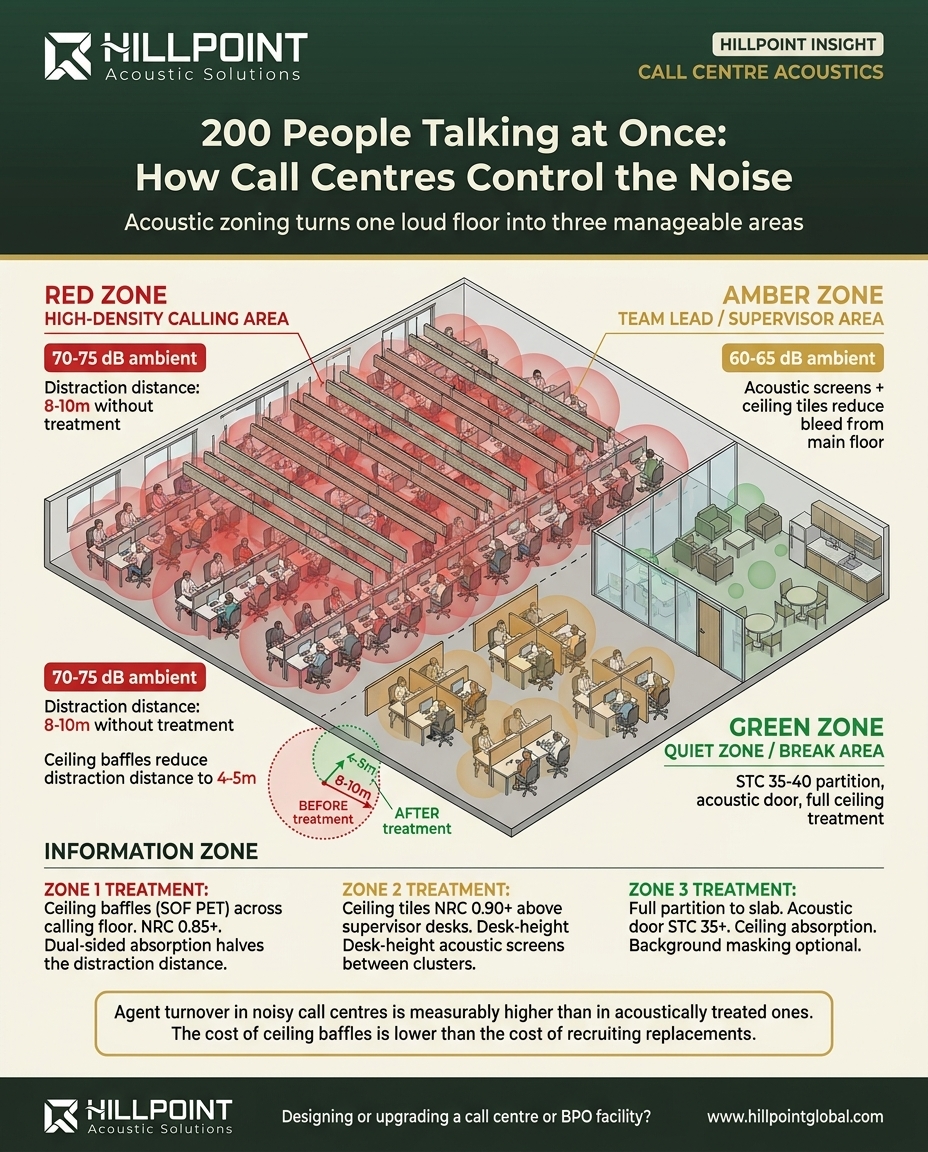
We've worked on open plan offices where ceiling treatment alone brought the distraction distance from about 12 metres down to around 7. Getting it below 5 needed the screens and background sound layer on top of that.
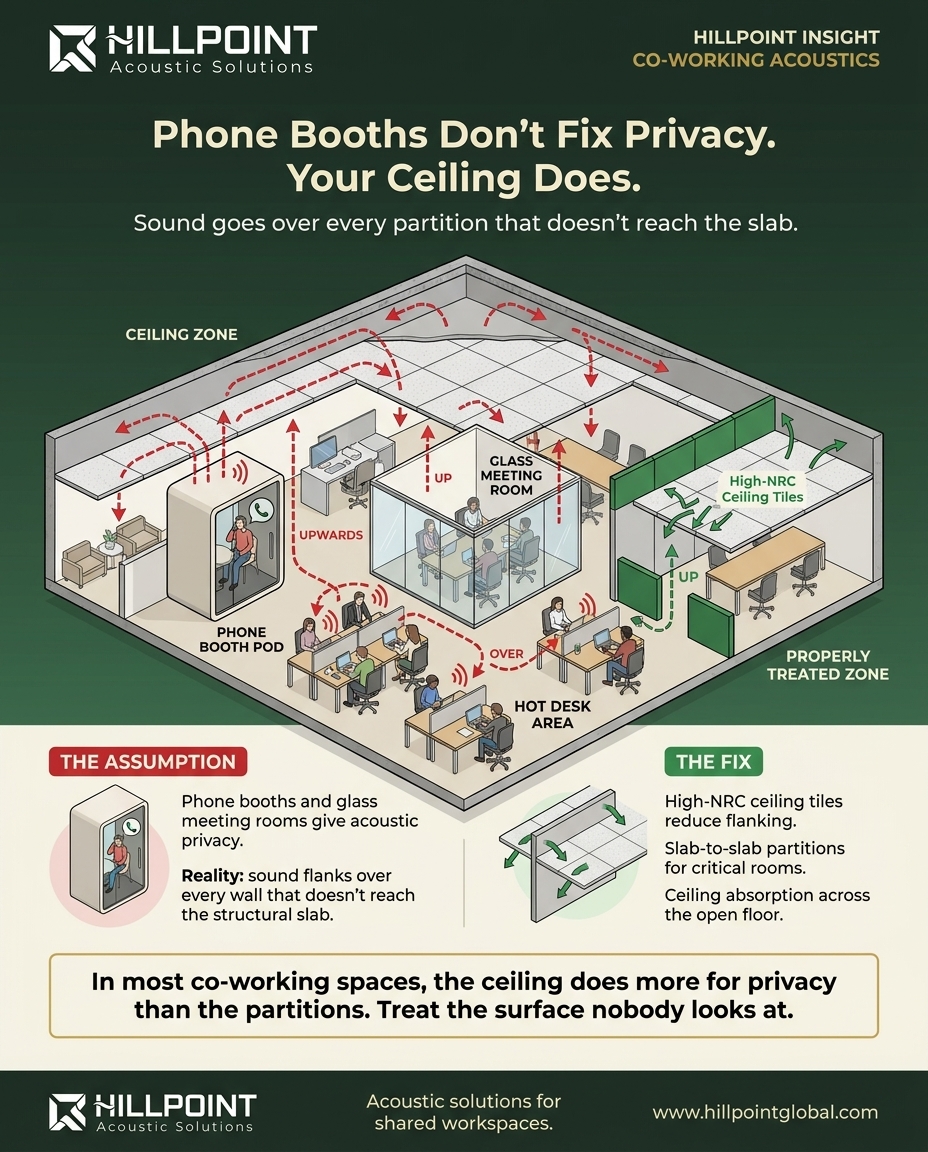
The ceiling matters most in open offices because it is usually the largest untreated reflective surface, and it is the one that spreads sound most efficiently across the floor. Walls at least contain reflections to a local area. The ceiling is wide open and doing most of the damage, and in most open offices nobody has touched it.
Acoustic ceiling baffles or high-NRC ceiling tiles are typically the first intervention. Baffles work well when the ceiling is exposed because they hang in the plenum and absorb from both sides. In offices with a standard drop ceiling, swapping to acoustic ceiling tiles with NRC 0.85 or higher is the simplest upgrade.
But ceiling treatment alone rarely gets you to the target distraction distance by itself. It's rarely one fix. The screens or desk-mounted acoustic dividers handle the direct path between people. The sound masking system fills in the ambient floor. All three together is what produces the under-5-metre result.
How to test it yourself
Walk 10 metres from a conversation in your open office. Can you follow it? If yes, your distraction distance is over 10 metres, which means the space probably needs treatment. If you can still make out words at 15 metres, the ceiling is almost certainly untreated hard surface and the ambient noise level is too low.
ISO 3382-3 gives the formal measurement methodology if you need proper documentation, which you will for WELL certification or post-occupancy evaluation studies. But the walk test gives you a good enough answer to know whether the conversation about acoustic treatment is worth having. When that conversation needs to turn into a commercial brief, our architectural acoustics page and acoustic ceiling systems page are the two most useful next reads.
Technical Guides
Need the full acoustic treatment and soundproofing guides?
The long-form acoustic panels India guide covers panel types, NRC logic, standards, and room treatment. The soundproofing solutions India guide covers STC logic, doors, walls, floors, and the block-and-isolate side of the same design problem.