WELL building standard acoustics: what architects need to know
WELL v2 treats sound as a core building-health requirement, which means acoustic planning has to start early enough to shape partitions, doors, ceilings, and HVAC noise targets.
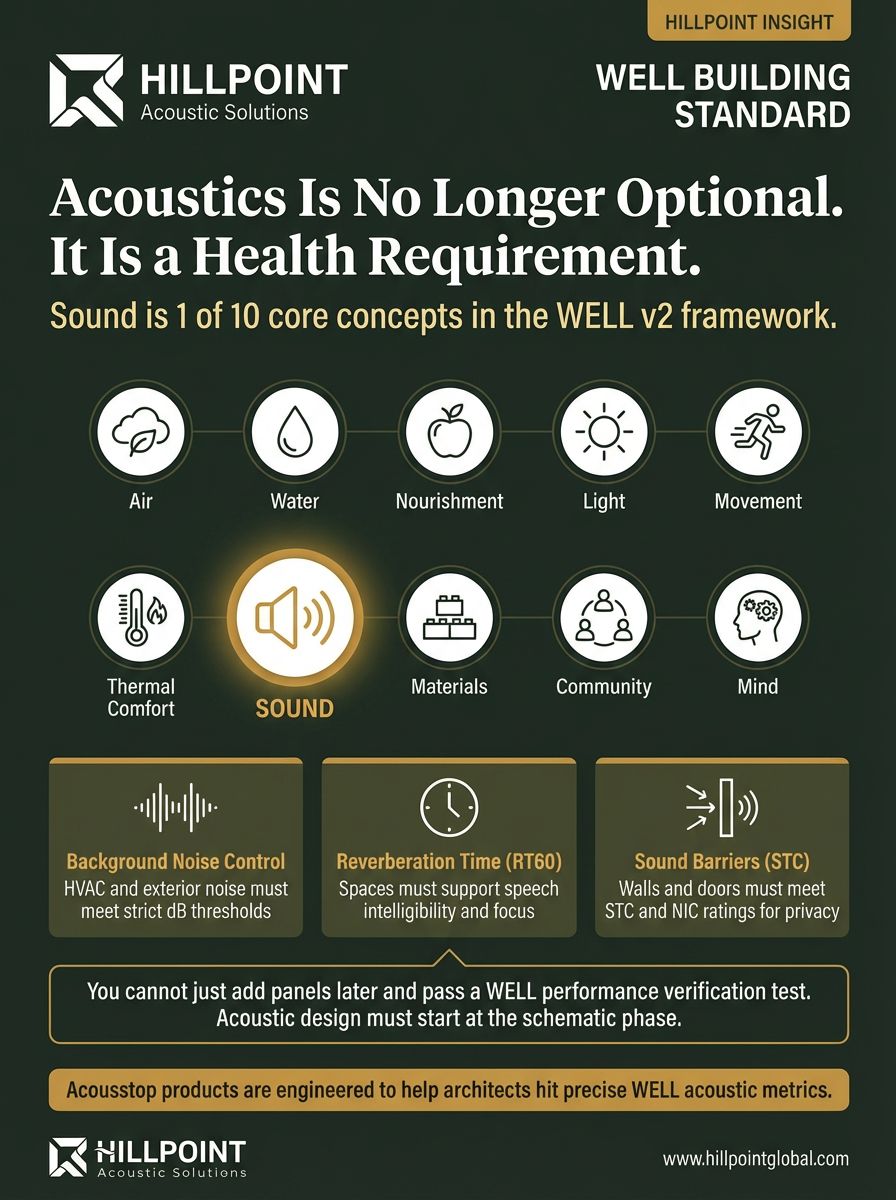
Sound is 1 of 10 core concepts in the WELL v2 building framework. It sits at the same level as Air, Light, and Water, which means it's not optional. It is a mandatory category that every project has to address for certification.
Most design teams have heard of WELL. Very few expect the acoustic requirements to be this specific.
The standard puts hard numbers on three things: background noise from HVAC systems, reverberation time based on room function, and STC ratings on partition walls and doors between enclosed spaces. A conference room sharing a wall with a private office needs to clear STC 53 on that wall assembly. That's a precondition for certification, not a recommendation the project can choose to skip. For the block-and-isolate primer behind those STC and partition requirements, see the soundproofing solutions India guide.
The timing problem
Here's where most projects run into trouble. Acoustic decisions get pushed to the fitout stage. Someone thinks about it after the partitions are built, the ceiling grid is installed, and the doors are hung. By then the options are limited and expensive.
WELL evaluates how sound was addressed from schematic design onward. The performance verification is not just a measurement at the end, it looks at the process. Retroactive fixes like swapping hollow-core doors for acoustic doors, adding ceiling absorption over an already-built drop ceiling, or rebuilding a partition assembly to hit STC 53 typically cost two to three times what it would have cost to plan for it at the start.
This is probably the single most expensive mistake we see on projects aiming for WELL certification. The acoustic consultant gets brought in during fitout, measures the space, and finds that the partition walls are STC 38 instead of 53. Fixing that after construction is painful. Specifying it correctly in the schematic phase is just a line item.
What WELL gets right, and where it falls short
For offices, hospitals, and education spaces, WELL is probably the most enforceable acoustic framework available today. The reverberation time targets are practical. The STC thresholds between rooms are realistic. The background noise requirements push mechanical engineers to actually spec quieter HVAC systems instead of treating the noise after the fact.
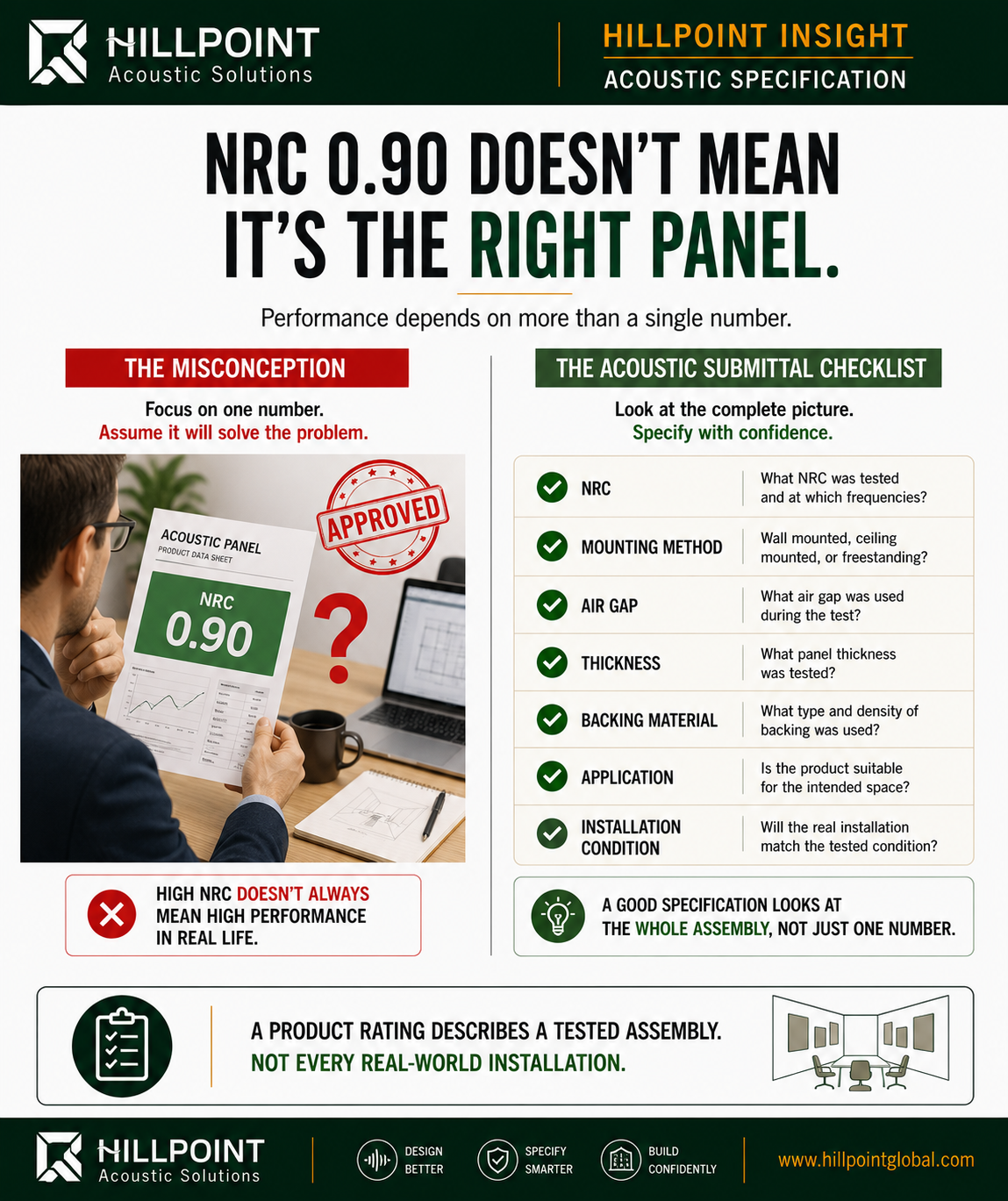
Where WELL does not quite cover everything is low-frequency problems. The NRC thresholds in the standard won't catch bass buildup in gyms, mechanical rooms, or multipurpose halls where the problem is below 250 Hz. NRC is a mid-band average across 250 to 2000 Hz, so a room can pass the NRC check and still have a low-frequency problem that makes it uncomfortable. That's a limitation of the metric, not the standard itself, but it is worth knowing about if you're working on spaces with heavy music, equipment vibration, or large HVAC plant nearby.
How this connects to product selection
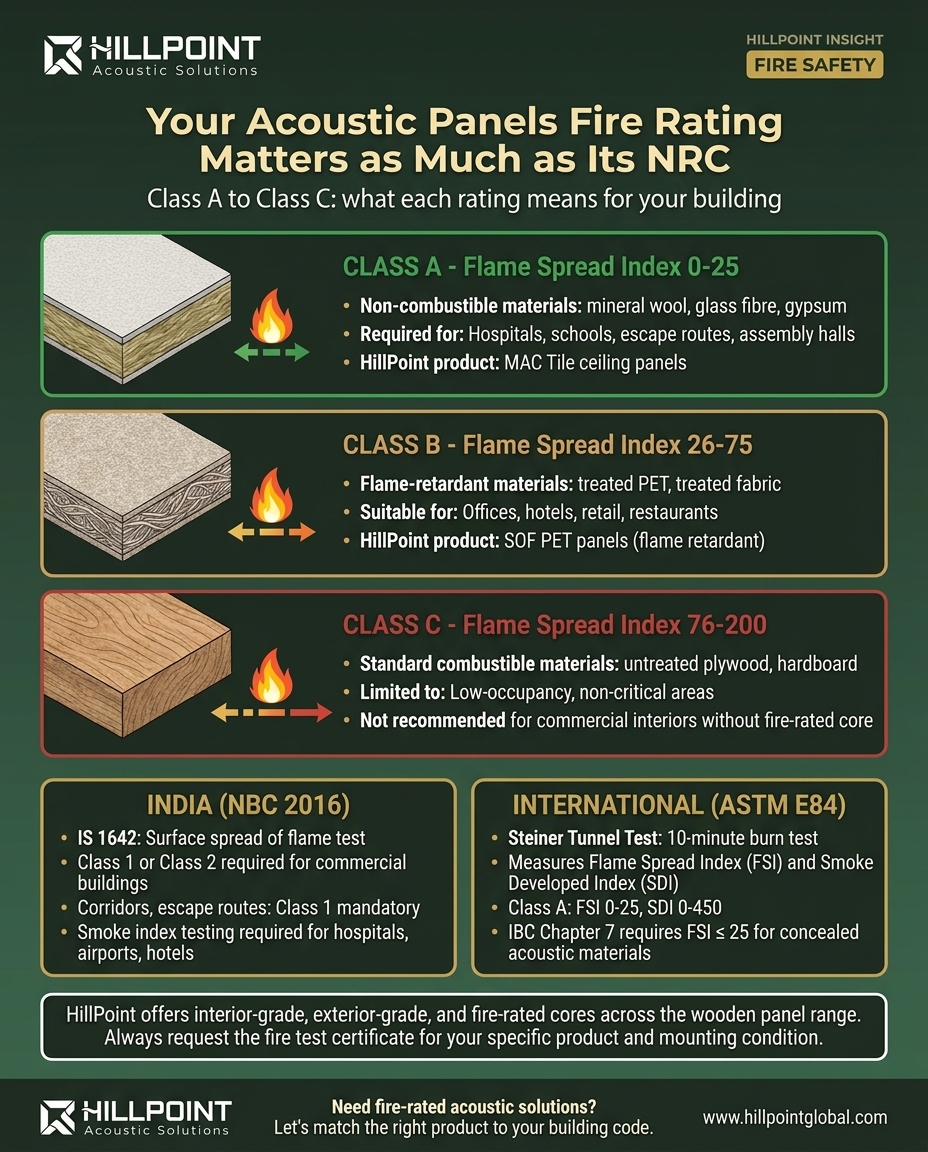
The reason WELL matters to us as a manufacturer is that the standard requires tested, documented acoustic performance data. You can't submit a product for a WELL project with estimated NRC values or a fire rating from a similar product. You need the actual test reports for the actual product going into the building.
The Acousstop range carries independently tested NRC and STC data mapped to WELL thresholds. When an architect is writing a specification for a WELL project, they can pull the product data and check it against the standard's requirements without guessing. We get involved at schematic stage on these projects because that's where the acoustic strategy either becomes part of the building or becomes a retrofit problem later.
If WELL certification is on your project roadmap, get the acoustic consultant in the room before the schematic phase wraps up. That one decision saves the most money and rework downstream.
Technical Guides
Need the full acoustic treatment and soundproofing guides?
The long-form acoustic panels India guide covers panel types, NRC logic, standards, and room treatment. The soundproofing solutions India guide covers STC logic, doors, walls, floors, and the block-and-isolate side of the same design problem.