
Recycled PET acoustic panels: from plastic bottles to sound panels
SOF PET panels turn recycled bottles into high-NRC acoustic treatment with lower water use, lower energy use, zero VOC emissions, and a practical end-of-life recycling path.
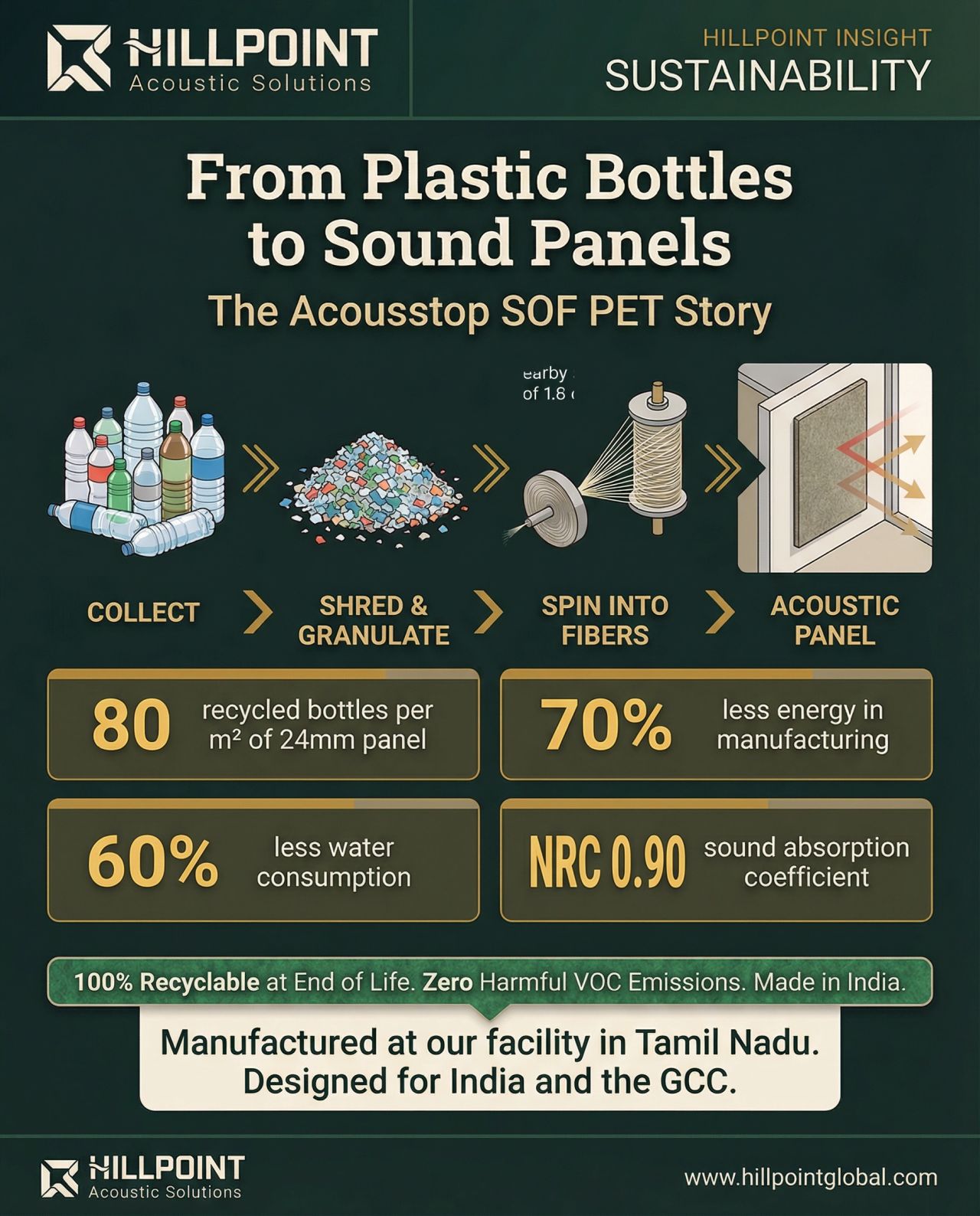
Every square metre of our SOF PET panel at 24mm thickness uses about 80 recycled plastic bottles. The bottles go through a pretty straightforward process: collect, shred into granules, spin the granules into polyester fibers, then press those fibers into finished acoustic panels at our manufacturing facility in Coimbatore, Tamil Nadu. The whole production line uses 70% less energy and 60% less water compared to conventional acoustic panel manufacturing.
Those numbers are real, and they matter if you're working on a project tracking IGBC or LEED certification. But there's another number that probably matters more on a day-to-day basis: zero VOC emissions.
Acoustic panels sit on walls and ceilings in enclosed spaces where people spend eight to ten hours a day. If the panel material is off-gassing volatile organic compounds, your indoor air quality takes a hit no matter how good the HVAC system is. That affects WELL certification scores directly, and it affects the people in the room whether anyone is measuring or not. Most PET panels on the market claim low VOC. Ours test at zero. The recycled polyester fiber is inert once pressed, and there is no formaldehyde binder in the construction.
What actually convinced the sceptics
The sustainability story gets attention, but what usually closes the conversation with architects is the acoustic performance. NRC 0.90 is a high sound absorption coefficient for any panel, full stop. It is higher than most fabric-wrapped fiberglass panels and significantly higher than foam alternatives. When we first started showing the test data to architects who were used to writing "recycled content" off as a compromise, the reaction was usually surprise.
The SOF PET range is also moisture resistant, which matters in GCC climates and Indian coastal cities where humidity is a constant problem. The panels don't absorb water, don't sag, and don't grow mould. They're stain repellent, so they hold up in education spaces and hospitals where wall panels take a beating. And they carry fire retardant certification, which is a non-negotiable for commercial interiors.
One thing that gets overlooked is the colour range. PET felt comes in enough colours to work as a design element, not just a functional treatment. Architects we've worked with on school projects and corporate offices in Bangalore and Doha have used the colour options to create visual patterns on walls while solving the acoustic problem at the same time.
The recycling loop
The panels are 100% recyclable at end of life. When a fitout gets torn out after 10 or 15 years, the SOF PET panels can go back into the recycling stream instead of a landfill. The recycled PET is not a secondary input we add for marketing. It is the primary raw material. Every panel starts as a plastic bottle and can end as raw material for something else.
We manufacture the full SOF PET range at our facility in Coimbatore, Tamil Nadu for projects across India and the GCC. The product line includes wall panels, ceiling panels, and suspended baffles, all using the same recycled polyester base material.
If you're spec'ing a project that needs sound absorbing panels with a sustainability story that holds up under scrutiny, the SOF PET range is worth looking at. The NRC data and fire test certificates are available from the product page.
Technical Guides
Need the full acoustic treatment and soundproofing guides?
The long-form acoustic panels India guide covers panel types, NRC logic, standards, and room treatment. The soundproofing solutions India guide covers STC logic, doors, walls, floors, and the block-and-isolate side of the same design problem.