PET vs Mineral Fibre vs Wood Acoustic Panels: Which Material Fits Your Project
PET, mineral fibre, and wood panels can all reach similar NRC values. Sustainability, moisture resistance, fire rating, and aesthetics determine which fits your project.
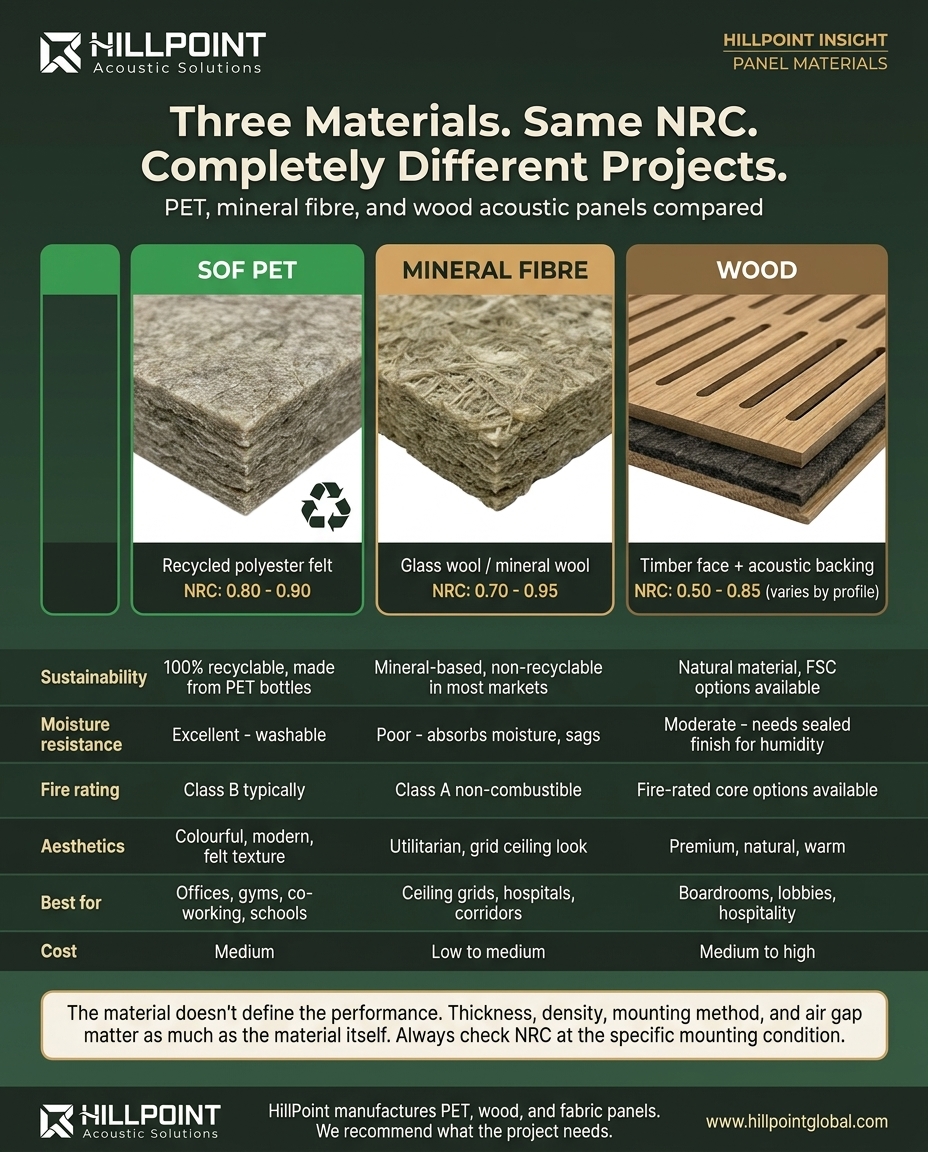
Three acoustic panels from three different materials can all hit NRC 0.85. An architect looking at spec sheets alone might conclude they're interchangeable. They're not.
The NRC rating tells you how much sound the panel absorbs at mid-band frequencies. It doesn't tell you how the panel handles moisture, whether it's combustible, what it looks like on a wall, how it ages over 10 years, or what happens to it at end of life. Those factors determine which material belongs in which project.
PET panels (HillPoint SOF range)
PET acoustic panels are made from compressed polyester fibres, typically derived from recycled plastic bottles. HillPoint's SOF range uses 100 percent recycled polyester and achieves NRC 0.80 to 0.90 depending on thickness (9mm to 24mm) and mounting method.
The standout properties are moisture resistance and washability. PET doesn't absorb water, doesn't sag in humid environments, and can be wiped clean. That makes it the practical choice for gyms, swimming pool areas, commercial kitchens, bathrooms, and any space where humidity or splash exposure would damage other panel types.
PET panels are also lightweight (roughly 2 to 3 kg per square metre for 12mm panels), which matters in retrofit situations where existing ceiling structures weren't designed for heavy suspended loads. They're available in a wide colour range (40+ options in the SOF series) and can be cut into custom shapes, hexagons, circles, or baffles, which gives designers creative flexibility that mineral fibre tiles can't match.
The fire rating is typically Class B (flame-retardant, not non-combustible), which is acceptable for most commercial applications but may not meet the Class A requirement for hospitals, certain public buildings, or projects following stricter fire codes. Always check the local fire code before specifying.
At end of life, PET panels are 100 percent recyclable back into polyester fibre. This closed-loop recyclability is increasingly relevant for projects targeting LEED, WELL, or Green Star certifications where material lifecycle impacts count toward credits.
Mineral fibre panels (HillPoint MAC Tile range)
Mineral fibre is the established standard for ceiling tiles in commercial construction. The material is a compressed blend of mineral wool, perlite, clay, and starch binders, formed into rigid tiles that sit in T-grid ceiling systems. HillPoint's Acousstop MAC Tile panels push the performance ceiling to NRC 0.95, which is about as high as any ceiling tile gets.
The primary advantage is fire performance. Mineral fibre is non-combustible (Class A), which makes it the default material for hospitals, schools, corridors, and any occupancy type where fire code compliance is non-negotiable.
The primary disadvantage is moisture sensitivity. Mineral fibre absorbs water vapour and liquid water. In humid climates or spaces with occasional leaks (above kitchens, in tropical regions without consistent climate control), mineral fibre tiles sag, discolour, and eventually need replacing. The GCC market, with its extreme humidity levels, has to specify moisture-resistant formulations or accept a shorter tile lifespan in non-climate-controlled areas.
Aesthetically, mineral fibre tiles look like what they are: functional ceiling tiles in a grid system. Some manufacturers offer textured or coffered profiles, but the visual character is utilitarian. For spaces where the ceiling is a design element, not just a utility surface, mineral fibre may not deliver the aesthetic intent.
Cost is generally the lowest of the three material types for equivalent coverage area, making it the default choice for large-area ceiling installations where budget drives the specification.
Wooden panels (HillPoint Acousstop Wooden range)
Wooden acoustic panels are the premium option for spaces where the acoustic treatment needs to look as good as it performs. HillPoint manufactures 11 wooden panel profiles (Niche, Micro Niche, Perf, Micro Perf, Diverse, Equitile, Grille, Assort, MAC Tile, Sway, and wooden baffles) in melamine, veneer, or paint finishes.
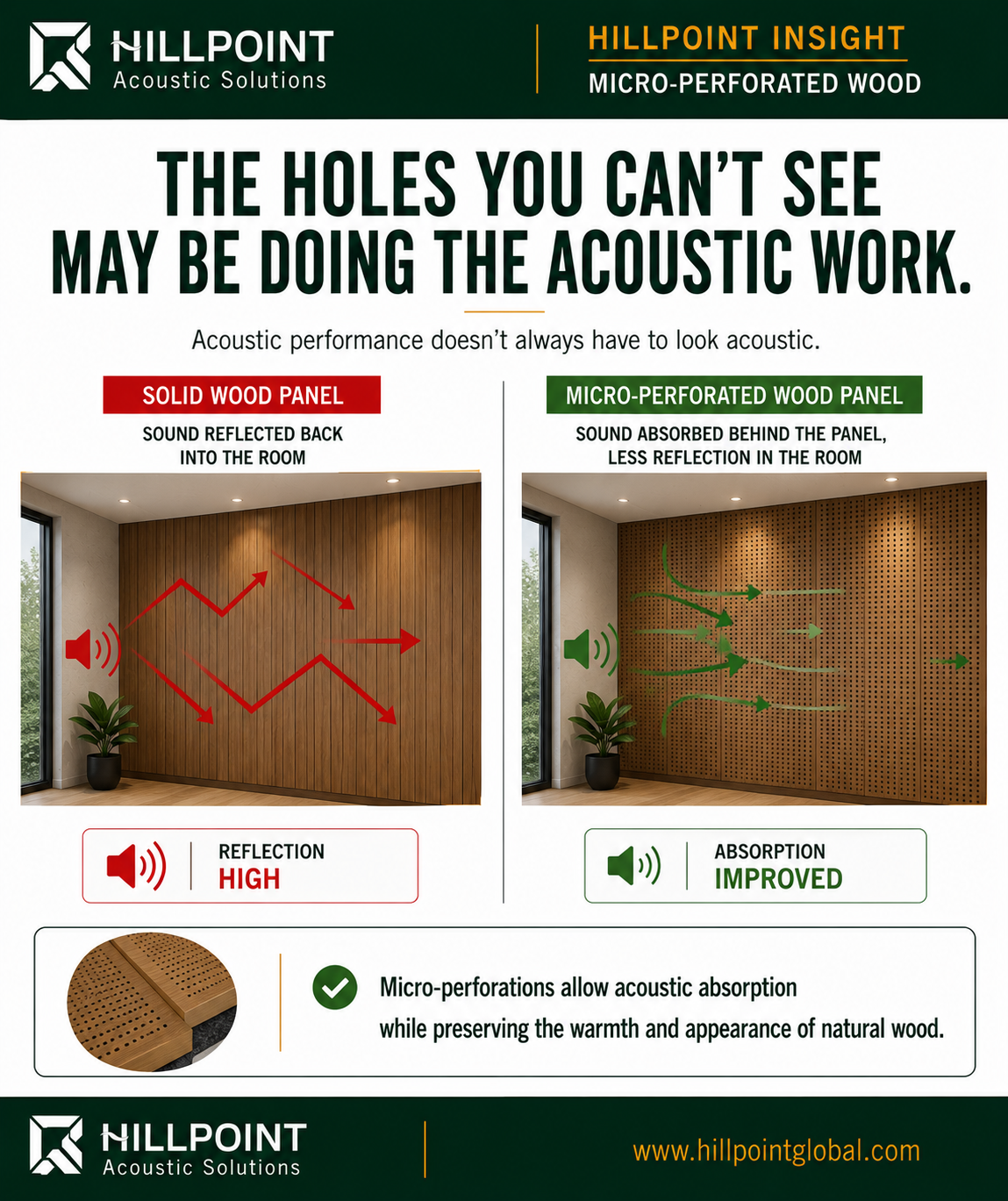
Acoustic performance in wooden panels depends heavily on the profile and backing. A solid timber panel with no perforations or backing absorbs almost nothing, the wood surface reflects sound like any other hard material. The absorption comes from the perforations or slots that allow sound to pass through the timber face and into the acoustic backing behind it (typically mineral wool or polyester felt).
This means the NRC range is wider than the other materials: from NRC 0.50 for lightly perforated profiles to NRC 0.85 for heavily perforated or slatted profiles with thick acoustic backing. Specifying a wooden panel for its NRC rating requires checking the specific profile, backing thickness, and mounting condition, not just the material category.
Wooden panels excel in boardrooms, hotel lobbies, reception areas, high-end restaurants, auditoriums, and any space where the ceiling or wall treatment is a visible design element. They're available in natural timber veneers (walnut, oak, teak, ash) that bring warmth and material quality to interiors.
Fire-rated cores are available for wooden panels, making them suitable for public buildings and high-occupancy spaces where fire compliance is required. HillPoint offers interior-grade, exterior-grade, and fire-rated core options across the wooden range.
Picking the right material
The material choice maps to the project constraints:
Budget-driven with maximum coverage needed: mineral fibre tiles in a standard grid. Humid, wet, or high-abuse environments: PET panels. Premium interiors where appearance matters as much as performance: wooden panels. Healthcare with Class A fire requirement: mineral fibre for ceilings, wooden panels with fire-rated cores for walls. Sustainability-focused projects: PET panels for recyclability, wooden panels with FSC certification for natural material credentials.
HillPoint manufactures all three material types at our Tamil Nadu facility. The recommendation for any given project depends on the room type, the acoustic target, the environmental conditions, the fire code, the aesthetic intent, and the budget. Starting with "we need NRC 0.85" and then picking the material that fits everything else is usually the right sequence.
Technical Guides
Need the full acoustic treatment and soundproofing guides?
The long-form acoustic panels India guide covers panel types, NRC logic, standards, and room treatment. The soundproofing solutions India guide covers STC logic, doors, walls, floors, and the block-and-isolate side of the same design problem.