The three axes of acoustic design: absorb, block, isolate
Acoustic treatment, sound blocking, and vibration isolation solve different problems. Strong acoustic design only works when all three axes are considered together.
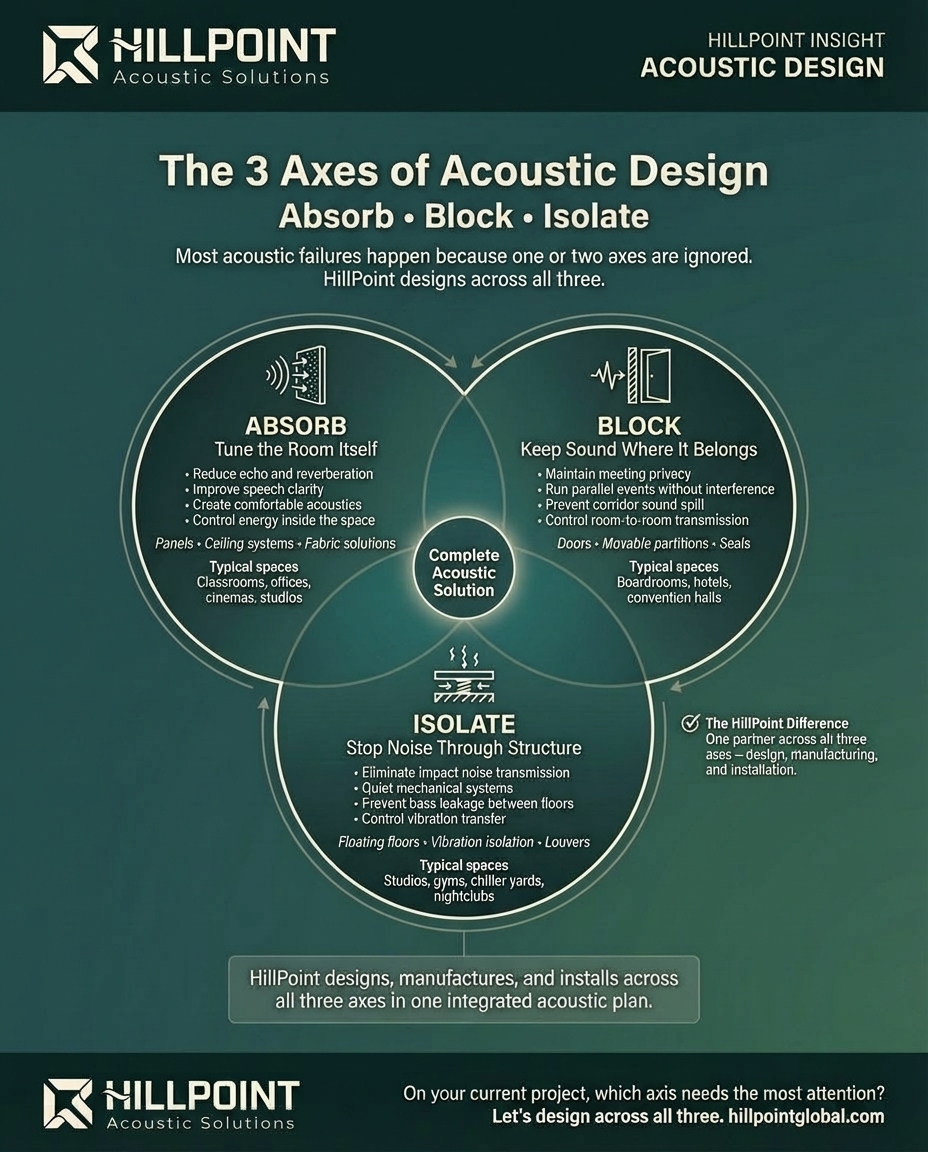
Every acoustic failure has the same root cause. The project addressed one axis and ignored the other two. Or more commonly, it addressed absorption and pretended that would solve everything.
Acoustic design has three distinct problems to solve, and they use different physics, different products, and different installation methods. Conflating them is how you end up with a conference room that has beautiful fabric panels on every wall but zero sound privacy because the door leaks and the partition wall is a single layer of plasterboard.
Absorb: tune the room itself
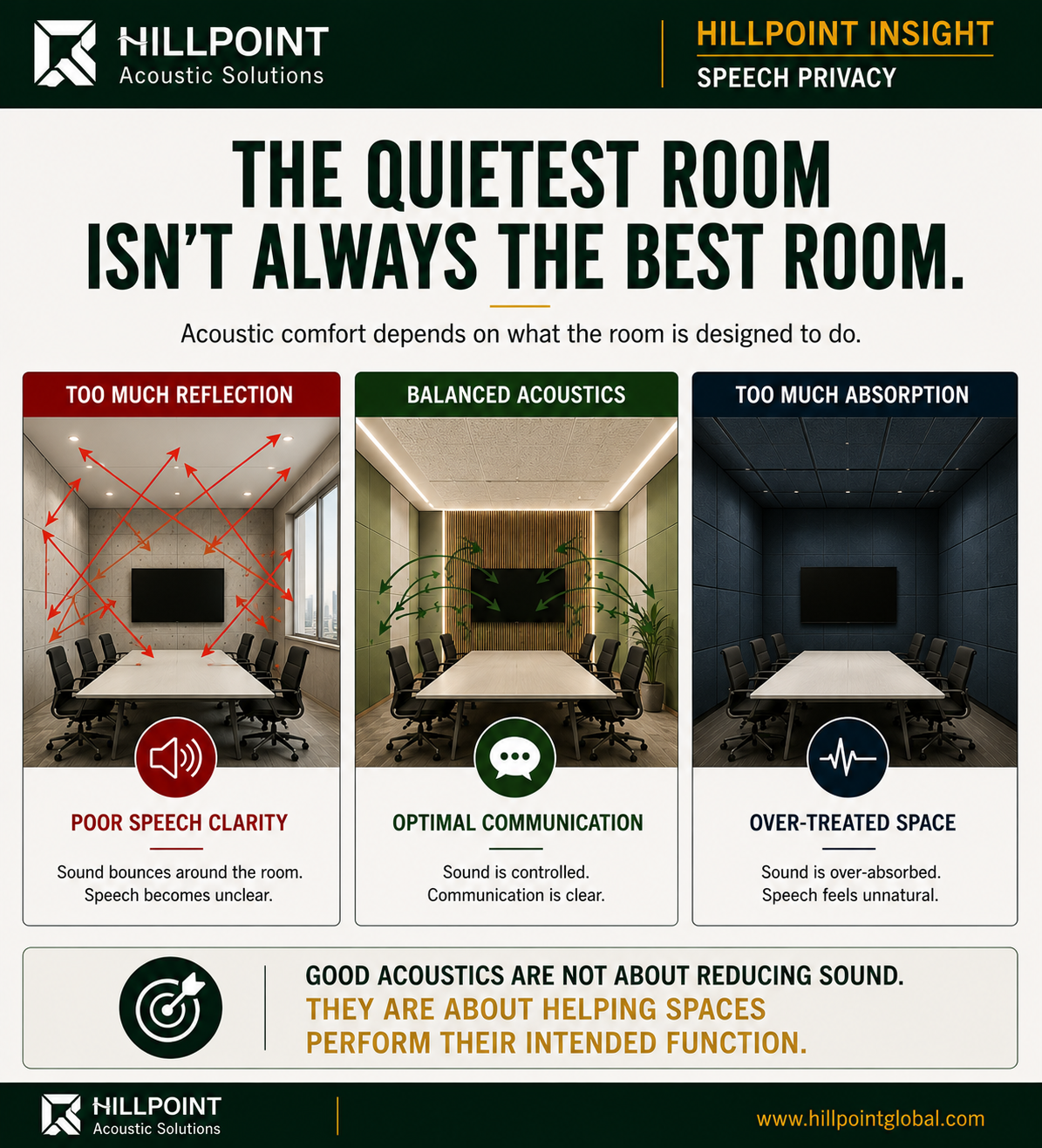
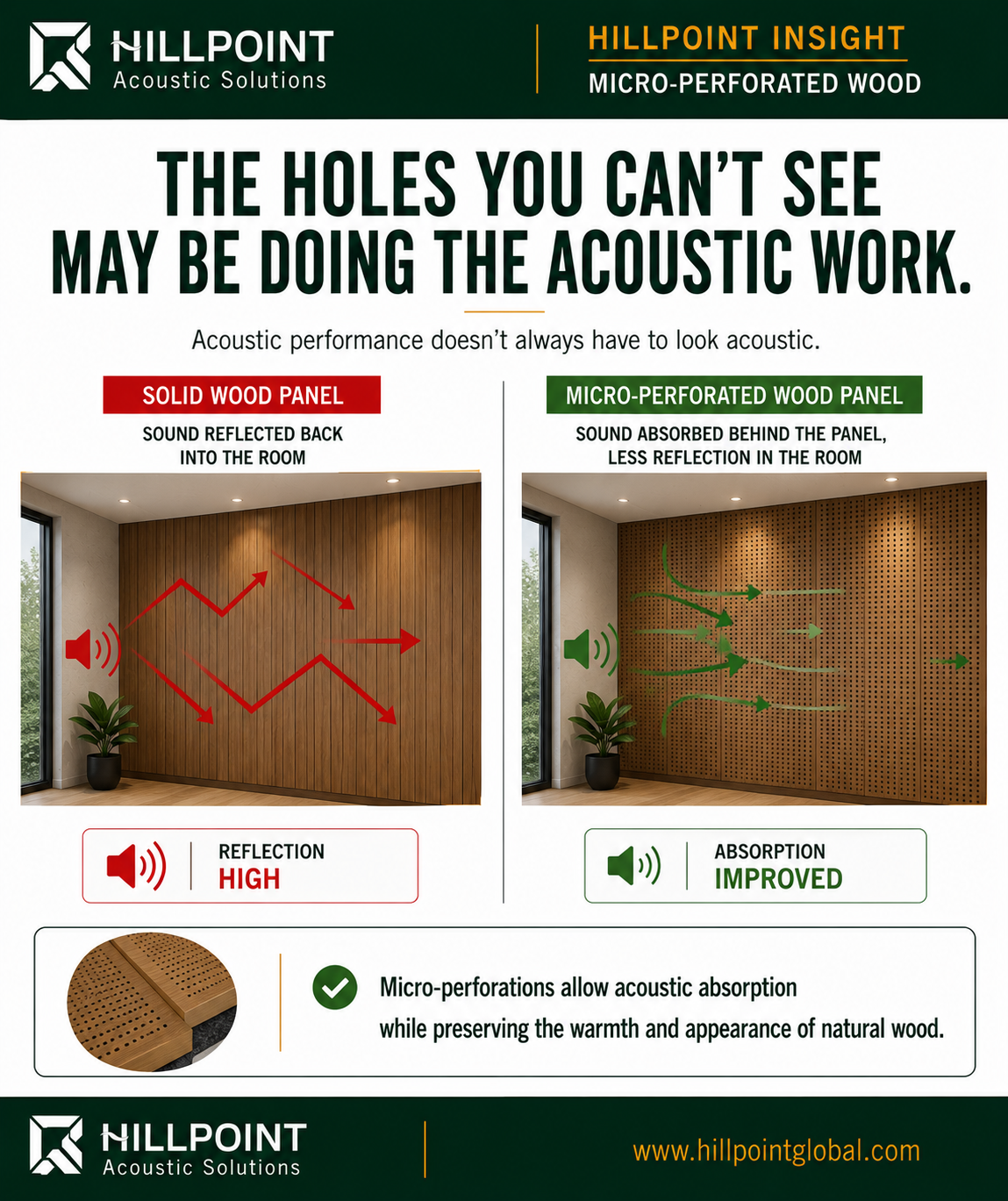
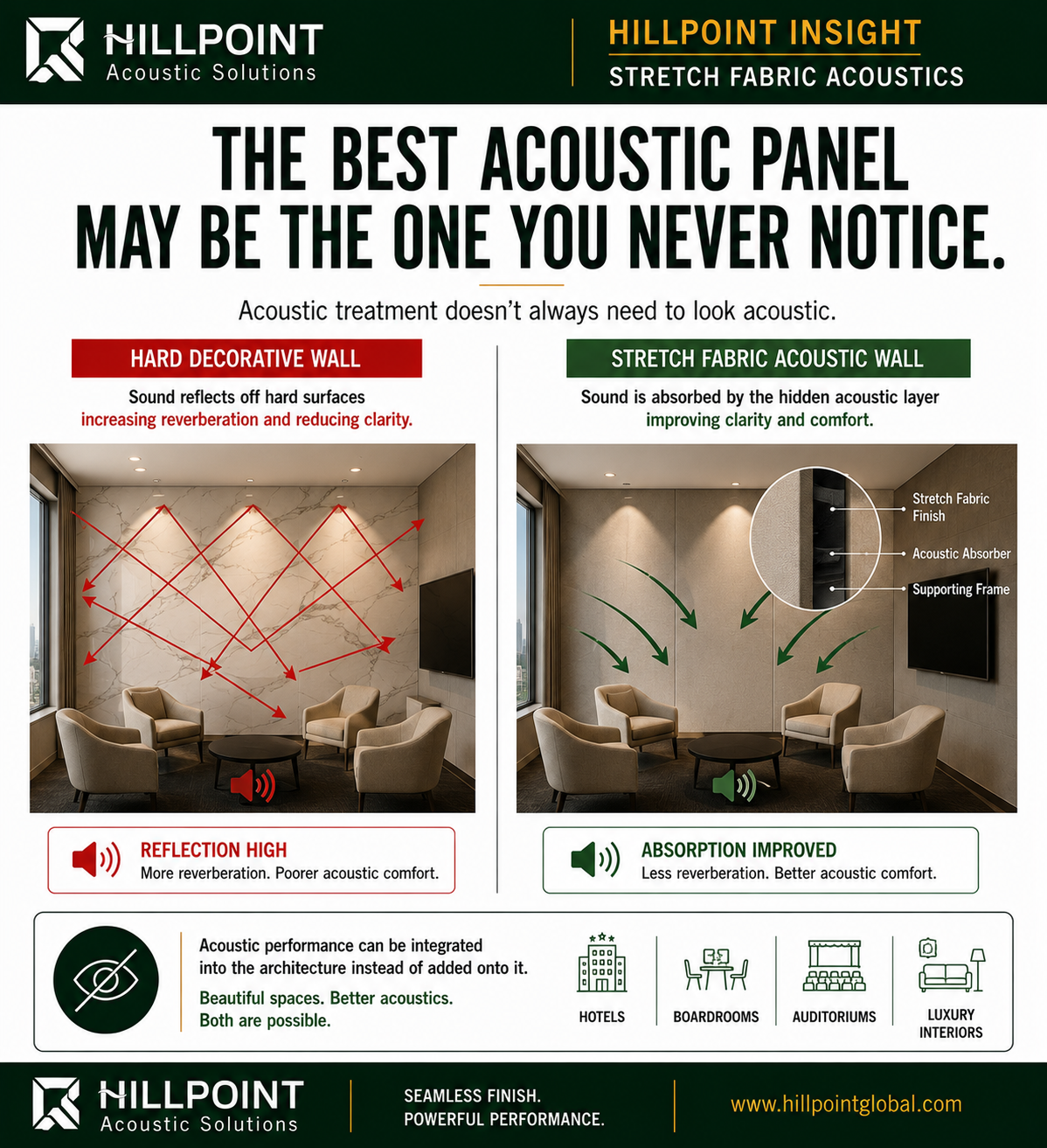
Absorption controls what happens to sound inside a room. It reduces echo, controls reverberation time, and improves speech clarity for the people in the space. The tools here are wall panels, ceiling tiles, suspended baffles, acoustic clouds, and stretch fabric systems.
This is the axis most people think of when they hear "acoustic treatment." And it handles one specific problem well: reducing the reverberant energy so the room sounds clearer and more comfortable. In classrooms, offices, studios, and cinemas, absorption is doing most of the work.
But absorption doesn't stop sound from leaving the room. A room covered in NRC 0.95 panels will sound great inside, and the conversation will still be perfectly audible from the corridor if the wall and door don't block transmission.
Block: keep sound where it belongs
Blocking controls sound transmission between rooms. It's about mass, density, and airtight construction. The tools here are acoustic doors, STC-rated partition walls, movable acoustic partitions, and proper sealing around every penetration in the wall or ceiling assembly.
This is what most people actually mean when they say "soundproofing," even though the industry uses that word loosely. You need blocking when conference rooms share walls with open offices, when hotel rooms are adjacent to each other, when a banquet hall splits into two event spaces, or when a boardroom needs to keep its discussions private.
The products are fundamentally different from absorption products. A fabric wall panel absorbs sound energy. An acoustic door blocks sound transmission. They're solving different problems, and using one for the other doesn't work.
Isolate: stop noise through the structure
Isolation is the axis most projects forget entirely. It deals with vibration and impact noise that travels through the building's structure rather than through the air. Footsteps from the floor above, bass frequencies from a nightclub below, equipment vibration from a mechanical room, the rumble from a gym in the same building.
The tools here are vibration isolation mounts, anti-vibration pads, floating floor systems, and structural decoupling. These products go inside the construction, under screeds or between wall layers. They're invisible after installation.
Isolation problems are the hardest to fix after the building is complete, because they require access to the structural assembly. If you've got a hotel room above a gym and the impact noise is transmitting through the floor slab, the fix involves working on the floor assembly, not hanging panels on the wall.
Why most firms only do one
Most acoustic product suppliers specialise in absorption. They sell panels and baffles and tiles. Some handle blocking with doors or partitions. Almost none handle isolation, because it requires a different product line and different installation expertise.
The result is that a project owner ends up with two or three different vendors for what should be a single acoustic strategy. The absorption vendor doesn't talk to the door vendor who doesn't talk to the vibration consultant. Nobody owns the overall acoustic outcome.
At HillPoint, we handle all three axes. The Acousstop range covers absorption, blocking, and isolation through panels, baffles, ceiling tiles, stretch systems, acoustic doors, movable partitions, Silenz membrane, Vibro mounts, and Vibro pads. We design the acoustic plan, manufacture in Tamil Nadu, and handle installation across India and the GCC. One team owns the whole acoustic outcome.
If you want to turn that operating model into a project conversation, start with our architectural acoustics company guide.
If you want the long-form primer on the BLOCK and ISOLATE sides specifically, the soundproofing solutions India guide zooms in on STC logic, wall assemblies, doors, floors, and weak-link detailing.
That's not a pitch. It is the practical answer to why acoustic projects fail when the three axes get handled by three separate teams with no shared brief.
Technical Guides
Need the full acoustic treatment and soundproofing guides?
The long-form acoustic panels India guide covers panel types, NRC logic, standards, and room treatment. The soundproofing solutions India guide covers STC logic, doors, walls, floors, and the block-and-isolate side of the same design problem.