The glass wall trap: beautiful design, terrible acoustics
Glass makes offices look open and modern, but it reflects almost all sound and can turn meeting rooms into loudspeakers for the whole floor.
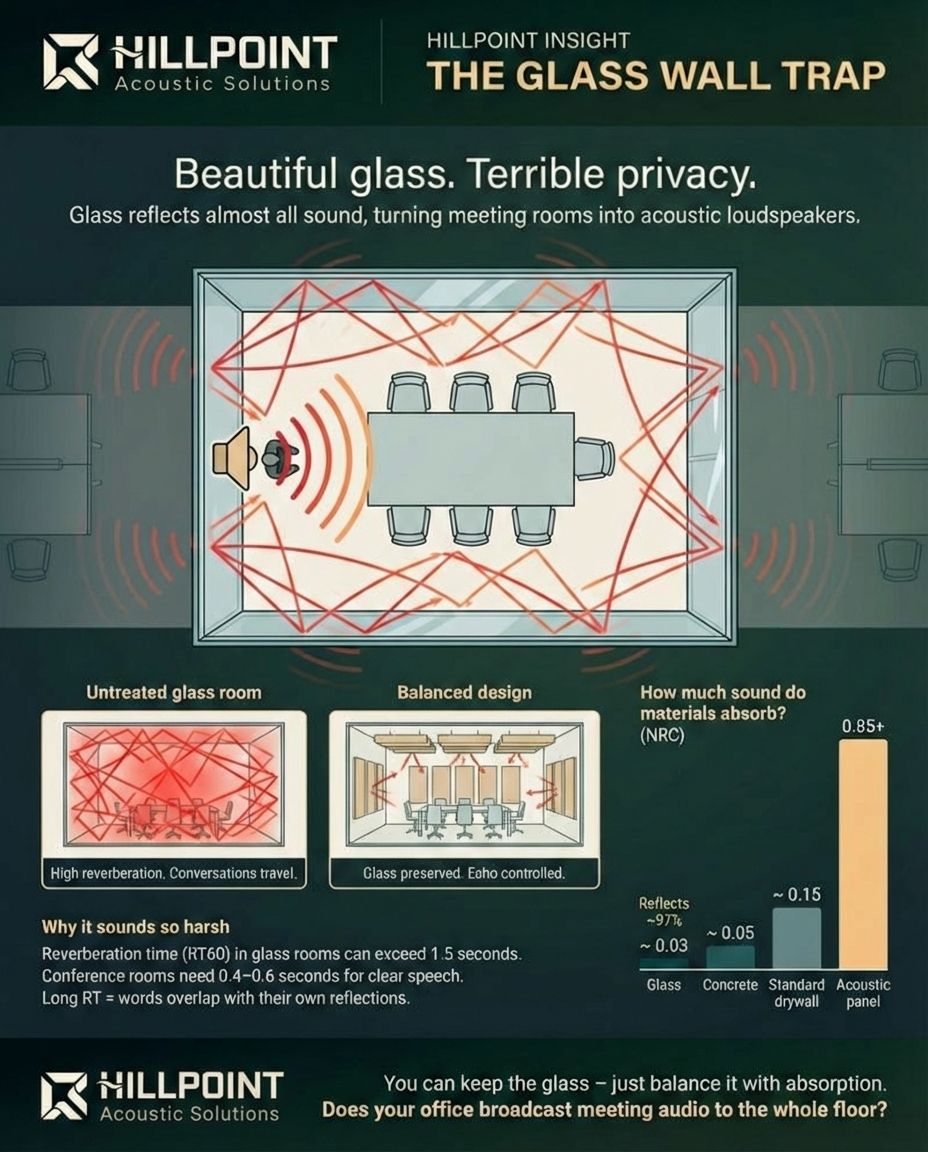
That sleek glass conference room looks stunning. It also broadcasts every confidential conversation to the entire floor.
Glass reflects nearly 100% of sound waves. It absorbs almost nothing, with NRC around 0.03. Fill an office with glass partitions, concrete floors, and metal fixtures and you create a space where sound bounces endlessly instead of dying away. It looks modern. It sounds awful.
What it actually sounds like
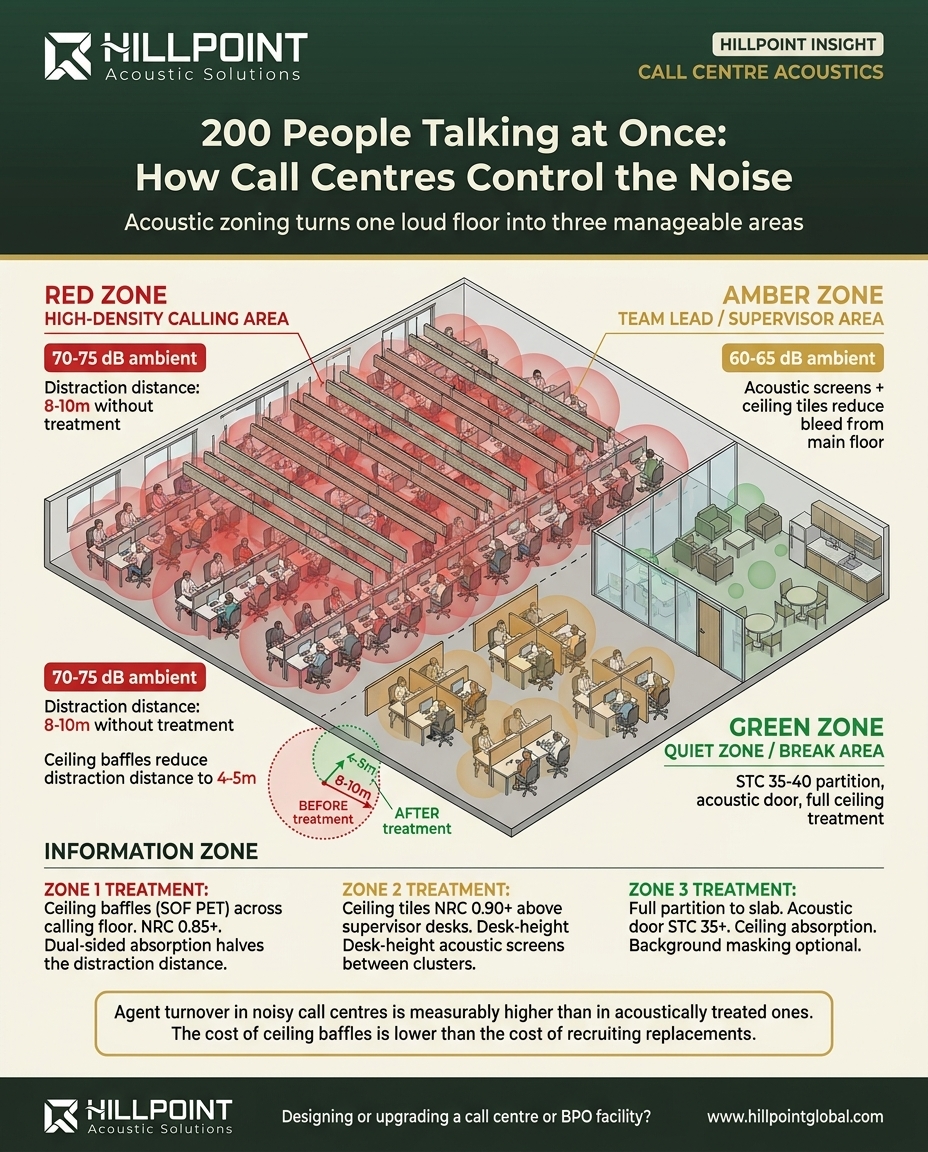
I walked through a new IT park in Bangalore last month. Beautiful glass-walled meeting rooms everywhere. The architect nailed the aesthetics. But during a routine call, I heard three different meetings simultaneously from 20 feet away.
This happens because reverberation time goes through the roof in reflective spaces. Sound that should decay in 0.5 seconds lingers for 1.5 seconds or longer. Speech overlaps with its own reflections. You can hear everything but understand nothing. And the privacy problem goes both ways: the people inside the meeting room think they're having a private conversation, and the people outside can follow along.
The NRC numbers explain why. Glass is around 0.03. Concrete is about 0.05. Standard drywall hits maybe 0.15. A room built from these materials has almost zero absorption. Everything reflects. Compare that to an acoustic panel at 0.85 or higher, and you can see the scale of the gap.
Why glass is so popular anyway
I get why architects spec glass. It lets light through. It makes small spaces feel bigger. Clients love the transparent, open look. It photographs well, which matters for commercial real estate marketing. Nobody is going to stop using glass in offices, and honestly, they shouldn't have to.
The problem isn't the glass itself. It's that nobody planned for its acoustic impact. Glass goes in, the room looks great, people move in, and six months later someone complains about echo in meetings. By then the interiors are done and the budget for acoustic treatment is gone.
The fix works better and costs less when it happens during design, not after. But even in a retrofit, there are options.
How to fix it without losing the look
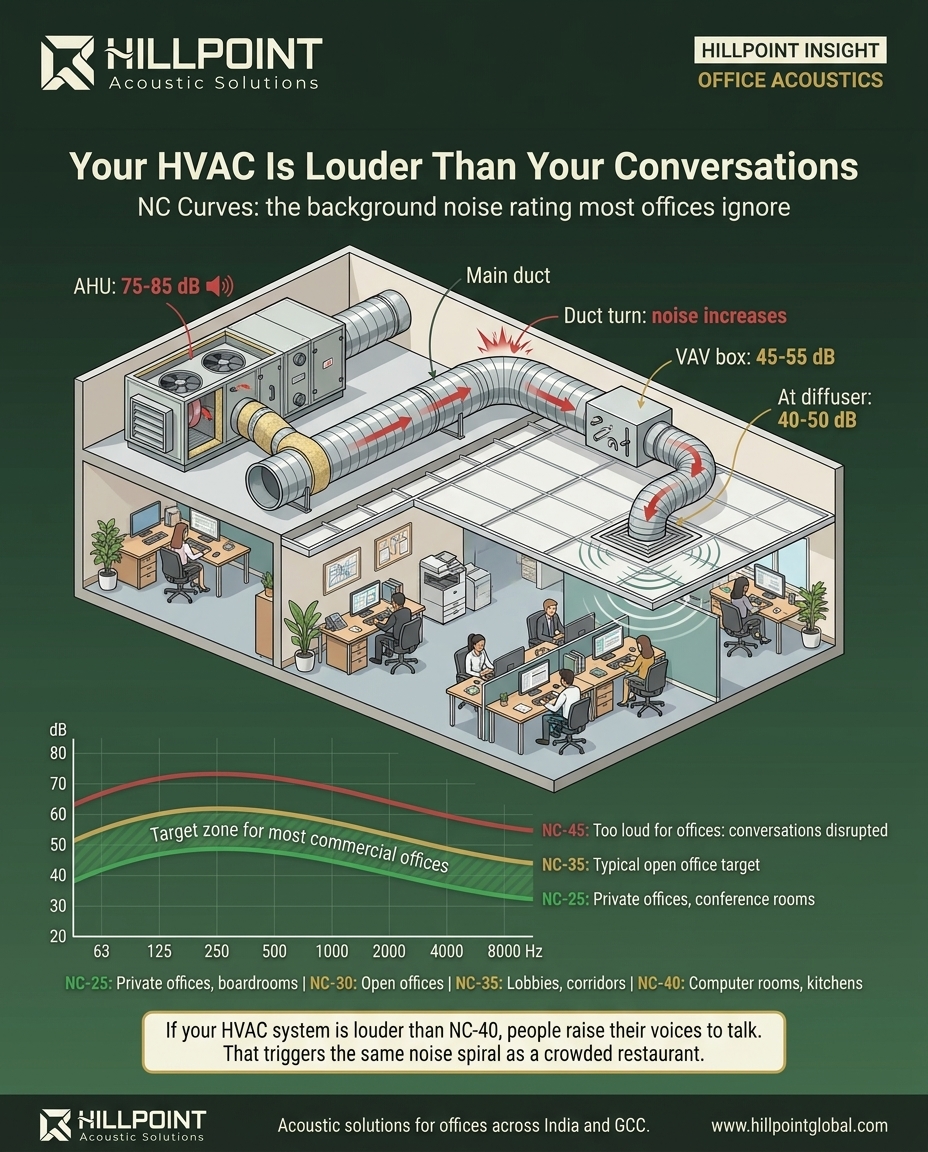
The solution works without ruining what the architect designed. Ceiling absorption handles the bulk of the work since that surface stays hidden anyway. Acoustic clouds or baffles suspended above meeting zones catch vertical reflections without blocking sightlines. Our Contour panels and Wood Baffles are the products we use most for this, partly because they add architectural interest to the ceiling rather than just being flat tiles.
Some fabric panels on select walls add warmth while reducing echo. Not everywhere, just where it matters. The back wall of a conference room is usually the highest-impact spot. A few Comfy panels there, maybe at 50mm thickness for better low-frequency performance, and the character of the room changes noticeably.
For the glass itself, there are a couple of options. The Tract stretch fabric system can be applied to one section of a glass wall if you are willing to sacrifice some transparency. More commonly, you leave the glass alone and put the absorption on every other available surface: the ceiling, the back wall, maybe the side wall opposite the glass. The math works out: if 25% of the room surface area is glass at NRC 0.03 and you treat 40% of the remaining surfaces to NRC 0.85 or higher, you can still get the overall RT60 down to 0.5-0.6 seconds.
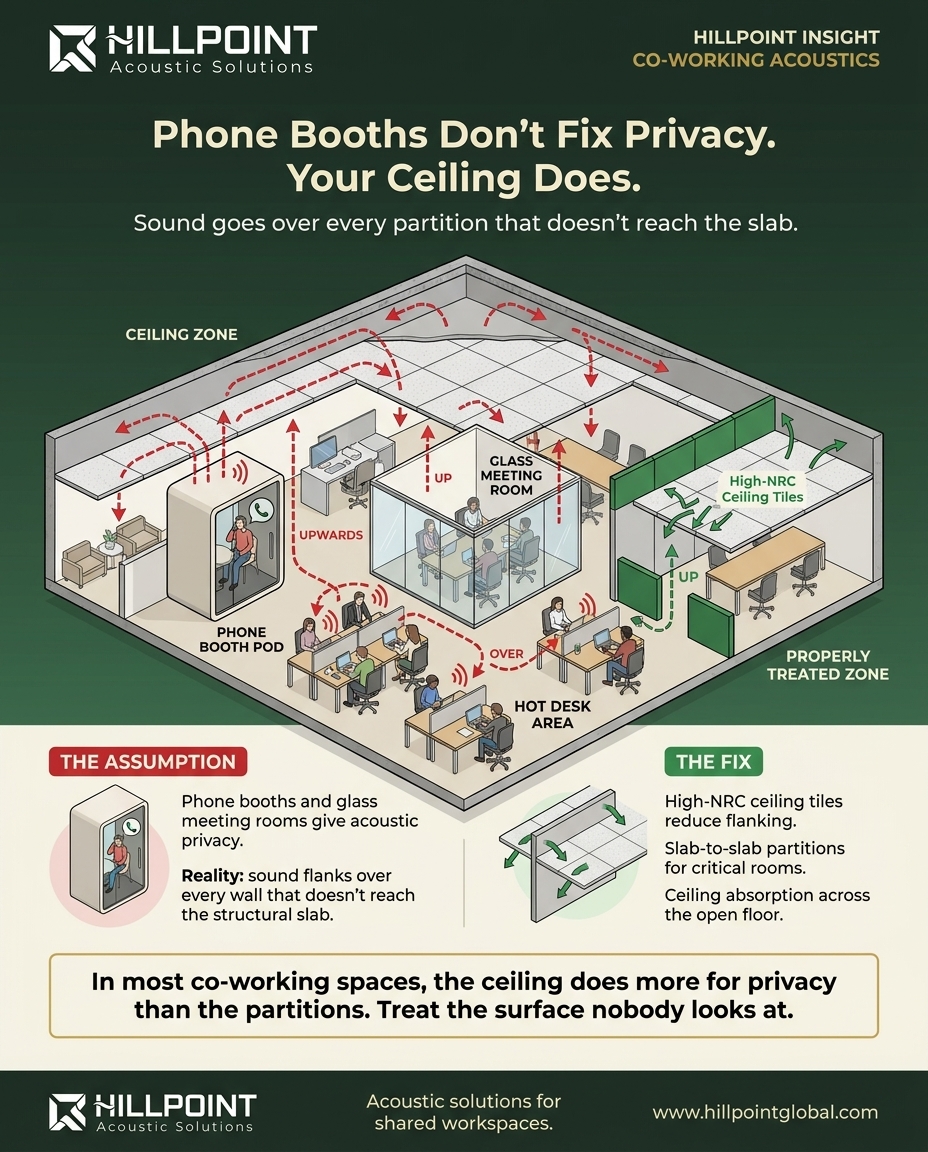
If sound transmission between the glass room and the open floor is the concern, that's a different problem. Reverberation treatment inside the room won't fix sound leaking through the glass itself. For that, the glass needs to have a decent STC rating, or you need to add our Silenz sound barrier membrane to adjacent partition walls that might be transmitting flanking noise around the glass.
You keep the glass. You just balance it with absorption elsewhere. Pretty simple when you know what to look for.
Technical Guides
Need the full acoustic treatment and soundproofing guides?
The long-form acoustic panels India guide covers panel types, NRC logic, standards, and room treatment. The soundproofing solutions India guide covers STC logic, doors, walls, floors, and the block-and-isolate side of the same design problem.