

Acoustic Treatment
Hospital and healthcare acoustic treatment
Hospital noise is not just an interior-design issue. It affects rest, privacy, concentration, and communication. Wards can sit above 60 dB during the day and remain noisy at night, while WHO guidance has long pointed to much quieter night-time conditions for patient recovery.
Healthcare buildings also combine very different acoustic needs in one facility: quiet patient rooms, confidential consultation rooms, noisy dental clinics, low-background-noise procedure rooms, busy waiting areas, and mechanical spaces that can transmit vibration through the structure.
Related guide
Need the hospital privacy and sound-isolation side too?
Healthcare acoustics is not only about quieter surfaces. Patient privacy, corridor leakage, door performance, and service penetrations matter just as much. The soundproofing guide covers those transmission paths in more detail.
Read the hospital soundproofing guidePatient rooms and wards
Patient rooms and wards need both absorption and isolation. Absorption reduces the noise build-up inside the room or ward. Isolation reduces sound transfer from corridors, nursing stations, adjacent rooms, and service areas.
High-NRC ceiling treatment is often the most practical first step because the ceiling is a large continuous surface. Comfy Tile panels and selected fabric or PET options can reduce reverberation without adding visual clutter. Wall panels can support the same goal where hygiene, impact resistance, and cleaning requirements allow.
For privacy and sleep quality, partitions and doors matter as much as room absorption. Acoustic doors with proper seals and STC-rated wall assemblies help keep corridor conversations and equipment noise from entering sensitive rooms.
Consultation rooms and clinics
Consultation rooms need speech privacy. Patients should not hear the room next door, and people in the corridor should not hear private conversations inside. In many clinic layouts, the door is the weakest link, so acoustic doors and seals become critical.
RT60 targets for consultation rooms are usually closer to meeting-room values, around 0.4 to 0.6 seconds, because the room depends on clear speech. Comfy panels, selected SOF products, and ceiling treatment can bring reverberation down without changing the room layout.
Dental clinics add another layer because drill and suction noise can be sharp and fatiguing. Vibro Pad and related vibration-control products may be useful where equipment or floor impact transmits through the structure.
Operating theatres and procedure rooms
Operating theatres and procedure rooms need low background noise so clinical teams can communicate clearly. They also need surfaces that can be cleaned, sealed, and coordinated with infection-control requirements.
Acoustic treatment in these rooms is therefore more constrained than in offices or schools. Flush or sealed ceiling systems, metal ceiling options, and cleanable finishes are usually more appropriate than exposed soft materials. The target is controlled noise without compromising maintenance, hygiene, or services access.
Mechanical noise also matters. HVAC, equipment rooms, pumps, and generators can raise the background noise floor if vibration and duct noise are not isolated correctly.
Waiting rooms and public areas
Waiting rooms, lobbies, pharmacies, and corridors often have the same acoustic problem as malls and airports: hard floors, hard ceilings, glass, and a lot of people. The result is reverberation that makes announcements, conversations, and staff instructions harder to understand.
Ceiling baffles, Comfy Tile panels, fabric wall panels, and Niche wooden panels can reduce that noise build-up while still fitting the design language of a hospital or clinic. These public spaces are often where acoustic treatment is easiest to retrofit because the work can be phased by zone.
For new hospitals, the better approach is to include acoustics early in the specification so patient rooms, consultation rooms, waiting areas, and procedure rooms each get the right combination of absorption, isolation, and vibration control.
Comparable interior references from our portfolio
These portfolio images are not presented as hospital projects. They show comparable wall, ceiling, and interior acoustic treatment approaches that can be adapted for healthcare spaces with the right hygiene and compliance requirements. See the full projects page for the broader portfolio.
GEMS World Academy

IBM Office
Products commonly used for this segment
These are the products that most often come up when we design acoustic treatment for hospital and healthcare acoustic treatment.
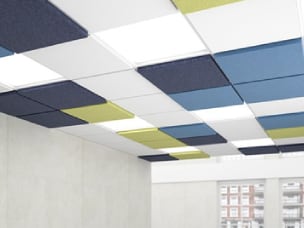
Comfy Panels-Fabric
Comfy Tile Panels
Moisture and humidity resistant
View product
Comfy Panels-Fabric
Comfy Panels
Multiple shade options
View product
SOF Panels – PET
SOF Baffles
Square, rounded, or custom profiles
View product
Acousstop Wooden Panels
Niche Panels
Clean, contemporary design
View product
Doors and Movable Partitions
Wooden Doors
Drop and perimeter seals prevent sound leakage
View product
Specialized Products
Acousstop Silenz
High mass for superior airborne sound reduction
View product
Specialized Products
Acousstop Vibro Pad
Interlocking design for fast installation
View product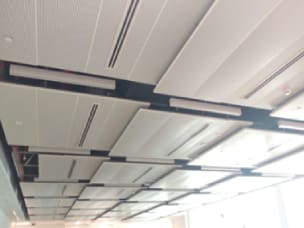
Specialized Products
Metpan
Plain and perforated metal ceiling pans for projects that need a harder-wearing surface than wood or fabric can offer. The perforated version adds sound absorption to the durability of metal.
View productStart the conversation
Planning acoustics for a healthcare space?
Share the room types, privacy requirements, hygiene constraints, and any consultant targets. We can help separate reverberation, sound isolation, and vibration-control needs across the facility.