NRC-backed product data
The key product lines on the site already publish NRC or acoustic performance values, so the discussion starts with real tested ranges rather than generic “sound absorbing” language.
Technical Support
Most online acoustic panel content focuses on small-room fixes and home-studio treatment. HillPoint supports the architect, PMC, consultant, and design-build team writing a submittal for a real commercial project.
HillPoint Global manufactures acoustic systems in Tamil Nadu and supports architects, consultants, and project teams across India and the GCC through teams in Bangalore, Doha, Dubai, and Jeddah. What matters at this stage is not marketing language. It is whether the product range comes with usable NRC and STC data, installation logic, and a team that can stay accountable through handover.
500+
Projects delivered
Since 2008
Operating history
India + GCC
Specification support
ISO 9001:2015
Quality system
The difference between a product vendor and a specification partner is usually found in the paperwork, coordination, and follow-through.
The key product lines on the site already publish NRC or acoustic performance values, so the discussion starts with real tested ranges rather than generic “sound absorbing” language.
We can work from drawings, room schedules, consultant notes, and product schedules, then respond with a tighter product mix instead of a generic catalogue dump.
Specification work is easier when finishes, mounting logic, and ceiling interfaces can be reviewed early instead of improvised after procurement.
Design intent only matters if the installed system still behaves like the approved one. That is where direct manufacturer involvement matters most.
These are the product lines most often specified on commercial projects. Exact absorption depends on thickness, mounting, and room geometry, so treat this as the starting point and request the full spec pack for the detailed test data.
| Product line | Published acoustic value | Typical application |
|---|---|---|
| MAC Tile Panels | Up to NRC 0.95 | Suspended ceiling systems, classrooms, offices |
| Micro Perf Panels | Up to NRC 0.90 | Meeting rooms, auditoriums, premium ceiling and wall applications |
| Comfy Panels | Up to NRC 0.90 | Conference spaces, boardrooms, video-call rooms |
| Perf Panels | Up to NRC 0.85 | Feature walls, auditoriums, lobbies |
| Grille Panels | Up to NRC 0.80 | Visible architectural wall and ceiling treatments |
| SOF Baffles | Up to NRC 0.65 | Exposed ceilings, open offices, retrofit ceilings |
| Acousstop Acoustic Doors | 38 dB to 50 dB | Boardrooms, studios, medical rooms |
| Metpan / metal panels | Configuration-specific | Industrial, transit, high-traffic environments |
If your BOQ needs the frequency-band absorption data, fire information, mounting logic, or door test reports, request the specification pack rather than relying on a single-number summary.
If the brief is just to buy the cheapest panel that loosely fits a budget line, HillPoint is probably not the right call. If the brief is to get an acoustic system through consultant review, procurement, and installation without the performance collapsing halfway through the process, that's where we fit better.
Specification work is usually about the details that disappear from product listings: mounting condition, ceiling-grid compatibility, whether the product is solving absorption or isolation, what happens at edge conditions, and whether the installer is working from the same intent that was approved at submittal stage.
That is why we connect product detail, project references, and deeper educational content in the acoustic insights section. Many enquiries start with a product name, but the right decision usually comes from seeing how the whole room works, not just the panel.
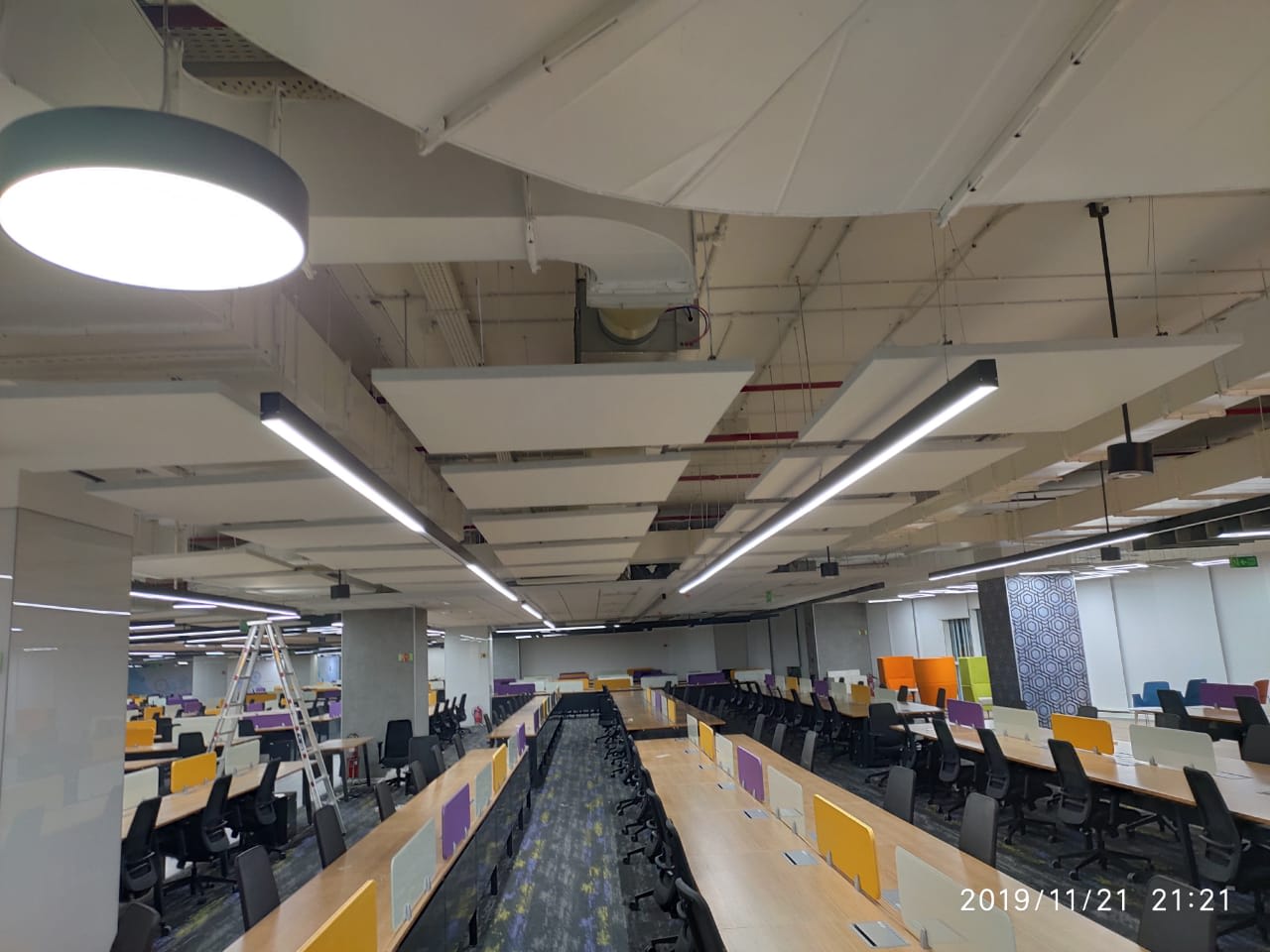
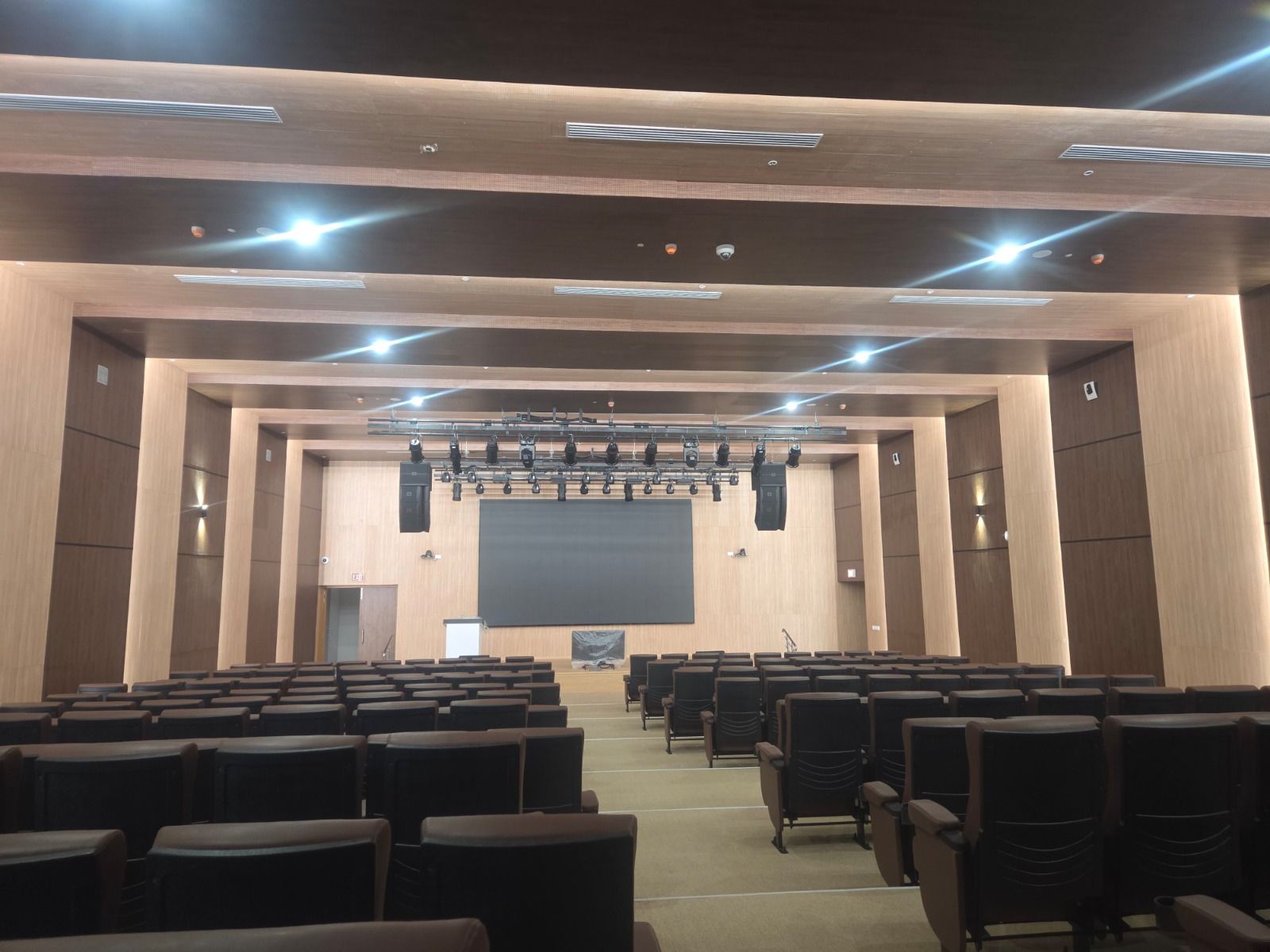
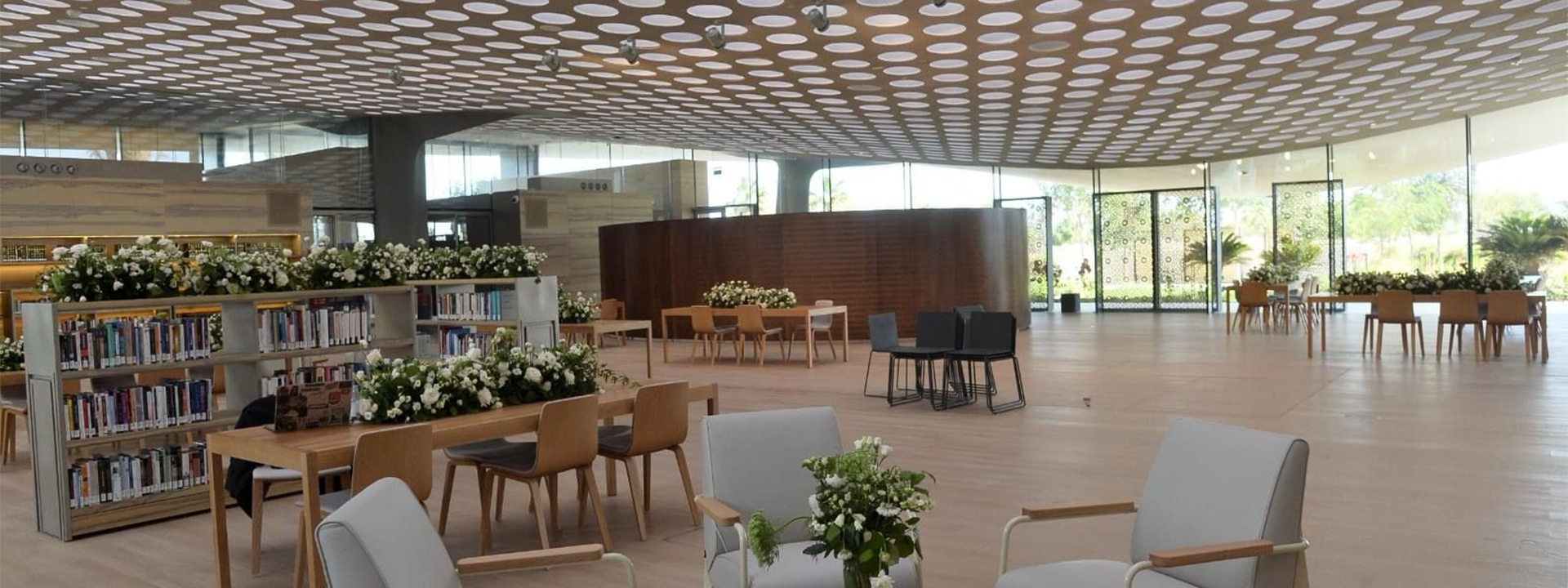
The public portfolio already spans corporate workplaces, education, auditoriums, hospitality, airport and stadium work, and specialized mechanical-noise applications. That breadth matters because project teams are rarely solving the same acoustic problem twice.
Corporate references such as Accenture sit alongside education work like Qatar University, auditorium projects in Chennai, and stadium-linked references in the GCC. It gives the specification team more than one precedent when the brief moves from “panel supplier” to “how has this been handled on comparable projects?”.
NRC is a useful filter, but it is still a single-number average across the mid-band speech frequencies. It will not tell you much about low-frequency HVAC rumble, structure-borne noise, or why one mounting detail outperforms another in the real room.
If a project is sensitive below 250 Hz, or if the acoustic issue is really about blocking and isolation rather than absorption, the right answer may involve doors, membranes, vibration isolation, or ceiling build-ups instead of more panels. That's exactly why the specification conversation should happen before the order, not after the complaint.
These references cover the mix of sectors that typically matter to consultants, architects, and PMCs evaluating a manufacturer for commercial work.
These product detail pages give the specification team a faster route into finishes, mounting logic, and published performance values.

Acousstop Wooden Panels
Engineered for maximum absorption in ceilings
View product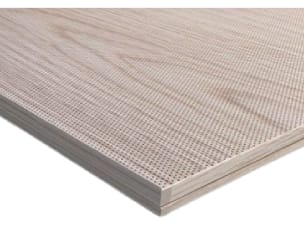
Acousstop Wooden Panels
NRC up to 0.9, among the highest in the wooden panel range
View product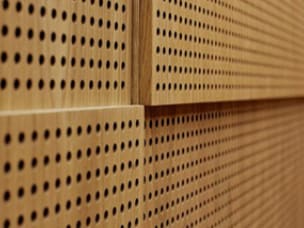
Acousstop Wooden Panels
Elegant aesthetically pleasing design
View product
Comfy Panels-Fabric
Multiple shade options
View product
Doors and Movable Partitions
Drop and perimeter seals prevent sound leakage
View product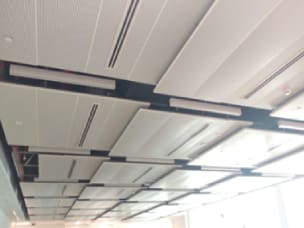
Specialized Products
Plain and perforated metal ceiling pans for projects that need a harder-wearing surface than wood or fabric can offer. The perforated version adds sound absorption to the durability of metal.
View productRelated Guides
Use the acoustic panels India guide for the absorb side of the brief and the soundproofing solutions India guide for the block-and-isolate side. Together they explain product selection, sound blocking, and isolation before you choose a system.
Yes. The most useful starting point is a room schedule, drawings, and any target RT60, STC, or privacy requirement already set by the project team.
That is usually part of the specification process. Samples, finishes, and the product mix typically need alignment before procurement is locked.
Yes. The range spans panels, ceiling systems, acoustic doors, and isolation products, which is often more useful than solving only one acoustic axis.
Ask for the relevant product pack, project references, and the exact test data that matches the room type you are working on.
Specification Pack
Send the project type, room schedule, and the products you are evaluating. We can respond with the most relevant data instead of a generic catalogue.