Micro-Perforated Wood Panels: Acoustics You Can't See
Micro-perforated wood panels keep the look of solid timber while absorbing sound. Here is how the perforations work and what sets their real performance.
Walk into a well-finished boardroom lined floor to ceiling in timber and your ear expects it to ring. Hard wood, big flat surfaces, a long table. By rights it should bounce voices around. Often it doesn't, and the reason is sitting right in front of you in holes you'd have to lean in to notice.
That's the whole appeal of micro-perforated wood. The room keeps the warmth and the grain. The echo that usually comes with that look quietly goes away.
Architects run into this tension constantly. The interior wants natural materials, and acoustics wants something to soak up reflections, and those two briefs feel like they're pulling against each other. Micro-perforated panels are one of the cleaner ways out of that fight.
Why solid wood is an acoustic problem
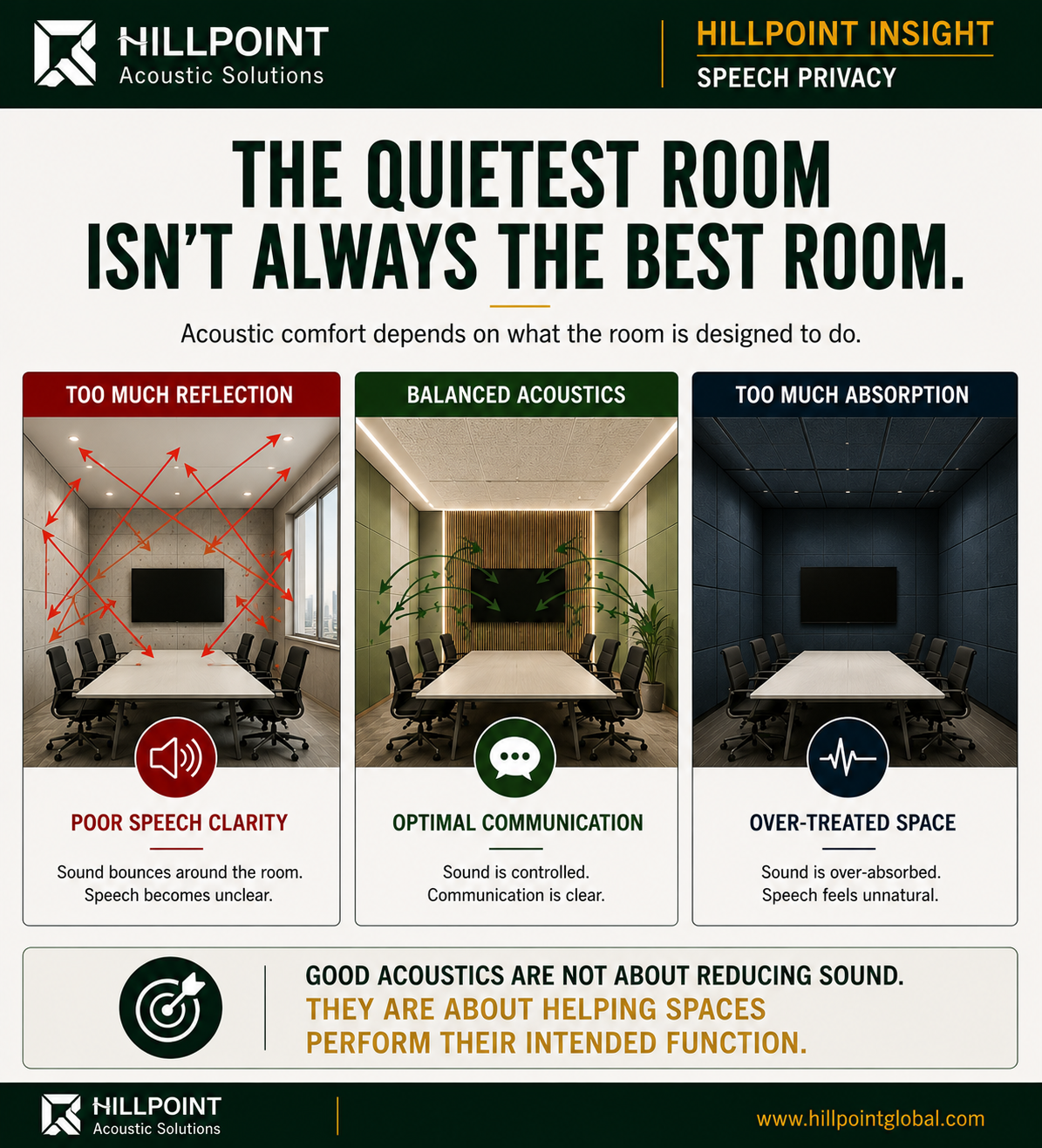
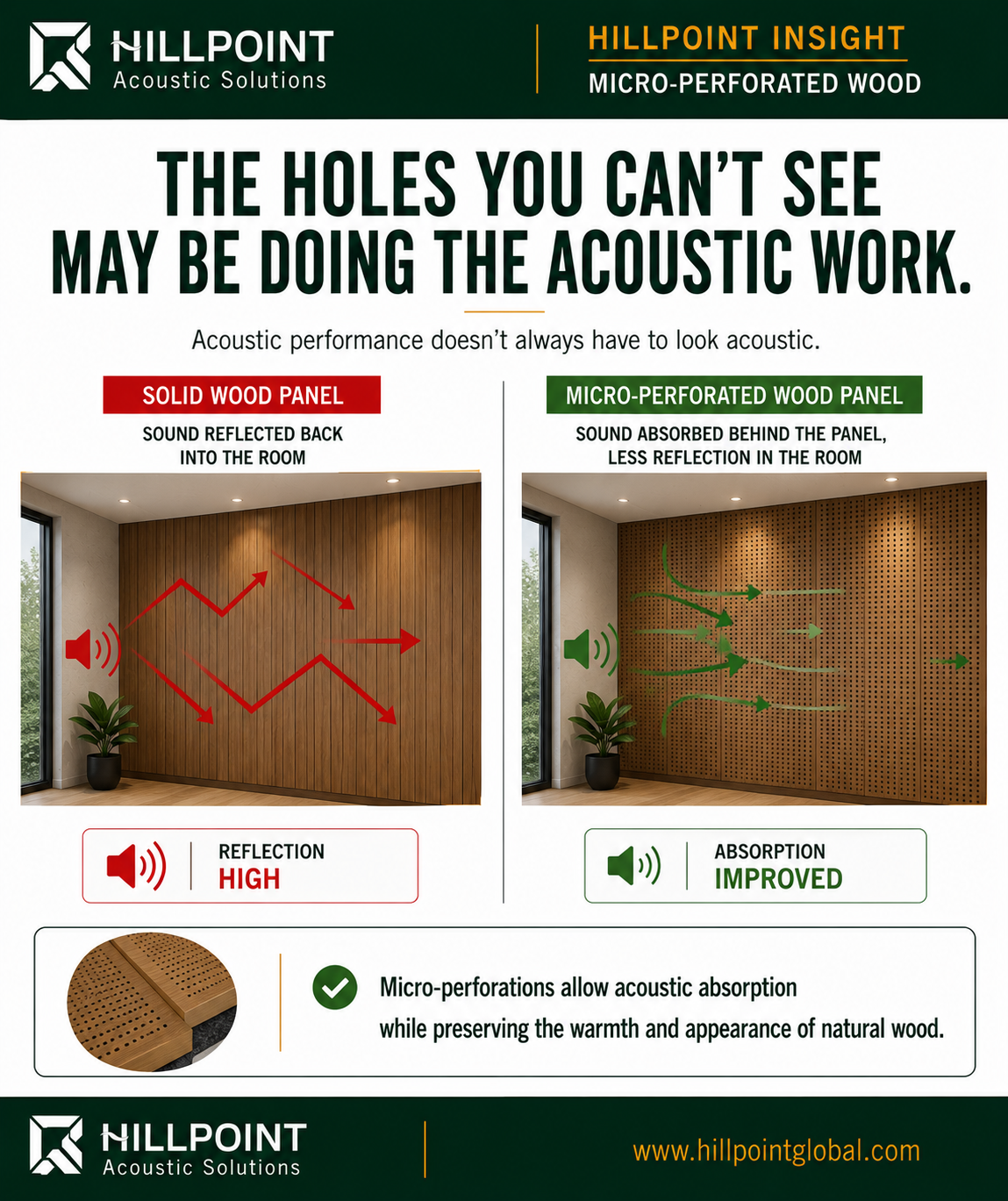
Wood earns its place for the look and the durability. Acoustically, though, a solid timber surface is just a hard reflector. Sound hits it and most of the energy comes straight back into the room.
Cover a lot of a space in exposed solid wood and that adds up. Reverberation climbs, speech gets harder to follow, and the room starts feeling noisier than the actual sound levels suggest. None of this means wood is a bad choice. It means the surface behaviour has to be handled rather than ignored, which is where the perforations come in.
What are micro-perforated wood panels?
Micro-perforated wood panels are timber acoustic panels with a face full of small perforations, fine enough to barely register from across a room, backed by an air cavity and usually an absorptive layer. The perforations let sound energy into the system behind the face, where it gets absorbed instead of reflecting back. From a normal viewing distance the panel still reads as a premium wood finish.
How the holes actually work
People picture the holes as little windows that let sound "escape" behind the panel, and that's close enough to start with, but the real mechanism is a bit more interesting. A perforated facing over an air cavity behaves as a resonant absorber. The air in and around the holes moves back and forth, the cavity acts like a spring behind it, and at the frequencies where that system resonates it pulls energy out of the sound field. Add a porous backing and you broaden the effect and damp it.
So yes, perforated wood panels absorb sound, and they do it as a tuned system rather than a simple sieve. Less energy reflects, reverberation drops, speech clears up, and the room gets more comfortable to be in, all while the visible surface stays wooden.
What actually sets the performance
This is the part that gets glossed over in a lot of product copy, and it's the part that matters most. A micro-perforated panel doesn't have one fixed acoustic value. Its performance shifts with the design, mainly:
1. Open area, the total percentage of the face that's actually perforated.
2. Hole size and spacing, which change how the facing resonates.
3. Panel thickness, since the depth of each hole is part of the system.
4. Cavity depth behind the panel, which moves the absorption up or down the frequency range.
5. The backing material, which broadens and steadies the absorption.
Change any of those and you move the band the panel works in. That's the honest caveat: specifying micro-perforated wood isn't "tick the box and the room is fixed." It's tuning the geometry and the build-up to the reverberation problem you've actually got. A beautiful panel with the wrong open area and cavity for the room is a handsome wall doing less than the data sheet led you to expect. If you want the background on why a single absorption number can hide this, the NRC ratings piece gets into what the figure leaves out.
Why architects keep reaching for it
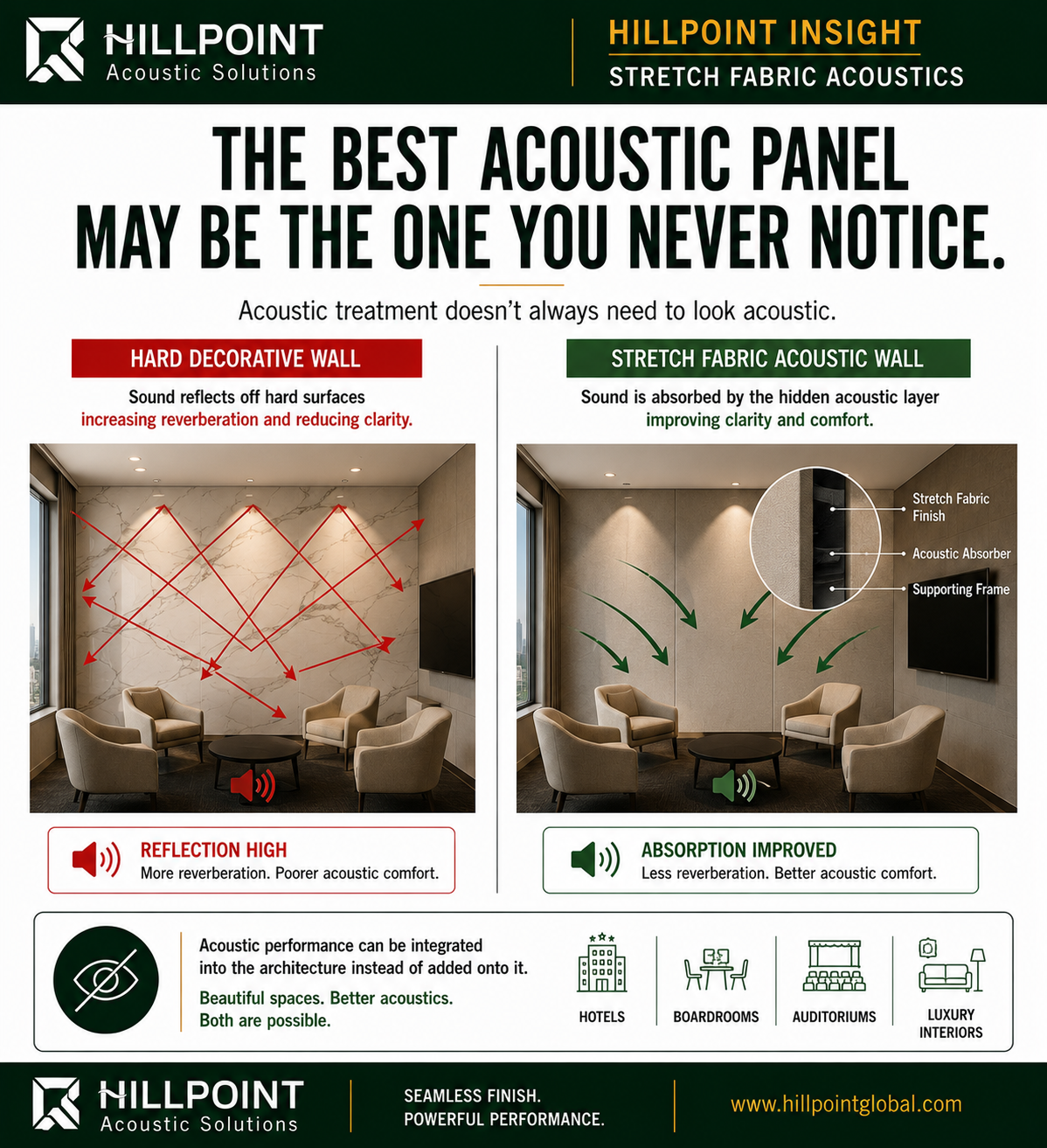
The pull is obvious once you've fought the alternative. Most acoustic treatment announces itself. Fabric panels, foam, visible absorbers, all of it reads as "acoustic stuff bolted onto the design." Micro-perforated wood folds the function into the finish, so the acoustic surface is the architectural surface. You're not choosing between the timber wall you wanted and the absorption the room needs.
Visitors notice the wood. They almost never clock the perforations. Those barely-visible holes can still be carrying a real share of the room's acoustic performance, which is a satisfying thing when it's done right.
Where it fits
Auditoriums use it to keep speech clear without giving up the architectural character. Boardrooms and executive spaces lean on it to cut reverberation where a fabric-covered wall would feel out of place. Corporate offices, especially the client-facing and collaboration areas, use it for comfort that doesn't look clinical. Schools and lecture rooms get speech intelligibility out of a durable surface. And hospitality interiors keep their premium timber look while holding noise down. Public buildings round it out, where durability, appearance and acoustics all have to coexist.
Spec it as a system, not a finish
The thread through all of this: the visible surface is only part of the answer. The perforation pattern, the panel thickness, the backing and the cavity behind it decide the result together, so the acoustic design wants to sit inside the architectural decision, not get bolted on after the finishes are chosen. Decide the look and the performance in the same conversation and you get both. Leave acoustics until the timber is already specified and you're usually negotiating a compromise.
That's how we'd approach it at HillPoint Global. We manufacture the Acousstop micro-perforated wood range and size the perforation and backing to the room's actual reverberation target, rather than handing over a finish that only looks acoustic. If a project wants the timber look and the quiet, the panel build-up is worth settling early with the rest of the interior.
For the products, see the Micro Perf panels and Micro Niche panels. The room coverage piece helps work out how much treated surface a space needs in the first place. Sound absorption is measured under ISO 354 and ASTM C423 reverberation-room methods if you want the testing detail (astm.org).
Technical Guides
Need the full acoustic treatment and soundproofing guides?
The long-form acoustic panels India guide covers panel types, NRC logic, standards, and room treatment. The soundproofing solutions India guide covers STC logic, doors, walls, floors, and the block-and-isolate side of the same design problem.