Speech Privacy vs Speech Intelligibility in Acoustics
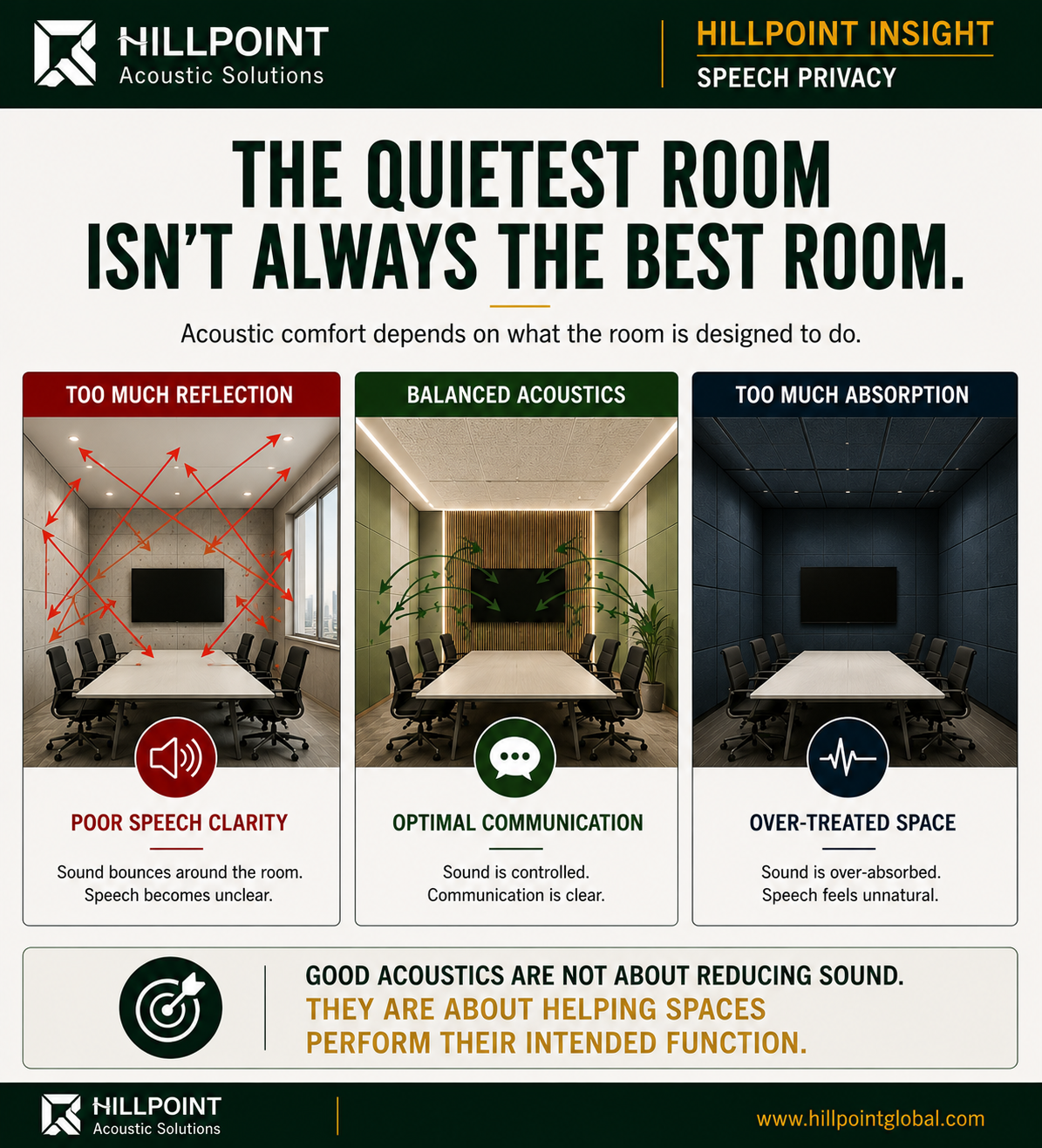
The quietest room isn't the best room. Speech privacy and speech intelligibility pull in different directions, and good acoustic design balances them by use.
Ask most people what good acoustics means and they'll say quiet. Less sound, better room. It's an easy assumption and it's wrong often enough to send projects after the wrong target.
A successful room isn't the quietest one. It's the one that does its job. A lecture hall and a consultation room both have acoustic briefs, and those briefs point in nearly opposite directions. Treat them the same and at least one of them ends up failing the people using it.
That split comes down to two ideas that get talked about as if they're the same thing. They aren't.
Two goals people treat as one
Speech intelligibility is about being understood. In a classroom, a boardroom, an auditorium, you want every word to reach the listener clearly and without effort. Reverberation, background noise and uncontrolled reflections all chip away at it, which is why those rooms get treated for clarity.
Speech privacy is the opposite concern. In an executive office, a clinic room, an HR or legal space, the point is that people outside the room can't follow what's being said inside it. Keeping the conversation in is as much the brief as making it clear within.
What's the difference between speech privacy and speech intelligibility?
Speech intelligibility measures how clearly speech is understood by the intended listener. Speech privacy measures how well speech is kept from being understood by everyone else. One is about clarity for the person you're talking to. The other is about protecting the conversation from the people you aren't. A room can be strong on one and weak on the other.
Why they pull against each other
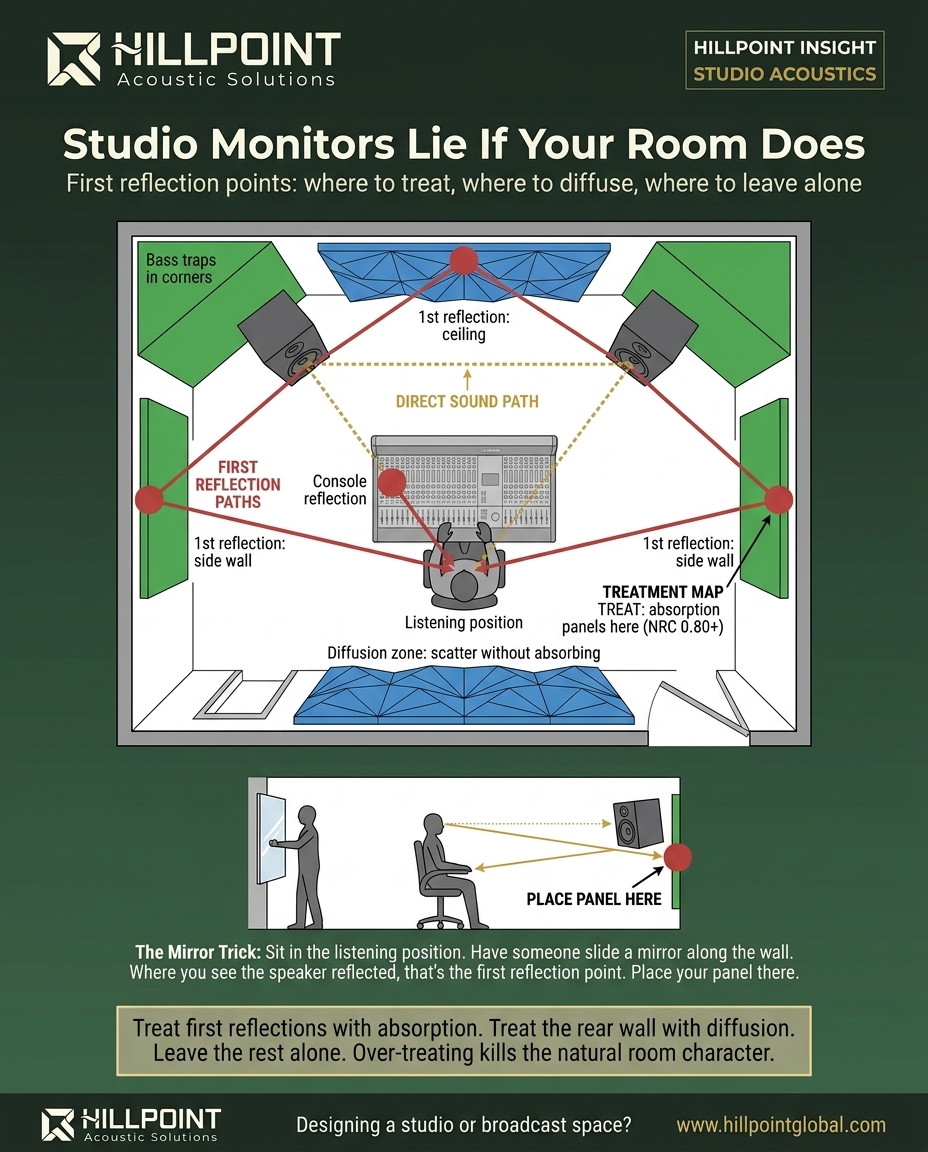
Optimise a room purely for clarity and you can make it easier for the wrong people to overhear too. Push privacy too hard inside the room and you can hurt the communication you actually wanted. The two aren't enemies exactly, but you can't max both in the same space, so the real work is picking the balance the room's function calls for. A boardroom leans toward clarity with controlled reverberation. A consult room leans toward containment. Most spaces sit somewhere on that line rather than at either end.
Why is a quiet office bad for privacy?
This one feels backwards until you've stood in it. An open office that's too quiet has worse speech privacy, not better, because there's no background sound to cover conversations. Every call carries clean across the floor, and you can follow the meeting three desks away word for word. Privacy in open plan isn't silence. It comes from a balance of absorbing reflections, blocking where the layout allows, and holding a steady, unobtrusive background level so nearby speech stops being intelligible. Our distraction distance piece gets into how that plays out across an open floor, and the open office one covers why overheard speech is so distracting in the first place.
Too much reflection, and too much absorption
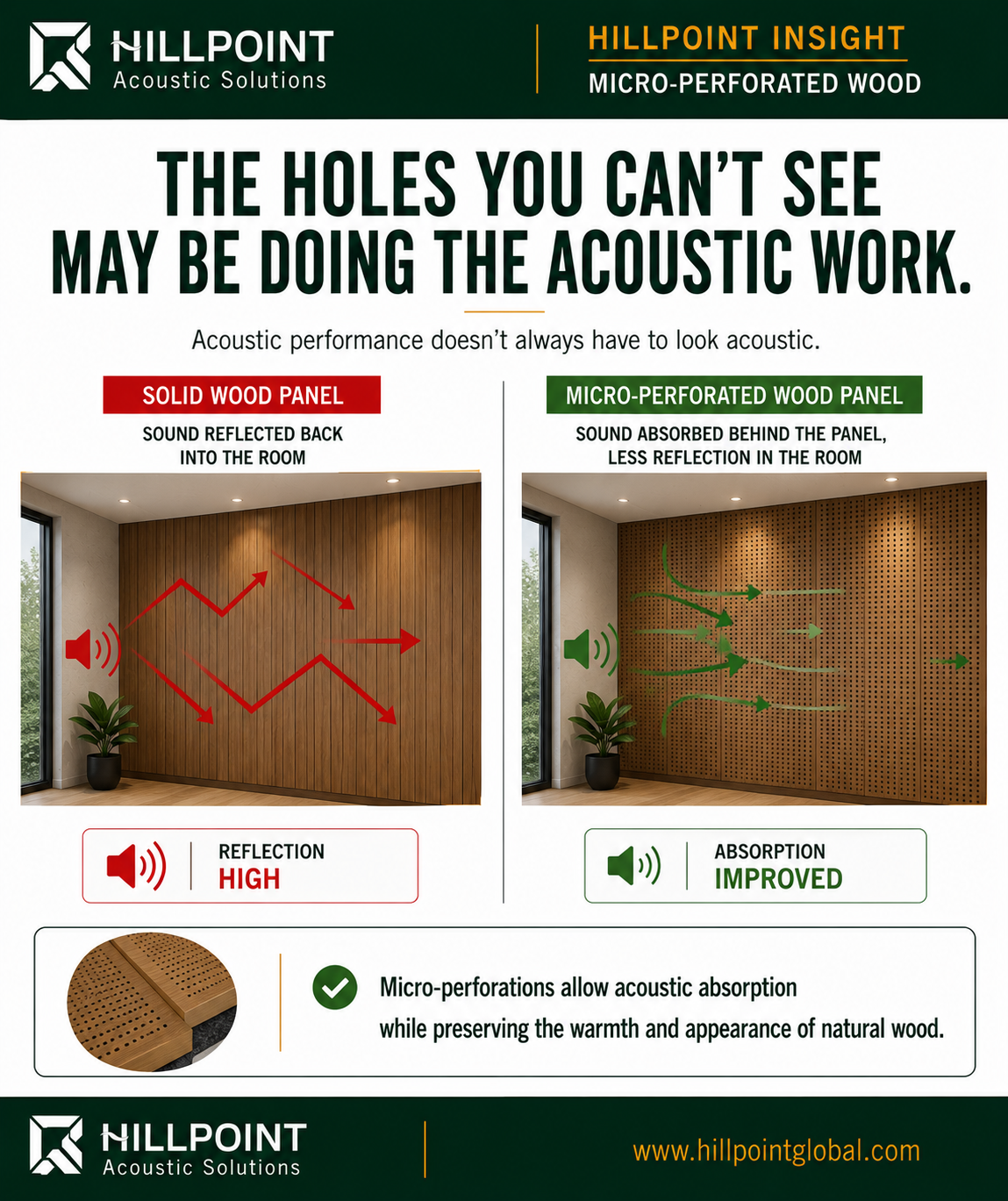
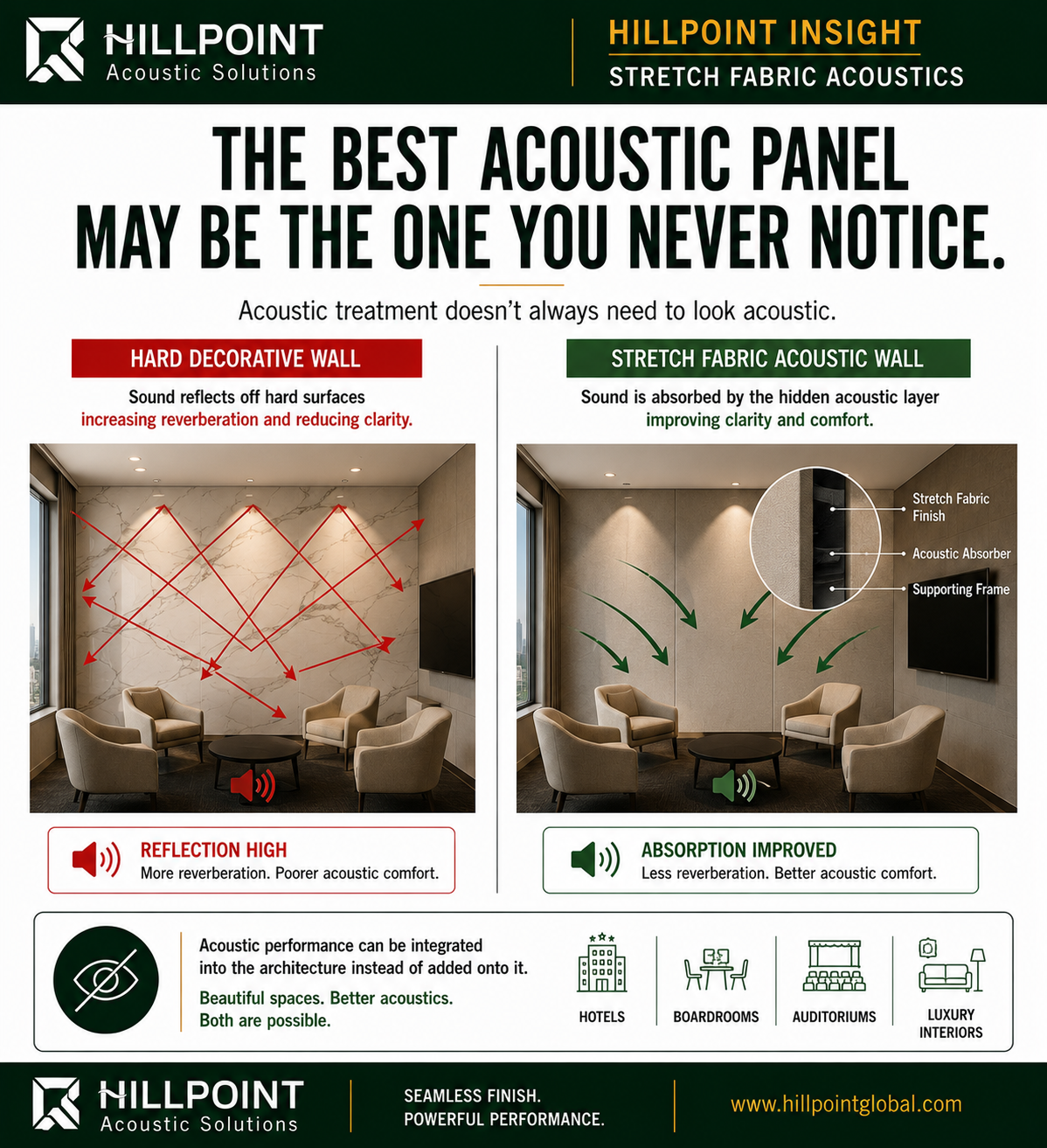
Both extremes fail, just differently. A room full of hard surfaces, glass, stone, concrete, bare walls, throws reflections around until clarity drops, voices rise, and everyone leaves a long meeting tired. That's the case for treatment, and it's real.
But more absorption isn't automatically more better. Over-treat a room and it can feel dead and slightly unnatural, people instinctively lower their voices, and the space stops feeling alive. The aim was never maximum absorption. It's the right amount for the use, which sometimes means leaving a room with more life in it than an instinct to "deaden everything" would suggest.
Different rooms, different targets
The mistake underneath most of this is assuming every room should hit the same acoustic number. They shouldn't. A classroom needs strong intelligibility so students follow the teacher, and there are standards written specifically for that. A boardroom needs clarity and controlled reverberation for discussion. An open office needs a working balance between collaboration and privacy, which is the hardest brief of the lot. Healthcare spaces need patient privacy while staff still communicate easily. And hospitality interiors need comfort without going so far that they kill the atmosphere people actually came for. Same building, several different acoustic answers.
Design to the function, not to a single number
The through-line: good acoustics isn't about reducing sound, maximising absorption, or chasing quiet. It's about understanding what happens in a room and shaping the sound to support it. Privacy and intelligibility aren't competing goals so much as different settings on the same dial, and the right setting depends entirely on what the room is for.
That's the conversation we'd rather start with at HillPoint Global. We manufacture the absorption and the blocking side of this, the panels, the acoustic doors and the partitions, and we'd ask what a space is meant to do before reaching for a product, because the same panel helps one room and overcorrects another. One honest note on scope: where privacy is the brief in an open plan, sound masking is its own electronic system and part of the answer, separate from the treatment we make. The quietest room is rarely the best room. It's usually just the one nobody tuned to the job in front of it.
For the products, see the acoustic panel range and the acoustic doors, and the three axes of acoustic design for how absorbing and blocking divide up the work. Speech privacy in open plan is measured under ASTM methods if you want the framework (astm.org).
Technical Guides
Need the full acoustic treatment and soundproofing guides?
The long-form acoustic panels India guide covers panel types, NRC logic, standards, and room treatment. The soundproofing solutions India guide covers STC logic, doors, walls, floors, and the block-and-isolate side of the same design problem.