Stretch Fabric Acoustic Systems: Treatment You Don't See
Stretch fabric acoustic systems hide the absorber behind a clean fabric wall. Here is how they work and why the fabric choice decides the performance.
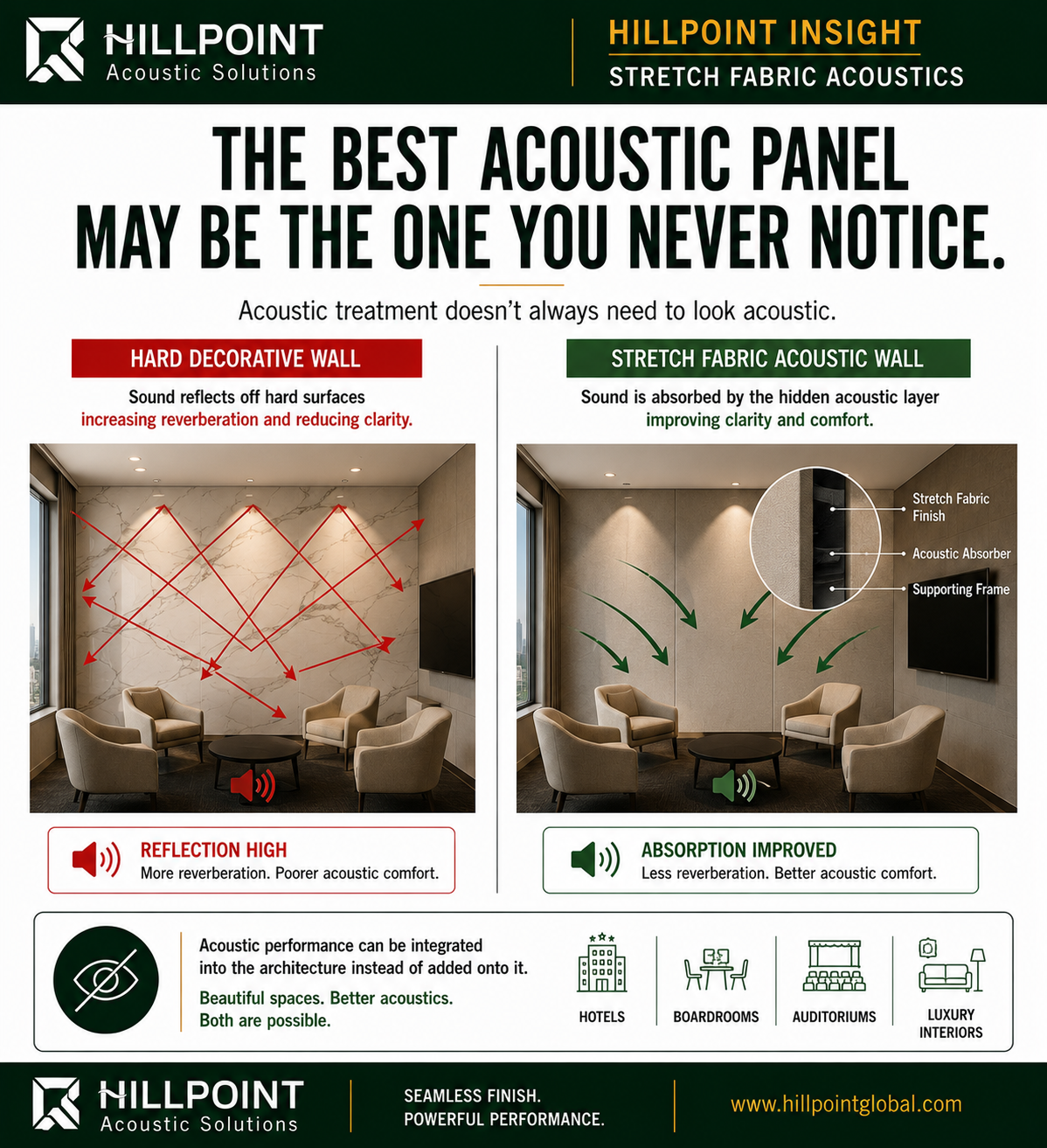
Some of the most comfortable rooms to talk in have nothing on the walls that looks acoustic. No grid of panels, no visible absorbers, no clouds hanging off the ceiling. Just a clean continuous wall. The treatment is there, doing its job. It's sitting behind the fabric you're looking at.
That's the whole idea behind a stretch fabric system, and it solves a fight that designers run into constantly. The room needs absorption to work, and most absorption announces itself. Stretch fabric lets the acoustic surface be the architectural surface, so the two stop competing.
Why acoustics and a clean interior pull against each other
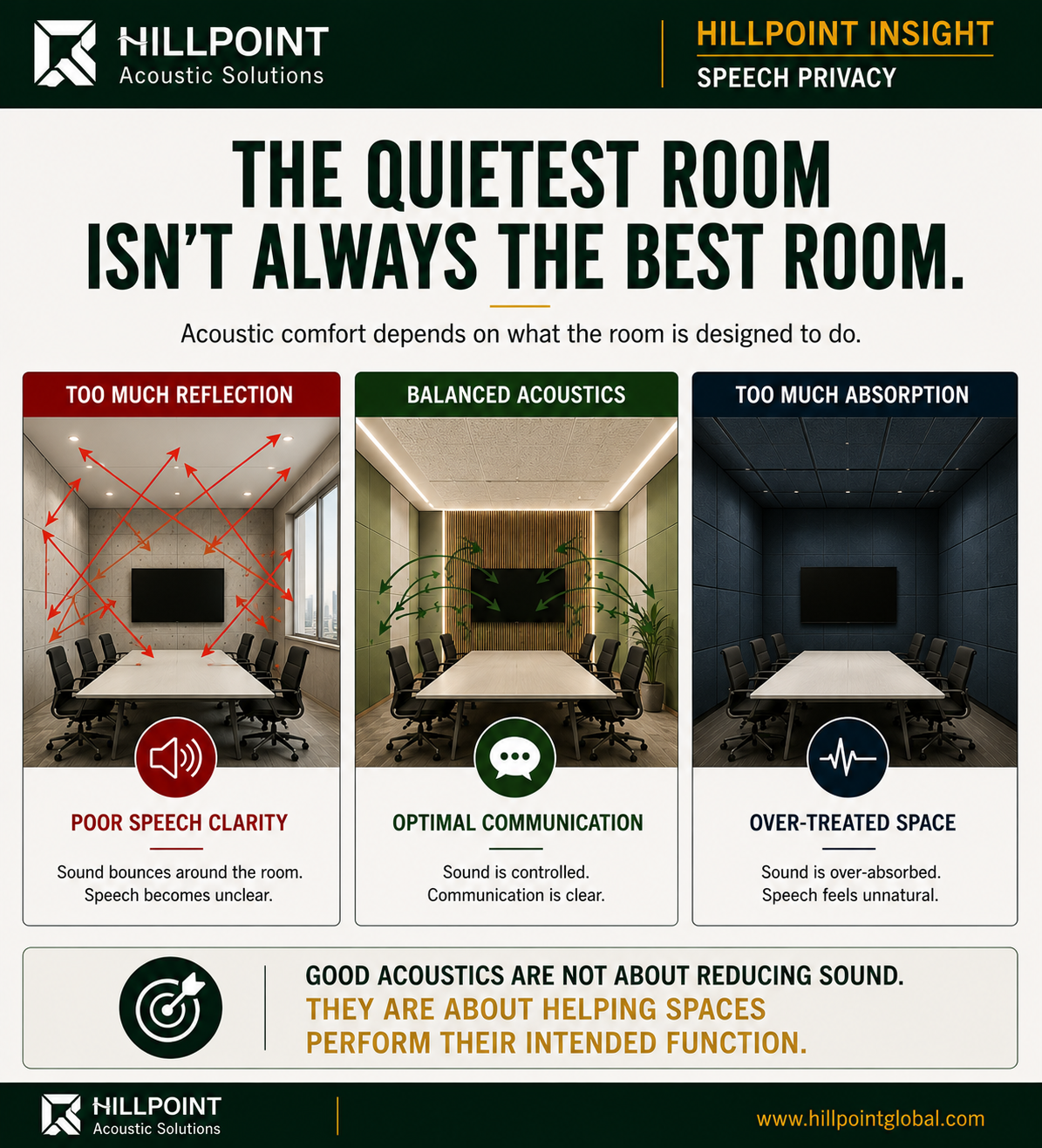
Plenty of spaces need treatment to function. Boardrooms, auditoriums, hotels, executive offices, lecture rooms, high-end homes. Leave the reflections untreated and reverberation builds, speech gets harder to follow, and the room wears people out by the end of a long meeting.
The usual answer is to add visible absorptive surfaces, and they work. They also read as acoustic products bolted onto a design that wanted to look like something else. In a premium interior built on material continuity and clean lines, a wall of obvious panels can feel like a compromise. That's the tension stretch fabric is built to resolve.
What is a stretch fabric acoustic system?
A stretch fabric acoustic system is an acoustically open fabric tensioned over a perimeter frame, with a sound absorber behind it. The fabric is the visible finish. The absorber behind it, usually mineral wool or PET, does the acoustic work. To the room it looks like one smooth, continuous wall or ceiling, with the treatment hidden from view.
Does stretch fabric absorb sound?
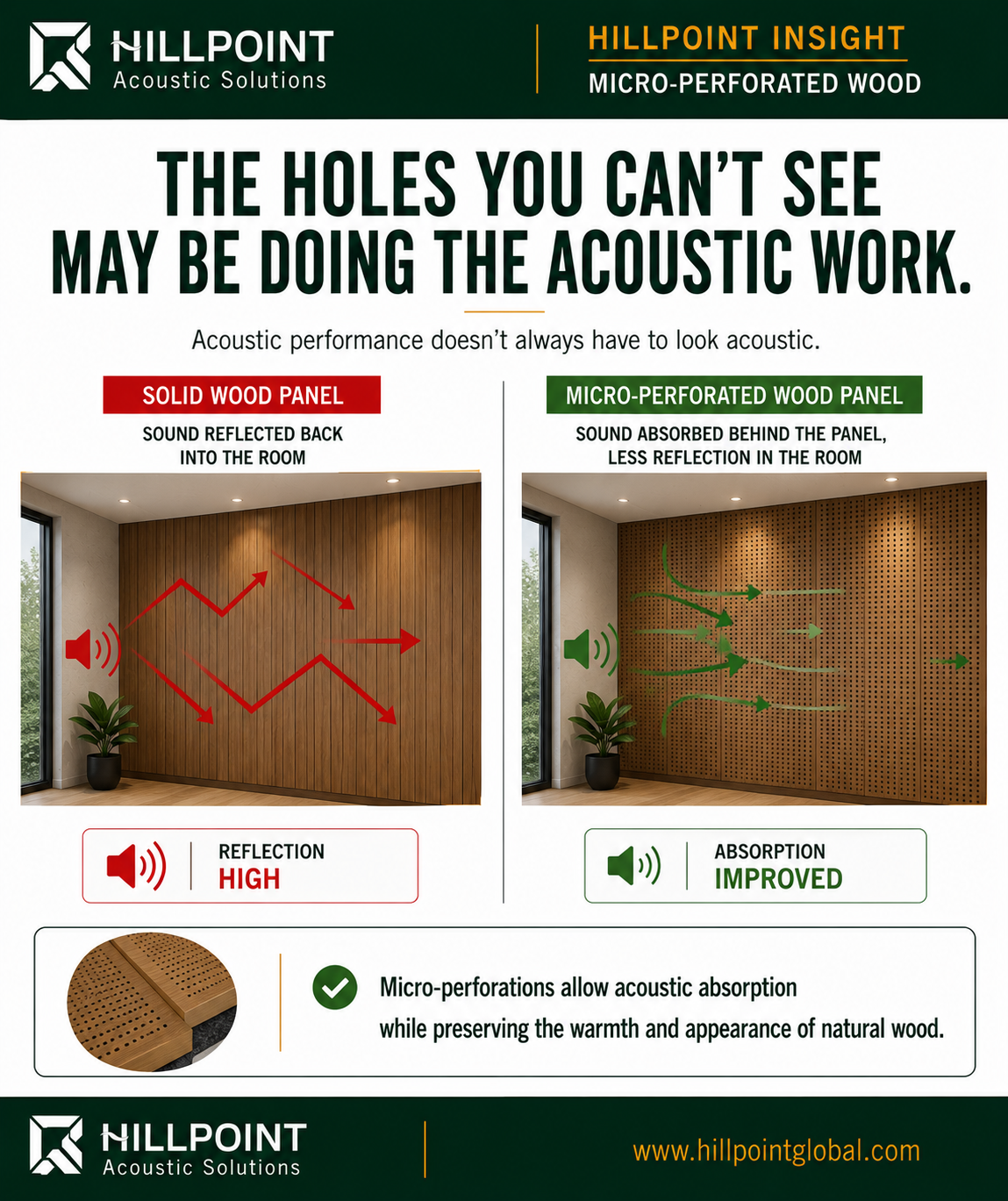
The fabric itself barely absorbs anything. It's there to look good and to let sound pass through to the material behind it. The absorber is what turns sound energy into heat and stops it reflecting back into the room. So the system absorbs sound, but the fabric is the cosmetic layer, not the working one, and that distinction matters more than it sounds.
Why the fabric choice is an acoustic decision, not just a colour
Here's the part that gets missed, and it's the part that separates a system that works from one that just looks right. The fabric has to stay acoustically transparent, meaning sound passes through it freely. Stretch a tight, coated or heavily backed fabric over that frame and you put a reflective layer in front of the absorber. The high frequencies bounce off the fabric before they ever reach the material behind it, and the system underperforms while looking flawless.
So the fabric sits in the acoustic spec, not just the finishes schedule. Pick it for the weave and openness as much as the colour, because the wrong fabric can quietly cancel out the absorber you paid for. A beautiful wall that isn't letting sound through is just an expensive decoration. If you want the background on how a single absorption figure can hide this kind of detail, the NRC ratings piece covers what the number leaves out.
What else it gives you
The acoustic part is the headline, but stretch fabric earns its place a few other ways. It hides an irregular or rough substrate, which is handy in a refurbishment where the wall behind is a mess. It wraps around curves and integrates with lighting and other details that rigid panels can't follow. It gives a consistent finish across a large surface. And it's relatively friendly to refurbish later, since the visible layer can be changed without rebuilding the absorber behind it. None of that is the reason to choose it, but it's a fair amount of upside for one system.
Where it fits
Boardrooms use it to keep speech crisp without a wall of visible panels in the client's eyeline. Auditoriums lean on it to manage reverberation while holding the architectural character. Hotels use it across public spaces and guest areas where the finish has to feel premium. Executive offices get privacy and comfort that doesn't look clinical. Luxury residences get acoustic control that disappears into the interior. And education spaces get intelligibility out of a durable, large-format surface.
Spec the system, not just the look
The thread through all of this: a stretch fabric wall is a system, and the visible fabric is the smallest acoustic part of it. The absorber type, the depth behind the fabric, and the openness of the fabric itself decide the result together. Choose the finish in isolation and you can end up with a gorgeous wall that does very little. Choose them together and nobody in the room ever clocks the treatment, which is the entire point.
That's how we approach it at HillPoint Global. We manufacture the Acousstop Tract stretch fabric system and match the fabric and the infill to the room's reverberation target, rather than letting a good-looking finish undercut the performance. If a project wants the quiet without the visible panels, the fabric and the build-up behind it are worth settling alongside the rest of the interior, not after it.
For the products, see the Tract stretch fabric panels and the Comfy fabric panels for the framed-panel route. The room coverage piece helps work out how much treated surface a space needs. Absorption is measured under ASTM C423 and ISO 354 reverberation-room methods if you want the testing detail (astm.org).
Technical Guides
Need the full acoustic treatment and soundproofing guides?
The long-form acoustic panels India guide covers panel types, NRC logic, standards, and room treatment. The soundproofing solutions India guide covers STC logic, doors, walls, floors, and the block-and-isolate side of the same design problem.