Why Movable Partitions Fail: Flanking Transmission Explained
A movable wall with a great STC rating can still leak sound between rooms. Flanking transmission is usually why, and here is how to design around it.

A banquet hall gets split in two for a Saturday. One side runs a corporate seminar, the other sets up for a wedding lunch. The operable partition between them is rated STC 55, which is a solid number. Halfway through the seminar, the speaker's voice is drifting into the wedding side, and someone decides the partition was oversold.
The partition is probably fine. The sound just went around it instead of through it.
This is one of those problems that gets blamed on the wrong component almost every time. The wall is the visible thing, so the wall takes the heat. But in a big multi-purpose hall, the partition is rarely where the privacy actually leaks.
What everyone expects, and what happens instead
The expectation is simple enough. Drop the partition, and one room becomes two. Sound from the seminar stays with the seminar, the wedding stays with the wedding.
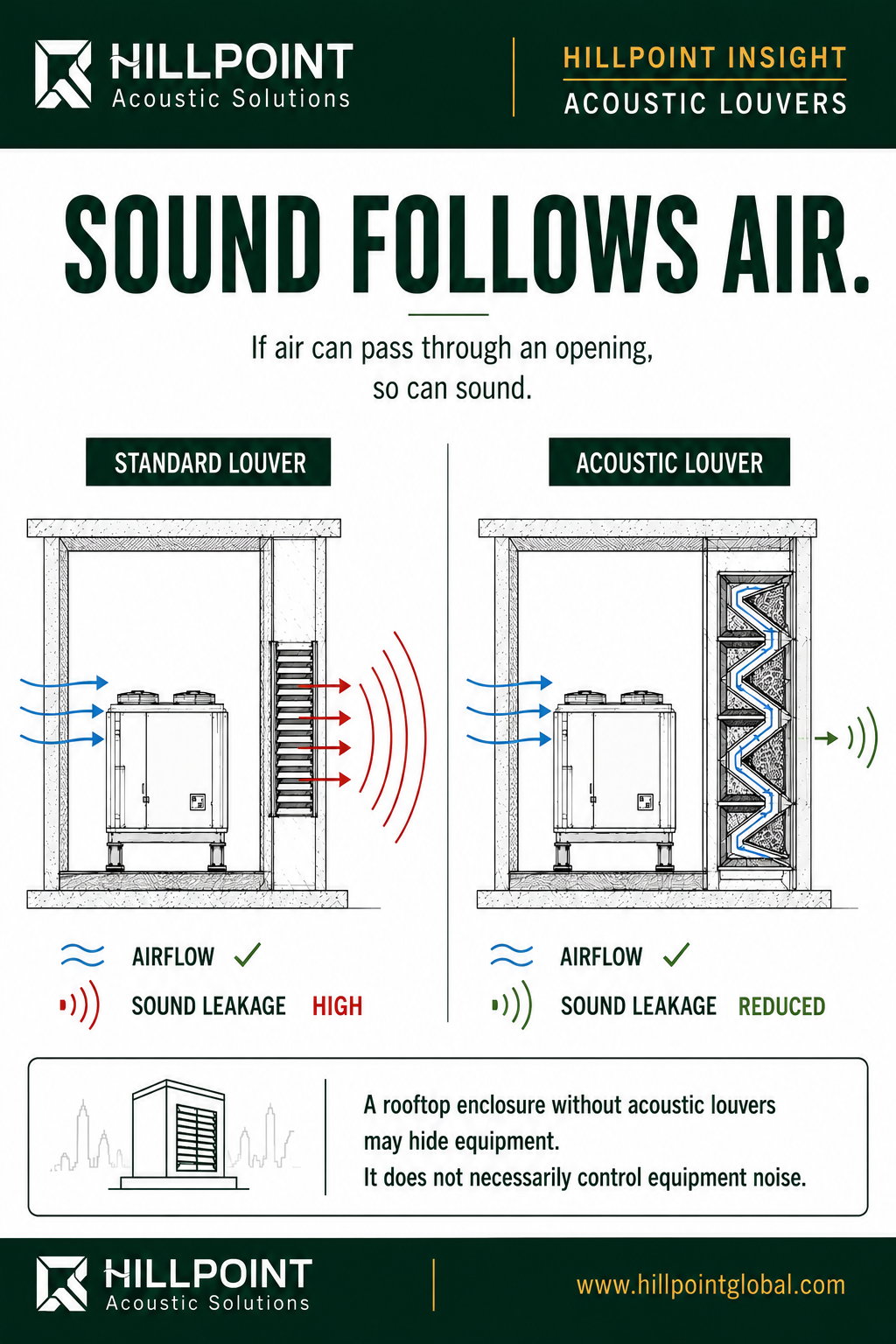
What actually happens is that sound looks for the easiest route between the two spaces, and the partition is only one of those routes. If there's a faster path over the top or around the side, the sound takes it. The partition can be doing its job perfectly and you'd never know, because the leak is happening above the ceiling.
What is flanking transmission?
Flanking transmission is sound that travels between two spaces by going around the separating element instead of through it. With a movable partition, the sound rises into the ceiling void, crosses the open plenum above the wall, and drops back down into the next room. The partition never gets a chance to block it, so its rating barely matters on that path.
Why a high STC partition still lets sound through
Here's the part that trips up project teams. An STC rating describes how the partition performed on its own, mounted in a test opening in a lab, with no flanking paths around it. That's a controlled measurement of the product, and it's useful. It just isn't a prediction of your finished room.
STC says nothing about your ceiling plenum, your side-wall construction, the duct that runs from one room into the next, or how cleanly the partition got sealed at the head and the floor on the day it was installed. Put a strong partition into a building full of bypasses and the field result lands well below the lab number. The industry even has a separate field measurement for this, apparent STC, precisely because the installed performance and the lab rating are different animals.
If you want the deeper version of how STC works and where the number stops being useful, the STC ratings explained piece covers it on acoustic doors, and the same logic carries straight over to partitions.
Why banquet halls are the worst case for this
Big halls are built to be flexible, and flexibility fights acoustic separation. You usually get a deep continuous ceiling void running the full length of the room, HVAC ductwork crossing wherever it needs to, lighting and rigging infrastructure, and a layout that changes week to week. Every one of those is a potential path over or around the partition.
The classic example: a presenter on the seminar side is comfortably blocked by the partition itself, so the direct path is handled. Their voice still climbs into the plenum, travels above the partition line, and re-enters the wedding side from the ceiling. To the guests, the separation simply failed. To an acoustician, it worked exactly as predicted, just not where anyone was looking.
The paths that actually carry the sound
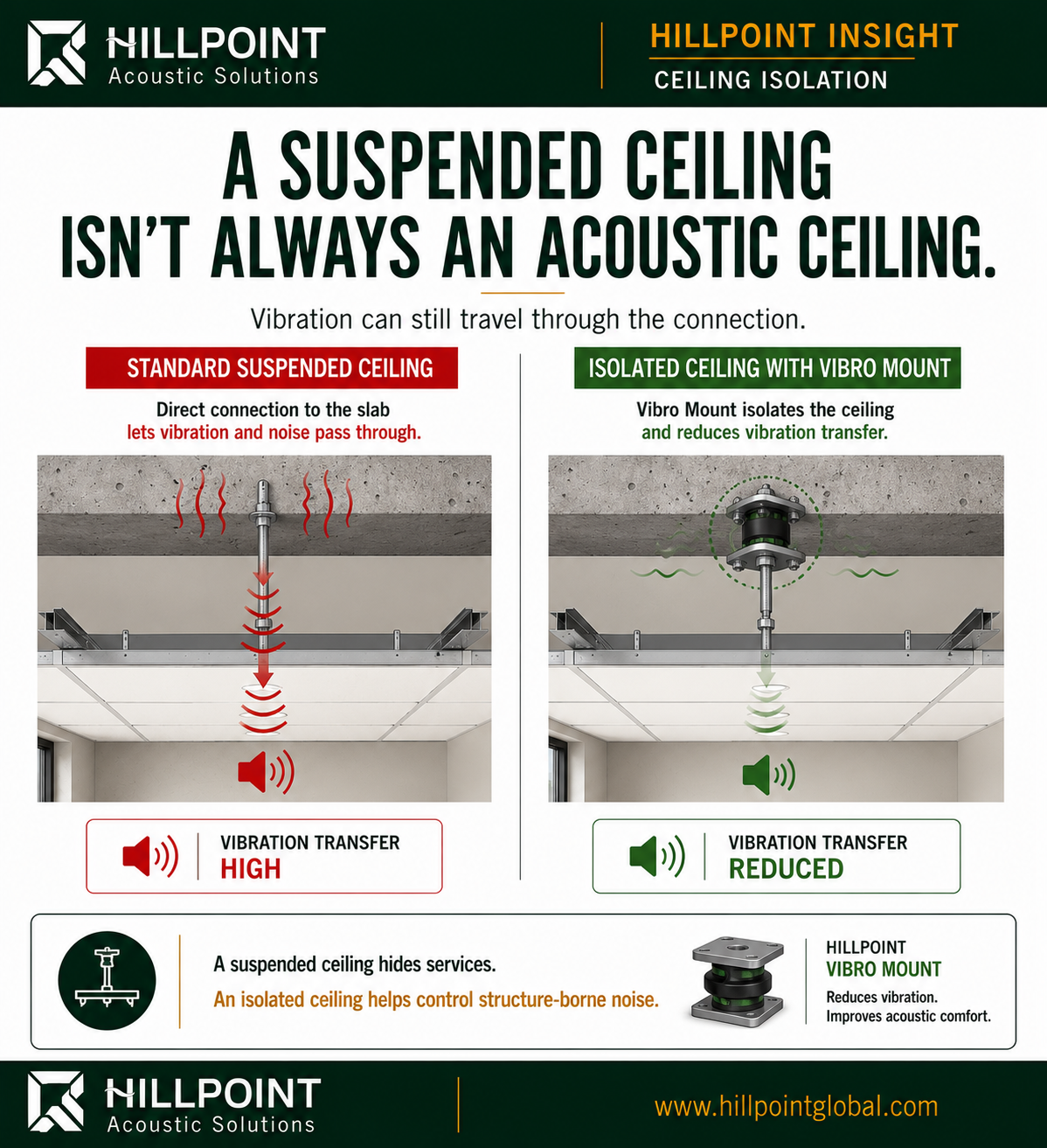
The ceiling void is the big one. An open plenum above the partition is the single most common reason these installations disappoint. Shared ductwork is next, because a duct that serves both rooms is a clean pipe for speech and mechanical noise to travel through. Side walls matter too. Sound can move through the adjacent permanent wall construction and reappear next door, especially where the partition meets a lightweight wall. And rigid structural connections can carry vibration around the whole partition system without much trouble.
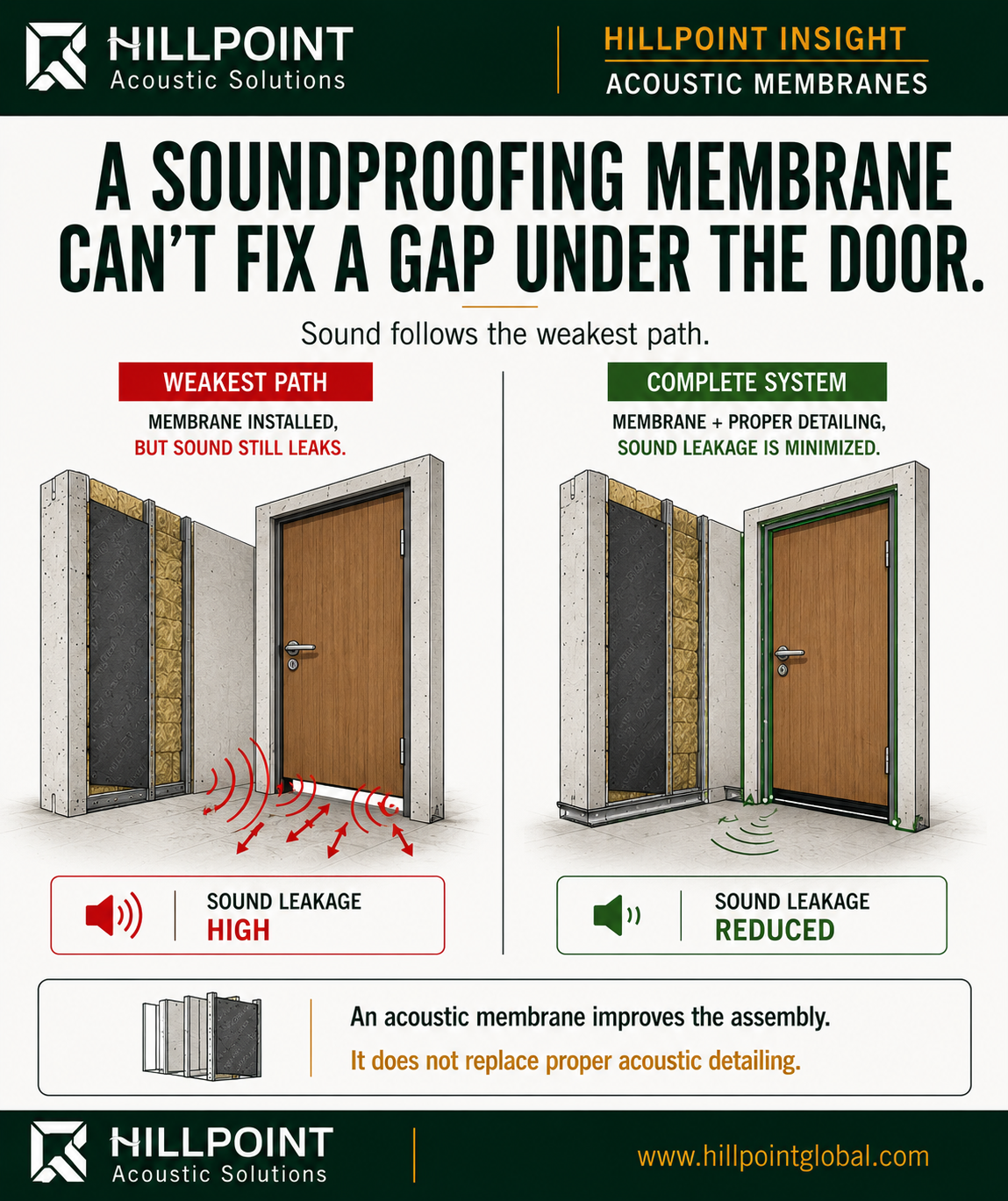
Perimeter gaps deserve their own mention. A movable wall lives or dies on its seals. If the head, floor and edge seals aren't doing their job, you've got direct leakage right at the partition, which no STC rating will save you from.
How to actually design around it
The fixes are coordination problems more than product problems, which is why they get missed when the partition is bought in isolation.
1. Carry the separation up to the structural deck. Closing off the plenum above the partition removes the most common bypass in one move.
2. Treat the ceiling cavity. Where a full deck-to-deck closure isn't possible, absorption and baffling inside the plenum cut the energy crossing over.
3. Coordinate the HVAC. Cross-talk attenuators and thoughtful duct routing stop the mechanical system from quietly defeating the wall.
4. Seal the perimeter properly. The head, floor and jamb seals have to be specified and then actually checked on site, not assumed.
5. Look at the whole path before fixing a target STC number, because the surrounding construction usually sets the ceiling on what's achievable anyway.
Set the expectation before the wall goes in
One honest thing worth telling a client up front: a movable partition will not match a fixed, full-height wall, even when everything around it is coordinated well. That's the nature of a wall that has to fold away. The goal is to get the installed performance as close to the partition's rating as the building will allow, and to be clear about what "separated" realistically means for that room.
That's the conversation we'd rather have early at HillPoint Global. We manufacture the Acousstop Wooden Wings operable partition, but we treat the ceiling void, the duct routing and the perimeter detailing as part of the same job, because a partition can only perform as well as the construction wrapped around it. If you're planning a divisible hall, the plenum and the services above it are worth resolving before the partition spec is locked.
For the product itself, see Acousstop Wooden Wings, and the three axes of acoustic design for why blocking and isolating are separate jobs. Field versus lab sound isolation is covered by ASTM test methods if you want the measurement detail (astm.org).
Technical Guides
Need the full acoustic treatment and soundproofing guides?
The long-form acoustic panels India guide covers panel types, NRC logic, standards, and room treatment. The soundproofing solutions India guide covers STC logic, doors, walls, floors, and the block-and-isolate side of the same design problem.